
THIRD-GENERATION FAMILY CONTRACTOR · SINCE 1978
Denver Gutter Services
Denver gutter services should solve the water problem at your property. Ernie’s Gutter provides seamless installation, replacement, repair, cleaning, downspouts, guards, and commercial gutter work, with attention to the complete drainage path.
Denver Gutter Services
Ernie’s Gutter provides Denver gutter services for installation, replacement, repair, cleaning, downspouts, gutter guards, commercial systems, and exterior drainage concerns. The right service depends on the existing gutter, fascia, pitch, outlets, downspout capacity, and discharge location. An evaluation helps separate a maintenance problem from a repairable failure or a system that needs replacement.
Start With the Problem You Can See
A gutter system has one basic job: control roof water before that water starts choosing its own path. Runoff must enter the trough, travel toward an outlet, pass through a downspout, and reach an appropriate discharge area. If any part of that route fails, water can stain siding, soak fascia, erode soil, cross a walkway, or collect near the foundation.
If this is your first time hearing this, a gutter problem does not always begin where water appears. A leaking corner may sit below a section holding water. An overflowing run may have a restricted outlet. A downspout may work correctly but release everything beside a basement window. Choosing the service means understanding the route, not simply naming the wet spot.
Ernie’s Gutter is a third-generation, family-owned contractor serving Denver and the Front Range since 1978. This page helps homeowners and property managers find the appropriate existing service information. You do not have to diagnose the installation before contacting us. Tell us what happens, where it happens, and whether cleaning or previous repairs changed anything.
Useful Details When You Contact Us
- Your property location and whether the building is residential or commercial.
- The symptom: leaking, sagging, overflow, a loose section, blocked drainage, or damaged downspouts.
- When the problem appears, including heavy rain, light rain, or snowmelt.
- Previous cleaning, repairs, storm damage, or recent roofing and landscaping changes.
- Photos taken safely from the ground, if available.
That information helps establish the next step. Inspection access, building height, guards, weather, and concealed construction affect what can be evaluated. A conversation about the problem is the beginning of planning; the actual scope, price, and work authorization still need to be understood before a project starts.
Find the Gutter Service That Fits Your Property
Choose the situation closest to yours. These eight service paths explain where to start; you do not need to diagnose the failure before contacting us. Installation and replacement can both use seamless gutters. Downspout work carries water from the gutter toward discharge; ground-level drainage manages where that water travels next.
Seamless Gutter Installation
Gutters for a new installation.
Plan custom-fit seamless gutters for a new home, addition, or roofline that needs gutters. Seamless describes how the straight runs are formed; replacement gutters can also be seamless. Discuss size, profile, corners, attachment, outlets, and downspout placement as one system.
Explore seamless gutter installationGutter Replacement
An old or failing system replaced.
Replace worn, distorted, or repeatedly failing gutters with a system designed for the property. Confirm which old runs come off, removal and disposal, new corners and outlets, and whether downspouts are included. Hidden fascia repairs require their own scope and approval.
Review gutter replacementGutter Repair
Leaks, sagging, or damaged sections fixed.
Start here for a leaking corner, loose gutter, damaged outlet, or isolated section that may be repairable. The surrounding metal and supporting fascia must remain suitable. A repair should address why the failure happened, including trapped water or weak attachment, rather than simply cover the symptom.
Find gutter repair informationGutter Cleaning
Leaves and debris removed.
Remove debris restricting a serviceable gutter and its accessible outlets and downspouts. Cleaning does not straighten distorted metal, repair deteriorated fascia, or increase drainage capacity. If overflow continues after cleaning, the remaining pitch, outlet, and runoff conditions need evaluation.
Learn about gutter cleaningDownspouts and Gutters
Downspouts repaired, added, or rerouted.
Address damaged downspouts, separated elbows, restricted outlets, loose straps, or routing that sends water toward the wrong area. Residential and commercial properties may need different sizes and configurations. Confirm the connection and discharge point; buried drainage is a separately defined scope.
Review downspouts and guttersGutter Guards
Debris protection.
Consider guards when you want to reduce debris entering a suitable gutter system. Leaves, needles, seeds, roof conditions, and maintenance access affect selection. Guards still need inspection and appropriate cleaning. Correct sagging, weak support, and drainage restrictions before covering the trough.
Review gutter guard considerationsGutter Drainage Solutions
Water managed after leaving the downspout.
Start here when collected roof water pools beside the foundation, crosses a walkway, or needs a better route across the property. Extensions and underground drainage require evaluation of slope, connections, access, and a practical discharge location. Identify excavation and restoration separately in the written scope.
Explore gutter drainage solutionsCommercial Gutter
Work on a commercial property.
Plan gutter work for warehouses, retail buildings, offices, and multifamily properties. Discuss runoff demand, profile, attachment, outlets, and downspouts along with building access, occupied areas, scheduling, documentation, and the person authorized to approve work. Commercial planning involves more than choosing a larger gutter.
Review commercial gutter servicesCommercial Planning Starts With the Building
A commercial property can involve several service choices at once. Explain whether the concern is maintenance, a damaged component, replacement, or discharge beyond the building. Identify occupied entrances, delivery routes, tenant restrictions, and the property representative responsible for approvals. The commercial service page is the starting point for that coordinated discussion.
Follow the Water Before Choosing the Correction
Denver gutters face wind, hail, snowmelt, temperature changes, and short periods of concentrated runoff. Those conditions can expose an installation weakness or damage a previously serviceable component. Weather alone does not identify the correct service. The location, condition, and extent of the failure still determine whether the practical answer is cleaning, repair, replacement, or a change farther along the drainage path.
Water Behind the Gutter
Water passing behind a gutter may involve its position, roof-edge flashing, attachment, or the supporting fascia. Fascia is the board commonly located behind the gutter. When water repeatedly wets that area, the material holding the fasteners may deteriorate. Sealing the inside of the trough will not solve runoff that never enters it. The roof edge and attachment need to be considered together.
Overflow With a Clean Trough
A gutter can be clean and still overflow. A low section can hold water, a valley can concentrate runoff into a small area, and an outlet can restrict flow into a larger downspout. Increasing gutter size without examining those conditions can leave the original restriction in place. The gutter, outlet, and downspout should be evaluated as connected components rather than separate purchases.
Water Collecting at Ground Level
If the gutter collects runoff successfully but the downspout ends beside the building, the water problem has simply moved downstairs. Extensions, routing changes, or separately evaluated underground drainage may be appropriate. Lot slope, access, existing connections, and the intended discharge location affect the available choices. Our gutter drainage solutions guide explains why ground-level water management needs its own consideration.
Tell Us What the Water Is Doing
You do not need to choose a product before requesting service. Describe the leak, overflow, damaged section, or discharge concern and start with an evaluation of the existing conditions.
Repair, Replace, Clean, or Redirect?
The smallest job is not always the most complete correction, and the largest proposal is not automatically the best choice. A service recommendation should explain what is failing, what can remain, and what the proposed work accomplishes. A homeowner comparing options deserves to understand whether a price covers a lasting correction or a limited repair with known constraints.
When Maintenance or Repair Can Make Sense
Debris restrictions may be resolved through appropriate cleaning when the gutter, support, and drainage layout remain sound. Repair can be reasonable when the failure is isolated and surrounding components can still do their job. Examples include a localized connection problem, a loose strap, or a correctable low section. The important question is whether the work removes the underlying cause rather than temporarily conceals its symptom.
When Replacement Deserves Consideration
Replacement may be more practical when several runs are distorted, attachment failures are widespread, or repeated repairs preserve an unsuitable layout. Partial replacement can be an option where damage is limited and compatible components remain usable. Ask why the proposed extent of work is necessary. A replacement proposal should identify what is removed, what stays, and how the new arrangement improves the water path.

“I would rather have a homeowner ask ten questions before we start than approve work they do not understand.”
Look Beyond a Larger Gutter
Five-inch and six-inch gutters are not interchangeable answers to every overflow problem. Roof area, pitch, valleys, run length, outlet position, and downspout capacity influence the decision. A larger channel can still back up at a restricted outlet. Likewise, adding a guard to a sagging gutter does not restore proper drainage. Product selection should follow diagnosis and the proposed scope should explain the relationship.
What to Understand Before Gutter Work Starts
A useful written scope helps separate assumptions from included work. Confirm the runs being repaired or installed, gutter material and profile, downspout quantities and locations, removal, disposal, access arrangements, and any supporting repairs. Ask whether extensions or underground connections are included. A proposal for roof-edge gutter work does not automatically include every ground-level drainage concern at the property.
Price Depends on the Actual Scope
Footage is only one part of the price. Building height, roof access, corners, outlets, downspouts, removal conditions, supporting material, and drainage corrections can change the work involved. Compare proposals by their included scope before comparing totals. The existing gutter replacement page provides pricing guidance for that service. A property-specific recommendation still requires understanding the conditions being addressed.
Hidden Fascia and Supporting Repairs
A visual review cannot establish the condition of every concealed board. Removing old gutter may expose deterioration that was not accessible beforehand. Agree on who can approve changes and how added work will be explained. If newly exposed damage changes the installation method, scope, or price, the proposed correction and authorization should be recorded rather than quietly added to the final bill.
Storm Damage and Insurance Claim Support
If a storm or insurance claim is relevant, explain that when discussing the property. Keep the scope grounded in visible damage, practical repairability, and the work needed to restore function. Ask what contractor documentation is available for the proposed project. Coverage and payment decisions belong to the insurer under the policy. Separate any independently selected improvements from the work being considered for the claim.
Know What Happens Next
After you contact us, the next step is to discuss the property, the symptom, and the service you are requesting. Confirm whether an appointment is an inspection, a quotation visit, an authorized repair, or an installation, and ask about any applicable charges. Discuss access, pets, gates, parked vehicles, and known hazards. An inquiry alone is not authorization to begin extra work.
Before work starts, review the written scope, scheduling arrangements, applicable warranty terms, and who can authorize a change. Ask how newly exposed fascia damage will be documented and priced. Our Before Gutter Work Begins guide explains inspection limits, included work, and added-work approval in greater detail.
Local Service and Workmanship You Can Evaluate
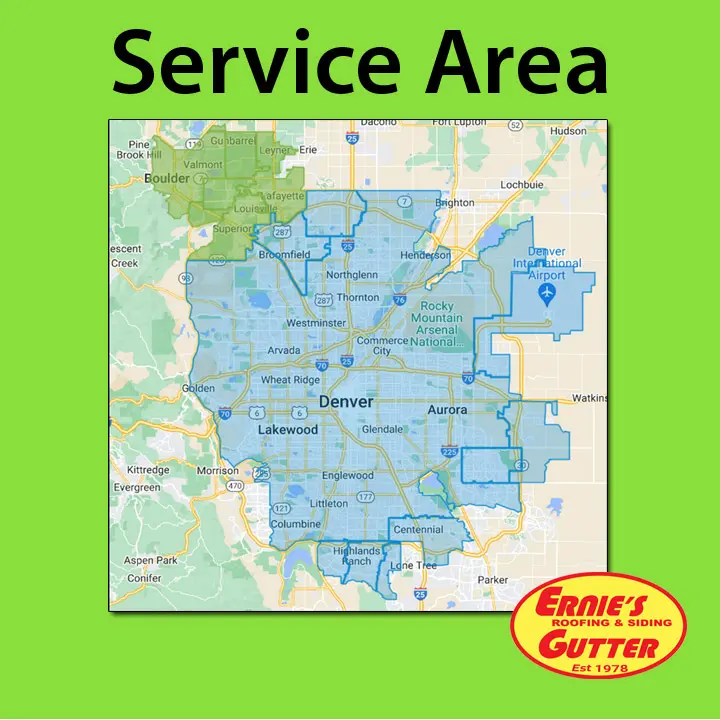
Ernie’s Gutter serves Denver and qualifying Front Range properties. Start with the service area directory to review local coverage, then provide the property location when requesting service. Residential and commercial projects can involve different access and scheduling needs. Describing the building and the concern helps avoid treating every request as the same installation.
Use Pictures to Ask Better Questions
Our gutter gallery includes published installation and detail pictures. Look at corners, downspout routing, roof-edge fit, and how the finished work relates to the building. An attractive roofline is useful to see, but appearance alone cannot establish pitch, attachment quality, or performance during a storm. Ask how the proposed installation will manage water on your own property.
Maintenance Still Matters After Installation
New gutters need periodic inspection and appropriate debris removal. Guards may reduce some debris, but surfaces and accessible outlets can still need attention. Observe the system safely from the ground during rain or snowmelt. If something changes, record the location and conditions so a follow-up discussion can focus on what is actually happening rather than begin with a guess.
Protect the Supporting Materials
Gutters depend on the structure behind them. Loose fasteners can be a symptom of damaged supporting wood rather than a problem solved by adding another screw. Before installation, explain any known history of fascia repairs, water staining, or gutters pulling away. Where concealed conditions remain uncertain, the scope should describe how those discoveries will be handled. A secure-looking connection is useful only when the supporting material can hold it.
Keep earlier proposals, invoices, and any written coverage terms together. That record helps distinguish previously repaired areas from new concerns and makes future service conversations clearer. There is no need to approve an undefined amount of extra work in advance. Establish who can authorize a change, how the condition will be explained, and how the added cost will be recorded before the project begins.
Helpful Homeowner Resources
- Seamless installation for new systems and installation planning.
- Gutter repair for localized leaks, sagging, and connection problems.
- Downspouts and gutters for routing and discharge questions.
- Commercial gutter services for larger buildings and property planning.
- Before gutter work begins for inspection, written scope, and added-work approval.
Denver Gutter Services: Frequently Asked Questions
Which gutter service should I request if I am unsure what is wrong?
Describe the symptom rather than choosing a repair in advance. Tell us where water appears, when it happens, and what cleaning or repairs have already been tried. The existing conditions help determine whether maintenance, repair, replacement, or drainage correction is appropriate.
What is the difference between seamless installation and gutter replacement?
Seamless describes gutters formed into continuous straight runs. Choose installation when planning gutters for a new home, addition, or roofline that needs them. Choose replacement when existing gutters need to come off and new gutters go on. Replacement gutters can also be seamless. Confirm removal, disposal, downspouts, and hidden fascia approval in the written scope.
Can leaking gutters be repaired instead of replaced?
Often, when the failure is localized and the surrounding gutter and support remain usable. Repeated leaks, distorted runs, weak attachment, or capacity problems may call for a broader correction. The recommendation should explain what caused the failure and why the proposed work makes sense.
Why do gutters overflow after cleaning?
Cleaning removes debris restrictions but does not correct poor pitch, low sections, concentrated valley runoff, inadequate outlets, or downspout capacity problems. If overflow continues after cleaning, the remaining drainage conditions should be evaluated before repeating the same service.
Should I choose downspout service or gutter drainage solutions?
Choose downspout service for damaged pipes, elbows, straps, outlets, added capacity, or routing from the gutter toward discharge. Choose gutter drainage solutions when water needs a better path after leaving the downspout, such as extensions or evaluated underground drainage. Some properties need both. The written scope should identify each connection and the intended discharge location.
Do gutter guards eliminate maintenance?
No. Guards can reduce some debris entering a suitable system, but periodic inspection and appropriate cleaning remain necessary. Guards do not correct sagging gutters, restricted outlets, weak fascia, or a downspout releasing water in the wrong place.
Does Ernie’s Gutter provide commercial gutter services?
Yes. Commercial gutter work is available for properties such as warehouses, retail buildings, offices, and multifamily buildings. Planning should consider runoff volume, gutter profile, attachment, outlets, downspouts, occupied areas, access, and the property’s scheduling requirements.
What affects the cost of gutter service?
Price depends on the work required, footage, height, access, corners, outlets, downspouts, removal, supporting material, and drainage corrections. Compare written scopes rather than totals alone. A property-specific proposal should identify included work and how additional conditions will be handled.
What areas does Ernie’s Gutter serve?
Ernie’s Gutter serves Denver and qualifying Front Range properties. Review the service area directory and provide the property location when contacting us. Building access, project requirements, and location should be discussed before scheduling service.
How do I schedule gutter service?
Call 720 346 ROOF or use the existing Ernie’s Gutter contact form. Include the property location, requested service or visible problem, and any relevant repair history. Confirm the appointment scope, access arrangements, and applicable charges before service is scheduled.
Start With the Right Gutter Service
Tell us what is happening at your property. Ernie’s Gutter can discuss the next step toward evaluating the gutter, downspout, or drainage concern and defining the work involved.
Third-generation family contractor serving Denver and the Front Range since 1978.
Disclaimer: Service recommendations depend on property conditions, safe access, and the agreed written scope. A visual inspection cannot identify every concealed condition. Pricing, removal, drainage work, testing, warranties, and additional repairs apply only as stated in the project agreement. Insurance coverage and claim payments are determined by the insurer under the policy.
Protection starts at the top of the home.
How Can We Help You?
Seamless Gutter Contractor In Denver
Craftsmanship That Stands Like a House
Let’s Get Your Project on the Right Track

Let’s Get Started