Soffits Fascia Wrap
Seamless Gutter Installation, Repair, and Service for Aurora Homeowners Since 1978
Ernie’s Gutter provides seamless gutter installation, repair, cleaning, gutter guards, downspout corrections, and fascia repair for Metro Denver homeowners
Family-Owned Legacy Built on Quality Since 1978
Fast scheduling and quick response – reach out today
Request Estimate
Ernies Roofing
Protect the roof edge without replacing solid wood that still has useful life
Soffit and fascia wrap in Denver can protect weathered roof-edge wood, reduce repeated painting, and give the eave a clean finished appearance without automatically replacing every fascia board that shows age.
Featured Answer: Fascia wrap can cover wood with minor surface dry rot, weathering, or paint failure when the board remains solid and passes a probe test. If an ice pick or awl easily penetrates deeply into soft wood, the failed section should be replaced first. The wrap protects the surface. Structural framing behind the fascia supports the gutter.
Family owned and serving Denver-area homeowners since 1978.
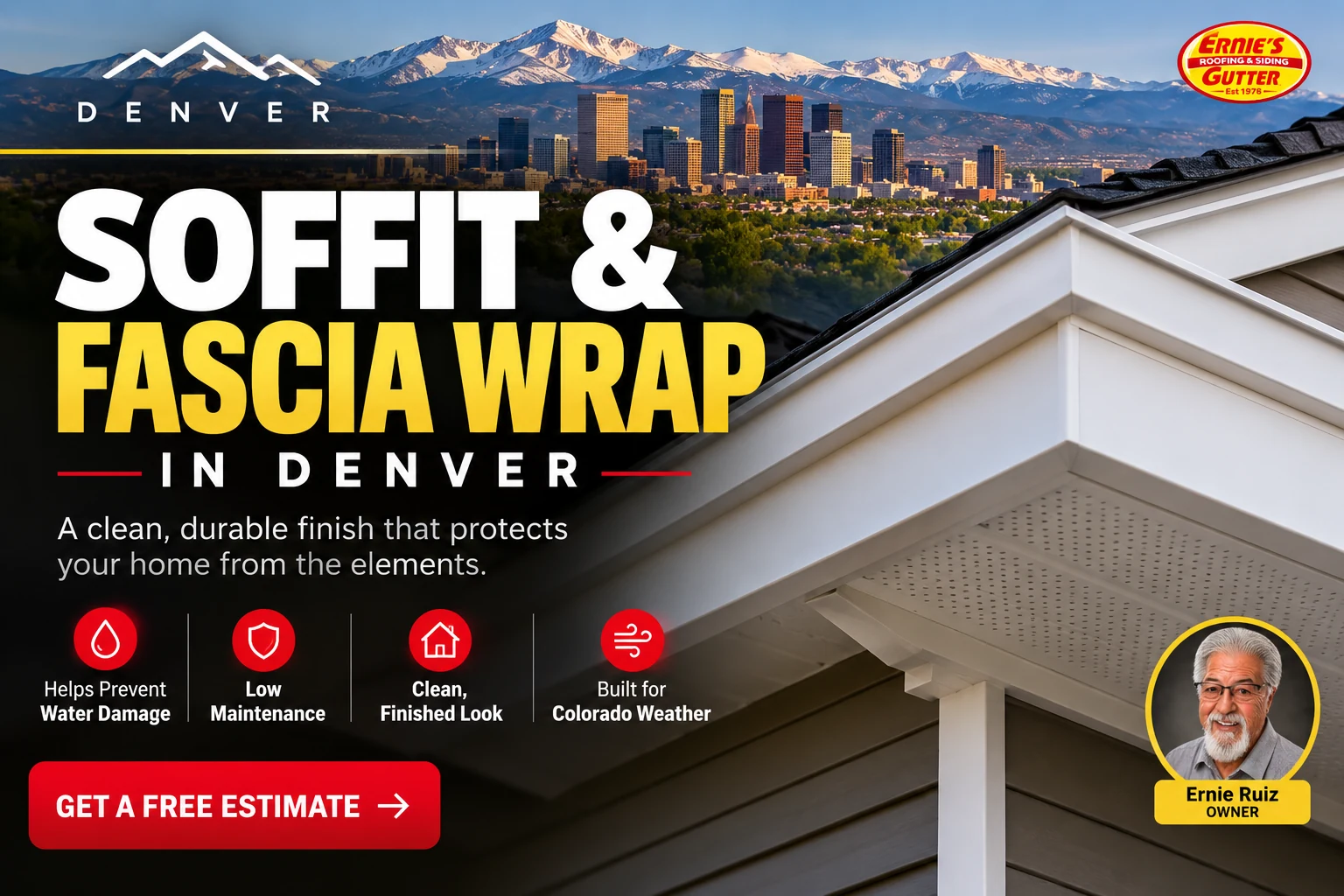
What Soffit and Fascia Wrap Actually Does
The fascia is the finished vertical roof-edge area directly behind the gutter. The soffit is the finished underside of the roof overhang. On many Denver homes these two areas are exposed to decades of sun, moisture, snowmelt, freeze-thaw movement, gutter overflow, wind and repeated paint cycles.
That means an older fascia board can look terrible without being structurally finished. Paint can peel. Primer can stop holding. The exposed grain can become rough. A small amount of surface dry rot can develop. The board can look like it needs to be torn off even though the wood underneath is still firm and usable.
This is where fascia wrap can save money. If the board remains solid enough to stay in service, a finished aluminum covering can protect that exposed surface instead of requiring unnecessary full-board replacement. The wrap gives the roof edge a clean lower-maintenance finish and removes the exposed face from the repeated scrape, prime and repaint cycle.

Page Guide
This soffit and fascia wrap guide explains:
- When weathered fascia can be wrapped instead of replaced
- How minor surface dry rot differs from failed wood
- How the ice-pick or probe test helps make the decision
- Why the gutter must fasten into structural framing
- What fascia wrap does and does not do
- Why soffit ventilation must stay open where required
- How gutter overflow contributes to roof-edge damage
- When replacement really is necessary
Minor Dry Rot Does Not Automatically Mean Full Fascia Replacement
There is an important difference between wood that is ugly and wood that is structurally failed. That distinction can save a homeowner a considerable amount of unnecessary carpentry.
If the paint has failed, the surface is checking, the face has minor dry rot, or the wood has become unattractive from years of exposure, we still need to determine whether the board itself remains solid. A board that is firm and stable can often stay in place and be wrapped.
The wrap is not pretending the surface underneath is new. It is covering and protecting a board that still has useful structural life. It is a practical way to stop exposing that wood directly to weather and eliminate much of the maintenance associated with repainting it.
If the wood is genuinely soft, punky, loose, crumbling, or deeply deteriorated, the answer changes. That failed section should be replaced before the finished wrap goes on.
Paint Failure
Peeling or blistering paint by itself does not mean the fascia has failed. The board underneath may still be perfectly usable.
Minor Surface Dry Rot
Light deterioration at the exposed face can often be covered when the remaining board is firm and structurally sound.
Firm Wood
If the board resists a probe and remains solid, wrapping can protect it and save the expense of replacing usable lumber.
Failed Wood
If the material is soft enough that a probe easily penetrates deeply, that section should be replaced before wrapping.
The Ice-Pick Test
One of the simplest field checks is an ice-pick or awl test. The point is not to destroy the board. It is to find out whether the material beneath the weathered surface still has real strength.
If the tool meets solid resistance, the fascia may still have plenty of useful life even if the paint looks terrible. If the tool sinks easily into soft material, the deterioration is no longer just cosmetic. That section needs replacement.
This keeps the recommendation practical. We do not replace sound wood just because the finish is ugly, and we do not hide genuinely failed wood behind metal.
The Fascia Does Not Carry the Gutter
This is one of the most important details on the entire page. The gutter should not depend on the fascia board or fascia wrap as its structural support.
A properly fastened gutter hanger passes through the roof-edge assembly and engages solid structural framing behind it, typically a rafter tail or other appropriate framing member. That framing is where the holding strength comes from.
The fascia creates the finished roof edge. The wrap protects that exposed surface. Neither one should be treated as the only thing holding a gutter full of water, wet debris, snow or ice.
A system that is simply fastened into the face of the fascia may look fine when it is new. Over time, however, water weight and seasonal loading can work those fasteners loose. Once the hanger loses its structural bite, the gutter can pull away, change pitch, sag or begin dumping water behind itself.
Fascia Board
The fascia creates the vertical roof edge. It can remain in place when it is sound enough to continue serving its purpose.
Fascia Wrap
The wrap is a protective exterior covering. It improves appearance and reduces maintenance. It does not carry the gutter load.
Structural Framing
The hanger fastener must engage solid framing behind the fascia assembly. That is where dependable gutter attachment comes from.
Fix the Water Problem Before You Cover the Evidence
Fascia damage often tells us something about the gutter or roof edge. Repeated overflow can soak the same board. A leaking miter can damage one corner. Water traveling behind the gutter can keep the fascia wet. A valley can concentrate more runoff than the existing gutter or outlet can handle.
That means a soffit and fascia project should not simply cover the stains and move on. We need to understand why those stains appeared.
If the gutter itself is leaking, sagging, loose or badly pitched, the correct supporting page is Gutter Repair Denver. If the gutter system has reached the point where replacement makes more sense, see Rain Gutter Replacement in Denver.
The water path continues through the outlets and downspouts. If the roof edge is working but water is not moving away from the house correctly, see Downspouts and Gutters.
Why Denver Is Hard on Soffit, Fascia and Roof-Edge Trim
Denver puts exterior trim through repeated cycles of strong sun, dry air, hail, wind, snow, snowmelt and freezing temperatures. Those conditions are especially hard on painted wood because the surface is constantly heating, cooling, drying, getting wet and moving.
That is why paint failure alone does not tell the whole story. Some boards may look rough because the coating has finally reached the end of its useful life. Other boards are being damaged because roof water has been allowed to reach them repeatedly.
Strong Colorado Sun
UV exposure breaks down coatings and dries exterior wood, particularly on south and west-facing roof edges.
Snowmelt
Water at the eaves can expose weak joints, worn paint and poor gutter relationships that stay hidden during dry weather.
Freeze-Thaw Cycles
Water entering small openings can freeze, expand and make existing cracks or separations worse.
Gutter Overflow
Overflow can repeatedly soak fascia or soffit areas and turn a simple maintenance problem into real deterioration.
Hail and Wind
Storms can damage gutter components, loosen trim and expose already weathered roof-edge materials to additional moisture.
Older Denver Homes
Many older homes have decades of repairs, paint layers, gutter replacements and roof-edge changes that need to be evaluated together.
What We Check Before Recommending Wrap
Wood Condition
We look for firmness, localized decay, cracks, loose material and areas that may need a probe test.
Soffit Condition
Staining, sagging, damaged panels and open joints can point to moisture or age-related failure.
Gutter Attachment
Loose hangers, pull-away and poor structural engagement can damage the roof edge and change gutter pitch.
Water Path
We look at roof runoff, gutter flow, outlets, downspouts and where the water finally discharges.
Soffit Is More Than the Finished Underside of the Overhang
Soffit is the surface you see when you stand under the roof overhang and look upward. Depending on the home, it may be solid or vented. When vented soffit is part of the attic intake system, those openings matter.
New soffit should not simply cover everything because the homeowner wants a cleaner appearance. If ventilation is required, the replacement material has to preserve that airflow path.
Older soffit can sag, stain, crack, loosen or become difficult to maintain. Replacing it can improve the appearance of the entire roof edge, especially when the new soffit is coordinated with fascia wrap and the gutter system.
The job works best when all three components are treated as one roof-edge assembly. The soffit closes the underside. The fascia finishes the vertical edge. The gutter collects roof water. Each part has its own job, but the details where they meet determine whether the system looks clean and works correctly.

Wrap, Repair or Replace: Three Different Decisions
These terms should not be treated as interchangeable. Wrap protects a sound or still-usable exterior surface. Repair corrects localized problems. Replacement removes a section that no longer has enough useful life to justify keeping.
Wrap
Best when the board remains solid but the exposed face has paint failure, weathering or minor surface deterioration.
Repair
Best when damage is limited to a manageable area and the surrounding roof-edge material remains serviceable.
Replace
Necessary when the material is soft, deeply rotted, unstable, badly damaged or no longer suitable to remain in the assembly.
Ernie's Gutter Soffit and Fascia Wrap Process
Inspect the Roof Edge
We inspect fascia, soffit, corners, roof-edge details, visible staining, peeling paint and areas showing deterioration.
Check the Wood
Questionable areas are checked for firmness so surface weathering is not confused with structural failure.
Follow the Water
We look for overflow, leaks, roof-edge water and downspout problems that may be contributing to the damage.
Check Gutter Attachment
Hangers should engage solid structural framing, not depend on the fascia face or wrap for their holding strength.
Repair Failed Areas
Sections that fail the probe test or have lost structural integrity are repaired or replaced before wrapping.
Install the Finish
Once the base is ready, the soffit and fascia finish can be installed cleanly while maintaining required ventilation.
Helpful Homeowner Resources
- Gutter Repair Denver for leaks, sagging, pull-away, poor pitch and gutter problems that may be damaging fascia.
- Rain Gutter Replacement in Denver for systems that have reached the point where full replacement makes more sense than continued repairs.
- Downspouts and Gutters for outlet, downspout and final drainage problems affecting the roof-to-ground water path.
- How to Fix Rotted Fascia and Soffit Boards for additional information about deteriorated roof-edge materials and water-entry conditions.
- Ernie's Gutter Service Areas for Denver Metro communities served by Ernie's Gutter.
Soffit and Fascia Wrap Denver FAQs
Can fascia wrap go over wood with minor dry rot?
Yes. Minor surface dry rot does not automatically require full fascia replacement when the board remains firm and structurally usable. The wood should be checked first. If it passes a probe test and still has strength, wrapping can protect the surface and save the cost of replacing usable material.
How do you know when fascia is too rotten to wrap?
A simple ice-pick or awl test can help. If the tool easily penetrates deeply into soft or punky wood, that section has lost too much integrity and should be replaced before wrapping.
Does fascia wrap repair rotten wood?
No. Fascia wrap covers and protects the exterior surface. It does not rebuild damaged wood. The purpose is to protect material that remains usable, while failed sections are replaced before the wrap is installed.
Does the fascia board support the gutter?
The gutter should not rely on the fascia face or fascia wrap alone for structural support. Hanger fasteners should engage solid structural framing behind the fascia assembly, such as a rafter tail or other appropriate framing member.
Can fascia wrap reduce future painting?
Yes. One of the main advantages of aluminum fascia wrap is removing the exposed wood face from the repeated cycle of scraping, priming and repainting.
What is the difference between soffit and fascia?
Fascia is the finished vertical roof edge behind the gutter. Soffit is the underside of the roof overhang between the exterior wall and the fascia.
Can soffit and fascia work be done with gutter replacement?
Yes. Because the soffit, fascia and gutter meet at the same roof edge, coordinating the work can make sense when the gutter already needs removal or replacement.
Can gutter overflow damage fascia?
Yes. Repeated overflow or water running behind the gutter can keep fascia wet and contribute to staining, paint failure and eventual deterioration.
Can new soffit affect attic ventilation?
Yes. If the home's attic ventilation system depends on soffit intake vents, new soffit must preserve the required airflow rather than blocking it.
Who installs soffit and fascia wrap in Denver?
Ernie's Gutter provides soffit and fascia wrap for Denver-area homeowners and evaluates the fascia, soffit, gutter attachment, structural framing, ventilation and water path before recommending whether to wrap, repair or replace affected areas.
Find Out What Actually Needs to Be Wrapped, Repaired or Replaced
If the paint keeps failing, the fascia looks weathered, the soffit is stained, or the gutter is beginning to pull away, Ernie's Gutter can inspect the roof edge and determine what still has useful life before you pay to replace it.
720 346 ROOF Request a Soffit and Fascia EstimateFamily Owned Since 1978.
We Do It Seamless.
Protection starts at the top of the home.