
Residential Gutter Contractor in Denver, Colorado
Learn More About Us and the Benefits of Installing Seamless Gutter For Your Home Below, or Fill in the Form to Request Your Free No-Obligation Estimate Today!
Get Your FREE Estimate Now
You’re Info is safe with us – we never share your information. We value our customers privacy!
Denver Residential Gutter & Drainage Services
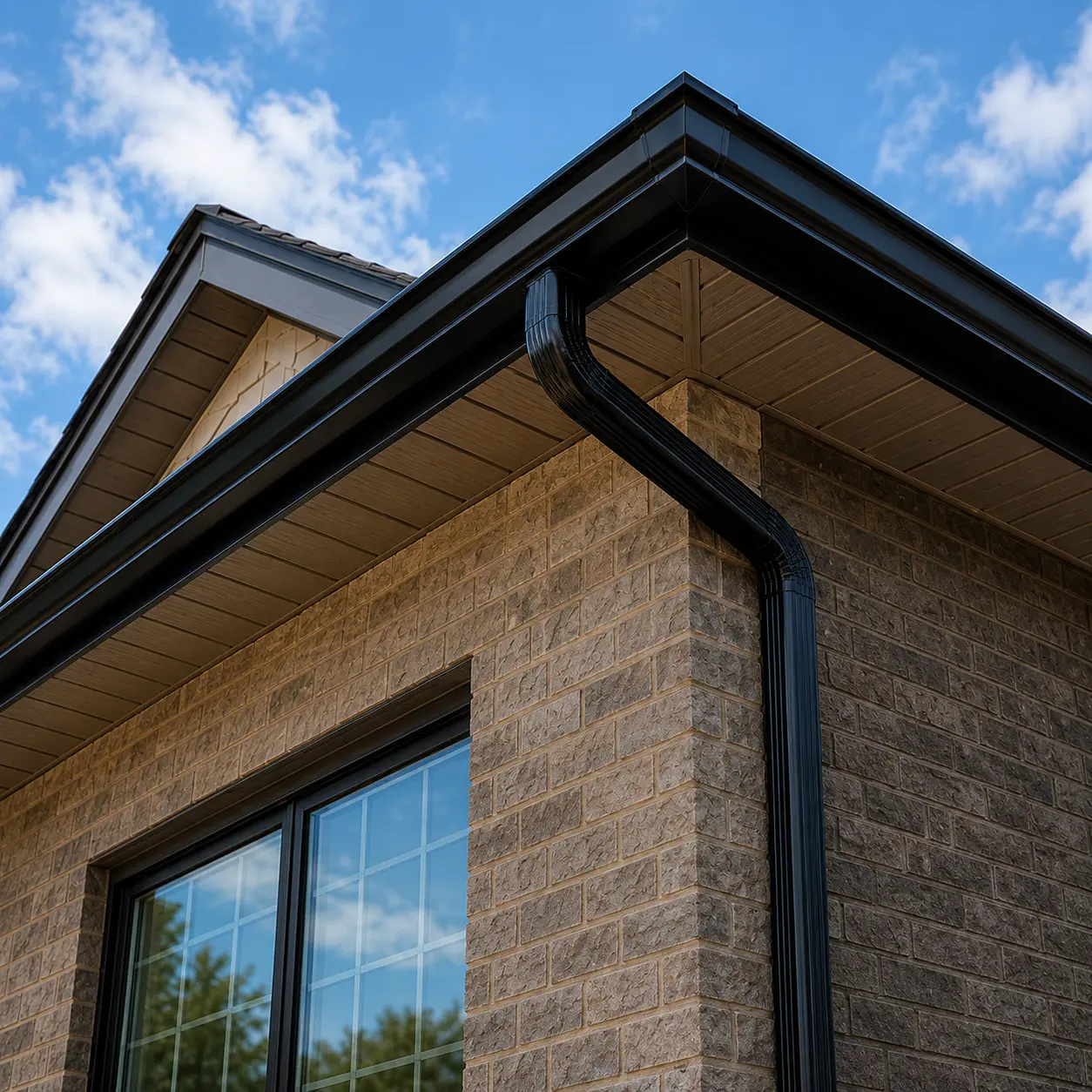
Residential Gutter Contractor Denver service should do more than replace a piece of metal at the roof edge. A dependable residential gutter system has to collect roof runoff, carry it through correctly sized outlets and downspouts, and discharge it where the water cannot simply turn around and come back toward the house.
If this is your first time hearing this, the gutter is only one part of the system. The roof, fascia, gutter pitch, hangers, outlets, downspouts, extensions, grading, and final discharge point all affect whether the home actually stays protected.
 alt="Residential gutter contractor Denver installing and inspecting a home gutter system"
loading="eager" fetchpriority="high">
alt="Residential gutter contractor Denver installing and inspecting a home gutter system"
loading="eager" fetchpriority="high">
Start With the Real Problem
A Residential Gutter System Is a Water-Control System
Most homeowners call a gutter contractor because they can see one symptom: a drip at a corner, a sagging section, water jumping over the front, a downspout that keeps separating, or a wet area beside the foundation. Those symptoms matter, but they do not always identify the real cause.
Water begins on the roof. From there it follows gravity. It can accelerate down a steep roof, concentrate in a valley, hit a short gutter run with more volume than expected, enter an outlet, travel through elbows and downspouts, and finally leave the system at ground level. If any part of that route is undersized, clogged, damaged, poorly pitched, badly supported, or aimed at the wrong place, the homeowner can still have a water problem even when the gutter itself looks new.
If this is your first time hearing this, think of the gutter as a highway rather than a bucket. Its job is not simply to hold water. Its job is to move water continuously toward an outlet before the next wave of runoff arrives. That is why a gutter can overflow even when it is clean. The problem may be a concentrated roof valley, a small outlet, too few downspouts, incorrect pitch, or a run that is too long for the layout.
At ground level, the same principle continues. A downspout that ends inches from the foundation has moved water off the roof but has not finished the job. A buried drain that is blocked or frozen can send water backward. A splash block aimed uphill can hold moisture against the structure. A good residential gutter evaluation keeps following the water until the discharge point makes sense for the property.
Residential Gutter Services
Match the Service to What the Home Actually Needs
A residential gutter hub should help you find the correct next step instead of forcing every homeowner into the same solution. Some homes need a new seamless system. Some need one corner rebuilt, a loose run secured, or a downspout moved. Others need cleaning, guards, fascia work, or a better way to discharge water after it leaves the roofline.
That is why Ernie’s Gutter separates these services. The purpose of this page is to help Denver homeowners understand the choices and then move to the detailed service page that matches the condition of the home.
Seamless Rain Gutters
Custom-formed straight runs reduce unnecessary mid-run joints and allow the system to be measured for the actual roofline. Performance still depends on correct pitch, support, outlets, downspouts, fascia, and drainage.
Explore Seamless GuttersResidential Gutter Repair
Leaks, separated corners, loose hangers, sagging runs, bad pitch, damaged outlets, and downspout problems can often be corrected when the rest of the system remains sound.
Explore Gutter RepairGutter Replacement
Widespread failure, repeated repairs, rusted material, poor sizing, badly damaged runs, or a system that was wrong from the beginning can make replacement more practical than another patch.
Explore Gutter ReplacementGutter Guards
Guards can reduce recurring debris and cleaning frequency, but they should go over a gutter system that is already draining correctly. A cover cannot fix bad pitch, weak fascia, or undersized drainage.
Explore Gutter GuardsDownspouts & Drainage
Outlets, elbows, downspouts, extensions, surface drains, and final discharge determine whether roof water truly gets away from the structure instead of collecting beside the foundation.
Explore Downspout DrainageSoffit & Fascia
The gutter needs solid material behind it. Soft, rotten, swollen, or damaged fascia should be addressed before new gutters are fastened over a weak roof edge.
Explore Soffit & FasciaResidential System Planning
What Should Be Checked Before New Gutters Go On a Denver Home?
Buying a gutter by the foot is easy. Designing a gutter system that fits a specific house takes more thought. The roof decides how much water reaches each section. The fascia determines whether the hangers have dependable backing. The outlet and downspout determine how quickly that collected water can leave. The ground around the house determines whether the water stays away after it gets there.
Five-inch residential gutters are common, but that does not automatically mean five-inch is correct everywhere. A larger system may be useful where a roof has large drainage areas, long runs, steep slopes, concentrated valleys, or other conditions that push more water into one location. The decision should be based on the roof and the water path rather than on a blanket sales pitch.
Hanger spacing matters for the same reason. Ernie’s Gutter commonly uses hidden hangers at about 24 inches on center, with closer spacing where the roofline or exposure calls for additional support. If this is your first time hearing this, “on center” simply means the measurement from the center of one hanger to the center of the next. Closer, dependable support can help the gutter resist sagging under water, debris, snow, and ice loads.
Pitch is another detail homeowners rarely see from the ground. A gutter should look clean and level to the eye while still having enough controlled slope to move water toward the outlet. Too little slope can leave standing water. Too much can look poor and create its own flow problems. The correct result is a run that drains without advertising the pitch from the sidewalk.
- Roof size and drainage area
- Valleys and concentrated runoff
- 5-inch versus 6-inch capacity
- Fascia strength and condition
- Gutter pitch toward outlets
- Hidden hanger spacing
- Outlet size and placement
- Downspout size and count
- Walkways and driveway conflicts
- Final discharge away from home
The seamless machine forms the gutter. It does not design the drainage system.
The contractor still has to measure the roofline, identify water concentration, choose the layout, establish pitch, place outlets, support the gutter, and decide where the downspouts should finish.
Repair, Replace, or Maintain
Do Not Replace a Good System — and Do Not Keep Repairing a Bad One
One of the most useful things a residential gutter contractor can do is separate a repairable problem from a worn-out system. Homeowners often assume a leak means they need all new gutters. The opposite problem happens too: a system has been patched so many times that another tube of sealant only buys a little time.
A repair makes sense when the failure is isolated and the surrounding system is still structurally sound. A leaking corner can often be cleaned and resealed. A loose section may need better fastening. A low area may need pitch correction. A damaged outlet or downspout may be replaceable without disturbing every gutter on the house.
Replacement becomes more reasonable when failures are widespread, the material has deteriorated, the system is repeatedly pulling away, multiple runs are badly pitched, rust has taken over galvanized material, the gutters are undersized for the roof, or old sectional joints keep becoming new leak points. At that point, paying for repeated service calls can cost more than solving the underlying problem.
Maintenance is the third choice and it is frequently overlooked. A structurally good gutter may simply need cleaning, downspout clearing, minor resealing, hanger adjustments, or routine inspection before the next season. That is very different from waiting until overflow has already damaged fascia, paint, siding, landscaping, or the area beside the foundation.
Repair It
Choose targeted repair when the problem is local, the fascia is sound, most runs still drain correctly, and the rest of the system has useful service life left.
Replace It
Choose replacement when failures are repeated or widespread, the system is badly sized or laid out, or deteriorated material makes continued patching a poor investment.
Maintain It
Choose maintenance when the system is fundamentally good but needs cleaning, inspection, small adjustments, and preventative attention to keep it that way.
Built Around Colorado Conditions
Why Denver Weather Exposes Weak Residential Gutters So Quickly
Denver does not give exterior drainage systems one simple season to handle. A gutter can see intense sun, hail, wind-driven debris, fast summer storms, wet spring snow, roof grit, leaves, pine needles, freeze-thaw cycling, and snowmelt over the course of one year. Those conditions do not automatically destroy a properly designed system, but they expose weak details faster.
Snow and ice add weight. If hanger spacing is poor or the fascia behind the gutter is weak, sections can begin to pull or sag. When standing water remains in a low spot and temperatures drop, repeated freezing can work joints and seams. When spring snow melts quickly under warm Colorado sun, the roof can deliver a large volume of water in a short period even though there is no rain falling.
Summer storms create a different test. A roof valley can concentrate runoff into a small target area and overwhelm a gutter that performs perfectly during light rain. Water shoots over the front, runs behind the gutter, or pounds landscaping below. Homeowners sometimes assume the gutter is clogged when the real issue is capacity or outlet placement.
Debris changes the equation again. Cottonwood fluff, leaves, needles, roofing granules, twigs, and storm debris can collect around outlets. A gutter does not have to be packed full to lose capacity. One restricted outlet can back up an entire run. That is why cleaning should include the downspout path rather than simply scooping material from the visible trough.
Snow & Ice
Extra weight and frozen standing water expose weak fastening, bad pitch, and damaged fascia.
Fast Storm Runoff
Short, intense rainfall can expose undersized gutters, restricted outlets, and poor valley planning.
Hail & Wind
Storms can dent gutters, loosen components, move debris, and damage outlets or downspouts.
Freeze-Thaw Cycles
Repeated temperature swings can magnify small leaks, trapped water, and weak connections.
Prevent Small Problems From Becoming Exterior Repairs
Residential Gutter Maintenance Is Cheaper Than Ignoring Water
 alt="Ernie's Gutter residential maintenance program Denver"
loading="lazy">
alt="Ernie's Gutter residential maintenance program Denver"
loading="lazy">
Ernie’s Gutter Maintenance Program
Good gutters still need attention. Debris accumulates, sealants age, fasteners loosen, downspouts get blocked, branches move, storms create new damage, and soil conditions around discharge points change. Preventative maintenance gives a homeowner a chance to find those conditions before the next major runoff event.
A useful maintenance visit is not just a quick scoop-and-go. The gutter should be cleared, accessible downspouts checked, obvious standing-water areas noted, visible fastening and corners reviewed, and discharge conditions observed. When a small repair is identified early, it is usually simpler than repairing fascia or siding after repeated overflow.
Homes under mature trees may need more frequent attention than open properties. Gutter guards can reduce debris entry but do not make a system maintenance-free. Fine material can still settle, surfaces can collect debris, and outlets still need to move water. The maintenance schedule should match the house rather than a one-size-fits-all promise.
Maintenance Program page link pending final live URLHow We Approach the Job
The Residential Gutter Process: Inspect the System Before Selling the Solution
Ernie’s Gutter has worked on Denver-area gutter and exterior water-control problems since 1978. The equipment and materials have changed, but the basic contractor responsibility has not: look at the home, understand the problem, explain the options, and do the work that makes sense for that property.
We start with what the homeowner is seeing. That might be overflow, a leak, a loose gutter, storm damage, peeling fascia paint, a downspout that empties into the wrong place, or simply an older system that needs an honest evaluation. From there, the inspection expands beyond the visible symptom.
Inspect
Review the gutter runs, corners, pitch, fascia, hangers, outlets, downspouts, roof concentration points, and visible discharge path.
Diagnose
Separate the symptom from the cause. A leak can be a failed seal, but overflow may come from a restriction, bad pitch, inadequate outlet, or roof concentration.
Recommend
Explain whether repair, maintenance, guards, drainage correction, fascia work, or replacement is the practical next step.
Verify Flow
Complete the work with the water path in mind so the system does more than look straight — it has to move water where it belongs.
Family owned since 1978. Three generations of hands-on exterior trade experience.
We are not trying to make every phone call become a full replacement. The better outcome is the correct scope for the condition of the home, with the homeowner understanding why that scope makes sense.
Homeowner Warning Signs
When Should You Call a Residential Gutter Contractor?
You do not need to wait for a dramatic failure. Gutter problems often announce themselves quietly before the repair becomes expensive. Dark stains beneath the roof edge, mulch that keeps washing away, one area of fascia that stays wet, or an icy patch that forms under the same downspout every winter can all be clues that water is leaving the intended path.
Pay special attention after hail, strong wind, heavy wet snow, spring melt, or a hard summer storm. Look from the ground. Do not climb onto a wet or icy roof to investigate. A safe visual check can often identify a section pulling away, a crushed downspout, fresh overflow marks, a separated elbow, or a gutter that suddenly sits lower than it did before.
- Water spilling over the front edge
- Water leaking behind the gutter
- Standing water after the storm ends
- Gutters pulling away from fascia
- Sagging between hanger locations
- Leaking corners or end caps
- Downspouts backing up or separating
- Soft, stained, or peeling fascia
- Soil erosion below the roof edge
- Pooling water near the foundation
- Repeated ice near downspout outlets
- New dents or damage after hail
Continue Your Homeowner Research
Helpful Residential Gutter Resources
Seamless Rain Gutter Denver
Learn how continuous gutter runs are formed, where seamless construction helps, and why pitch, fascia, outlets, downspouts, and discharge still determine performance.
Gutter Repair Denver
Review common repairable conditions including leaking corners, loose hangers, bad pitch, damaged outlets, and isolated sections that can still be restored.
Gutter Replacement Denver
Understand when repeated repairs stop making financial sense and what should be considered when an older system is replaced.
Gutter Guards Denver
Learn what guards can reduce, what they cannot eliminate, and why the base gutter system should be corrected before adding a cover.
Downspout Drainage Systems
Follow the water beyond the roof edge and see why downspout placement, extensions, drainage connections, and final discharge matter.
Soffits & Fascia Wrap
Understand the roof-edge structure behind the gutter and why failed wood should be repaired before it is covered or used to support a new system.
Straight Answers for Denver Homeowners
Frequently Asked Questions About Residential Gutters
What does a residential gutter contractor actually inspect?
Do I need gutter repair or full gutter replacement?
Are seamless gutters better for a Denver home?
Should my house have 5-inch or 6-inch gutters?
How far apart should residential gutter hangers be?
Can new gutters be installed over rotten fascia?
Do gutter guards eliminate gutter cleaning?
Why does my gutter overflow only during hard rain?
Can a downspout cause foundation water problems?
How often should residential gutters be checked in Denver?
General Information Disclaimer: This page is for homeowner education and does not replace an on-site inspection. Roof configuration, fascia condition, gutter sizing, downspout routing, soil grade, drainage, and site conditions vary from property to property.
Denver Residential Gutter Service Since 1978
Get the Gutter Problem Diagnosed Before You Spend Money on the Wrong Fix
Repair it, maintain it, improve the drainage, or replace it when replacement is actually the right answer.
#1 Rated Seamless Gutter Contractor In Denver
Craftsmanship That Stands Like a House
Let’s Get Your Project on the Right Track

Let’s Get Started