
Modified Torchdown Roof System in Denver
Modified Torchdown Roof
When you own a flat or low-slope roof in Denver, you don’t have a lot of room for mistakes. If the roofing system isn’t done right, water finds every weak spot, backs up at seams, and shows up later inside your living room or office. A modified torchdown roof system is one of the most proven, long-lasting options for Denver’s mix of sun, snow, and freeze‑thaw cycles when it’s installed by someone who knows what they’re doing.
We’ve been roofing in Denver since 1978 as a third-generation family contractor, and we’ve seen what works and what fails on low-slope roofs from West Colfax to southeast Denver. This page walks you through what a modified torchdown system is, why it matters in our climate, how it ties into gutters and drainage, and when it’s time to bring in a professional instead of trying to patch it yourself. If this is your first time hearing “modified bitumen,” “torchdown,” or “low-slope membrane,” don’t worry—we’ll keep it in plain English.
Background / Fundamentals
What is a modified torchdown roof system?
A modified torchdown roof system (often called modified bitumen or “mod bit”) is a type of low-slope roofing made from asphalt that’s been “modified” with polymers to improve flexibility, durability, and weather resistance. It typically comes in rolls, gets laid over a proper base, and is fused together using a torch or other heat‑welding methods to create a continuous, waterproof membrane.
Instead of individual shingles that overlap, you get a layered system that’s designed to handle standing water better, bridge minor movements in the structure, and resist cracking in cold weather. For Denver homes and small commercial buildings with flat or low‑pitch sections—porches, additions, garages, and full flat roofs—it’s a workhorse system when installed correctly.
Key components of a modified torchdown system
A typical modified torchdown roof system in Denver will include:
-
Decking: the structural surface (usually wood or concrete) the roof is built on.
-
Underlayment or base sheet: a base layer that smooths the surface and adds protection.
-
Modified bitumen cap sheet: the main waterproof layer, torched or heat‑fused in place.
-
Flashings: metal and membrane details where the roof meets walls, chimneys, skylights, and edges.
-
Drains, scuppers, or edge details: where water leaves the roof and heads toward gutters or downspouts.
Each part has a job. If one is rushed or skipped, that’s where leaks and early failure show up first.
How the system actually works
Think of a modified torchdown roof as a tight, layered jacket for your flat roof. The base layer smooths and protects the structure, the modified bitumen cap sheet keeps water out, and all seams and transitions are welded or sealed to create a continuous surface. When it rains or snow melts, water should move across the roof toward drains, scuppers, or edges and then into properly sized gutters and downspouts.
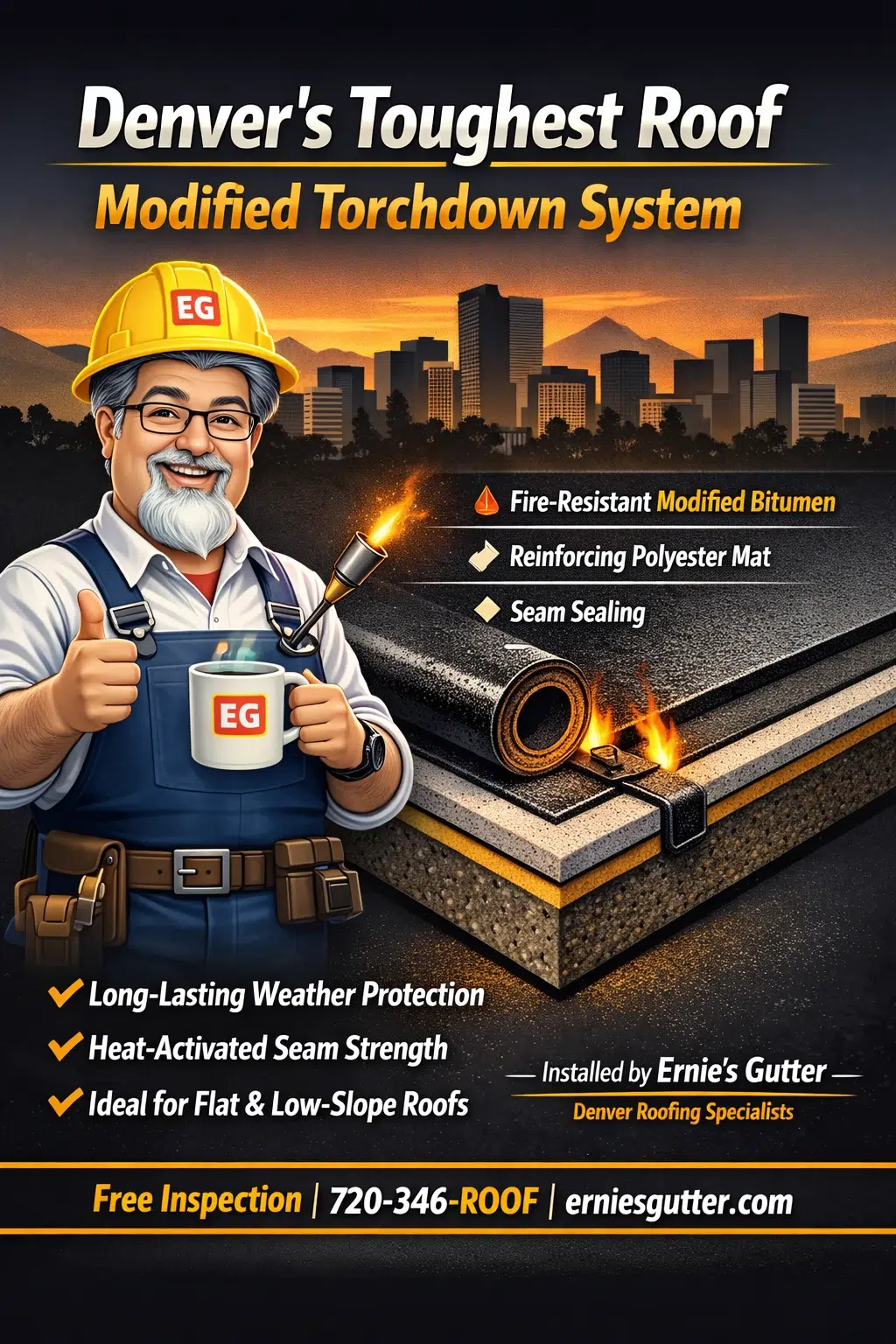

The reason modified bitumen is popular in Denver is that it stays flexible in cold weather and handles our strong sun better than old-school, unmodified tar and felt roofs. When done right, you get fewer cracks at seams, fewer blisters, and better long‑term performance under snow loads and freeze‑thaw cycles.
Common Problems in Denver
Snow, ice, and freeze‑thaw cycles
Denver sees big temperature swings—sunny and above freezing in the afternoon, hard freeze at night. On a flat or low-slope roof, that’s rough on any membrane system. Snow melts during the day, water moves across the roof, then freezes again at night. That expansion and contraction puts stress on seams, flashings, and any weak spots in the system.
If the roof wasn’t installed correctly, you may see:
-
Small splits or cracks along seams.
-
Blisters or bubbles where moisture got trapped.
-
Ice building up at low spots or drains.
-
Water backing up at parapet walls and roof edges.
Over time, that’s where leaks start—often showing up inside long after the weather that caused the damage has passed.
Older homes vs newer builds
In older Denver neighborhoods—Baker, West Washington Park, Highlands, and similar areas—you’ll see a lot of flat and low‑slope sections built decades ago. Many of those roofs have been patched and repatched with different materials over the years. Sometimes you have layers of old tar and gravel, patched torchdown, and random coatings stacked on top of each other.
On newer builds, you might see lightweight structures and value‑engineered details that are more sensitive to standing water and poor drainage. A modified torchdown system can work well in both cases, but the approach is different. Older homes often need careful tear‑off, deck repairs, and re‑sloping. Newer homes usually demand tighter detailing and quality control so the roof performs for the long haul.
Poor installations and shortcuts
The most common problems we see in Denver with modified torchdown roofs usually come back to shortcuts:
-
Inadequate surface prep, leaving old blisters or soft spots under the new membrane.
-
Rushed torching that leaves cold seams or poorly bonded laps.
-
Weak flashing work at walls, chimneys, valleys, and skylights.
-
No thought given to where water actually goes once it hits the roof.
These shortcuts may not show up in the first year or two. But once our weather cycles through a few winters, the roof starts telling on itself—especially around drains, terminations, and transitions to gutters and downspouts.
How This Affects Gutters & Drainage
Water flow on low-slope roofs
A modified torchdown roof is only as good as its drainage plan. On a low-slope roof in Denver, you want water to move steadily to the point where it leaves the roof—internal drains, scuppers, or the outer edge tied into gutters. If the slope is wrong or the drainage is undersized, water will pond.
Ponding water:
-
Accelerates wear on the membrane.
-
Adds unnecessary weight to the structure.
-
Makes small defects turn into leaks faster.
A proper modified torchdown system and a proper gutter/downspout setup have to be designed together, not separately.
Fascia, soffit, siding, and foundation risks
When drainage is poor or gutters are undersized or clogged, water doesn’t just stay on the roof. It runs over the edges where it shouldn’t and starts damaging other parts of the house:
-
Fascia boards: They rot when water constantly runs behind or overflows the gutter.
-
Soffits: They can swell, stain, and eventually fall apart if water keeps backing up.
-
Siding: Water streaks and rot show up along the top edges or where downspouts dump too close.
-
Foundation: Water falling close to the house increases the risk of settlement, cracks, and basement moisture.
If you see peeling paint, dark staining, or soft wood at the edges of a low-slope roof, that’s usually a sign that the roof, the modified torchdown system, and the gutters are not working as a team.
What fails first—and why
On a modified torchdown roof system in Denver, the first failures we usually find are:
-
Seams near ponding areas.
-
Flashings at walls and parapets.
-
Transitions to metal edge and gutter details.
-
Around skylights, vents, and mechanical equipment.
That’s because those are the spots that see the most movement and the longest exposure to standing water and ice. If the original installer cut corners, used the wrong materials, or skipped critical details, those areas will tell the story.
DIY vs Professional Solutions
What homeowners can do safely
There are a few things a Denver homeowner can safely handle on or around a modified torchdown roof system, especially if the roof is accessible and you’re comfortable working carefully at height:
-
Visual inspections from a ladder: looking at edges, gutters, and fascia for signs of water damage.
-
Gutter cleaning: keeping gutters and downspouts clear so water can actually leave the roof.
-
Checking for obvious debris: branches, trash, or objects that might be blocking scuppers or drains.
Basic maintenance like this goes a long way, especially before and after winter.
What should never be DIY
Torchdown work is not a DIY project. Heating a modified bitumen roll with an open flame around wood framing, siding, and old dry materials is not something you want to experiment with.
Things that should be left to a professional Denver roofing contractor:
-
Installing or replacing a modified torchdown roof system.
-
Re‑torching seams or patching membranes with open flame.
-
Rebuilding flashings and transitions at walls, skylights, and chimneys.
-
Re‑sloping or re‑decking low-slope sections.
The risk isn’t just doing it wrong—it’s fire, hidden leaks, and voided warranty on the roof system.
Warning signs that require a contractor
If you see any of the following on your Denver home or building, it’s time to call a roofing contractor who knows modified torchdown systems:
-
Persistent ponding water that doesn’t dry out a couple of days after storms.
-
Bubbles, blisters, or soft spots in the membrane.
-
Cracks at seams, corners, or where the roof meets walls.
-
Interior staining on ceilings or walls under flat or low-slope sections.
-
Rotten fascia, soffit, or peeling paint around the roof edge.
These issues usually mean the problem is beyond simple gutter cleaning or caulking.
Professional Best Practices
How we approach modified torchdown systems
As a Denver roofing contractor that’s been on flat and low-slope roofs since 1978, our approach is straightforward: do it once, do it right, and build it to last our weather.
A typical professional approach includes:
-
Full inspection: roof, flashings, drainage, gutters, and soffit/fascia conditions.
-
Honest recommendation: repair, restoration, or full replacement based on what we actually find.
-
Proper tear‑off (when needed): removing failing layers so the new system can perform.
-
Correct substrate and slope: making sure water has a path off the roof.
-
High‑quality modified bitumen materials matched to Denver’s climate.
-
Detailed flashing work at every critical point.
We treat the modified torchdown roof as part of the entire water‑control system, not just a surface.
Materials, methods, and longevity
A well-installed modified torchdown roof system in Denver can offer many years of service when:
-
The membrane is properly matched to the building and use.
-
Seams are fully welded and checked.
-
Flashings are built with the right metals and details.
-
Drainage is sized and set up correctly.
We focus on materials and methods that have a track record in our climate—not just what’s cheapest on paper. The goal is a system that stays flexible in winter, stands up to summer sun, and keeps water moving to the gutters and away from your home.
Why experience matters
Flat and low-slope roofs don’t forgive mistakes. A contractor who has worked through Denver winters for decades has seen what happens when a detail looks fine on paper but fails in real life. That experience shows up in:
-
How we design and place drains and scuppers.
-
How we transition from roof membrane to metal edges and gutters.
-
How we choose materials for tricky spots like inside corners and parapets.
You’re not just paying for a product; you’re paying for judgment earned over thousands of roofs and storm seasons.
Denver-Specific Advice
Local building styles and details
Denver has a mix of older brick homes, mid‑century houses, and newer modern builds, and a lot of them have some type of flat or low-slope section. Each style comes with its own roofing quirks:
-
Older brick with parapet walls: needs careful flashing and scupper details.
-
Mid‑century additions and garages: often under‑sloped and under‑drained.
-
Modern designs with big flat sections: look clean but can be unforgiving if drainage is not thought through.
A modified torchdown system can be tailored to each of these, but the details matter.
Weather realities in Denver
In Denver, your roof has to handle:
-
Intense UV exposure at elevation.
-
Sudden snow, fast melt, and repeat freeze‑thaw.
-
Wind events that test edge details and flashings.
When we design and install a modified torchdown roof system, we’re thinking about how it’s going to perform on an icy January morning and a hot July afternoon, not just how it looks on day one.
Long-term ownership thinking
If you plan to hold your Denver home or building long term, it usually pays to invest in a properly installed modified torchdown system instead of chasing leaks with patch buckets. Long‑term thinking looks like:
-
A system built to match the life of the structure, not just the next buyer.
-
Roof, gutters, and drainage that work as a combined solution.
-
Regular inspections and basic maintenance instead of waiting for ceiling stains.
Done right, your flat or low-slope roof can be one of the most reliable parts of the building instead of the one you dread every storm.
OUR SERVICES
Your Neighborhood Roofing Contractor
Get more information concerning our service, do not wait to call us at 720 346 ROOF today. We’ll be more than happy to schedule a meeting with you.

Residential Roofing Contractor
Ernie’s Roofing specialize in residential roofing in Denver and have a team of experienced professional Roofers available to help you get the job done right The First Time. From minor repairs and maintenance to full–scale roof replacements,

Commercial Roofing
We construct, repair, as well as maintain Commercial Roofing systems for services both large and also small, creating personalized services that conserve our client’s time, cash, and also power. Call us at 720 346 ROOF and book a consultation today.

Hail Damage
Their knowledgeable staff is ready to help you assess the damage caused by storms and provide you with a comprehensive repair evaluation & plan. We specialize in all types of roof damage, including hail, wind, and even lightning strikes. Hail Claim Help

INSURANCE CLAIMS HELP
Our team of experienced insurance claim specialists will work with you to ensure that the insurance claim process is as stress-free as possible. We will work with your insurance company to provide all necessary documentation and estimates to ensure that your claim is processed quickly and correctly.

Wind Damage
When it comes to roof damage, it can be difficult to determine whether the damage was caused by hail or wind. While both types of damage can cause similar symptoms, they have different causes and require different repair methods.