
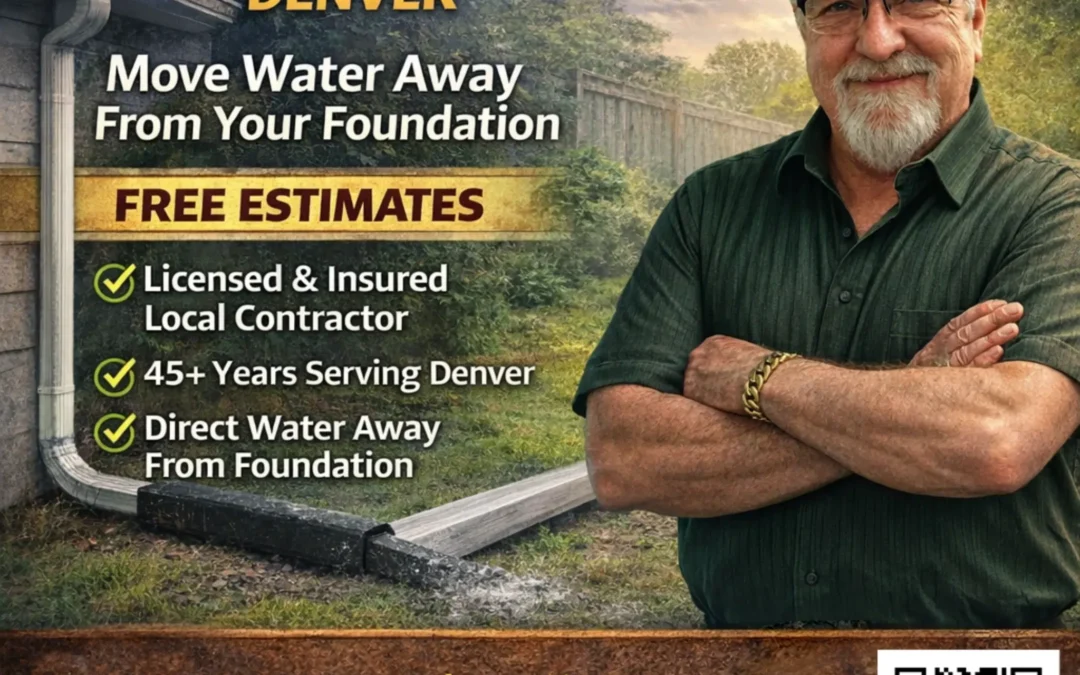
Rain Gutter Downspout Extensions Denver foundation protection


The most common mistake homeowners make
The most common mistake is assuming the gutter did its job because the water made it into the downspout.
That is only half the system.
If the downspout ends too close to the house, water still:
• saturates soil beside the foundation
• creates muddy areas and washout
• freezes on sidewalks and driveways
• works back toward basements and crawl spaces
Ernie’s published guidance says water should discharge well away from the home, with one page recommending at least six to ten feet where grading allows, while other site content recommends at least four to six feet away from the foundation. The safe takeaway is simple: the farther the water is moved from the structure, the better, as long as the yard can handle it.
Are downspout extensions good
Yes, when they are planned correctly.
A good downspout extension:
• moves water away from the foundation
• reduces erosion near the home
• lowers the chance of basement moisture
• helps control winter ice near walks
• finishes the drainage job the gutter started
The old page on your site asks whether downspout extensions are good. The better answer is this: they are not optional when water is being discharged too close to the home. They are one of the simplest and most practical ways to protect the foundation.
Surface extensions versus buried drainage
Homeowners usually want one of two solutions.
First is a visible extension across the lawn or planting area. This is the straightforward solution. It is affordable, easy to inspect, and easy to correct if there is a clog or slope issue.
Second is a buried drainage line. This looks cleaner, but it needs to be done right. Ernie’s site has a separate page focused on underground drainage and another page discussing the risks of simply hiding drainage underground without a proper plan. That tells you exactly how this page should be positioned: extensions are useful, but layout, slope, discharge point, and maintenance matter.
Walkways, trip hazards, and winter slip hazards
This is where bad shortcuts happen.
When a downspout sits near a walkway, patio, or driveway, homeowners often do one of three things:
• run the extension across the walkway and create a trip hazard
• stop the extension short and let water freeze on concrete
• bury or reroute the water correctly
Your newer downspout extension content already makes this point well. If the water lands near concrete in winter, it becomes a skating rink. That is not just inconvenient. That is a liability problem.
What makes an extension setup work
A proper extension setup is not just a piece of pipe clipped on the end.
It has to account for:
• discharge distance
• yard slope
• sidewalk and driveway paths
• soil washout risk
• winter freeze areas
• whether underground drainage makes more sense
That is why this should be positioned as a drainage decision page, not just a hardware page. Your current site already supports that direction with newer pages on drainage systems, runoff solutions, and downspout routing.
When a simple extension is enough
A standard extension is often enough when:
• the yard slopes away from the house
• discharge can run into open lawn area
• there is no nearby walkway hazard
• the volume of water is moderate
In these cases, the goal is simple. Get the water away from the structure and let it disperse safely.
When you need more than an extension
An extension alone may not be enough when:
• the yard pitches back toward the home
• the discharge point is near a walkway
• the property gets heavy runoff
• water still pools after being moved away
• erosion is already happening
• there are basement or crawl space moisture issues
That is where drainage redesign, additional downspouts, buried piping, or full downspout routing comes into play. Your own site already has newer pages that support this next step and make it clear that extensions are often part of a bigger drainage solution.
Cleaning versus drainage correction
This page also needs to make one thing clear.
Cleaning is maintenance. It is not drainage correction.
A clean gutter can still dump water in the wrong place. A clean downspout can still discharge too close to the house. That is why this topic belongs inside the larger funnel of cleaning, repair, installation, and drainage control.
Cleaning helps flow.
Extensions control where the water ends up.
Those are not the same thing.
What this page should own
This page should own one message:
Downspout extensions are a foundation protection issue.
Not a side topic. Not an afterthought. Not just a plastic add on from the hardware store.
If water is landing too close to the house, the system is unfinished.
FAQ
How far should a downspout extension move water from the house?
A safe target is at least four to six feet, and in many cases six to ten feet is even better when grading allows it. Ernie’s site uses both ranges on different pages, which still points to the same rule: get the water well away from the structure.
Are downspout extensions good for foundations?
Yes. They help reduce water buildup beside foundation walls and lower the chance of erosion and basement moisture.
Do downspout extensions help in winter?
Yes. They can reduce ice buildup near the house and help keep water off sidewalks and driveways when routed correctly.
Can I just use a splash block instead of an extension?
Sometimes, but splash blocks are usually a lighter duty option. Site content from Ernie’s says splash blocks help disperse water, while extensions move it farther away.
Should downspout extensions be buried?
Sometimes. Buried drainage looks cleaner, but it has to be installed correctly with proper slope and discharge. Otherwise it becomes a hidden problem.
Can extensions create trip hazards?
Yes. Surface extensions across walkways or traffic paths can become trip hazards.
Can extensions help stop yard erosion?
Yes. Moving water farther out reduces washout near the foundation and roof edge discharge zones.
Do I still need gutter cleaning if I have extensions?
Yes. Extensions do not replace cleaning. Debris still has to be removed so the system can flow properly.
When is an extension not enough?
When the yard slopes wrong, runoff volume is high, or water still pools after discharge. That is when full drainage correction may be needed.
Why refresh this page at all?
Because the older page is dated and thin, while newer pages on your site already frame downspouts and drainage as a more complete system. This refresh aligns the topic with that stronger authority structure.
Protection starts at the top of the home
This content is provided for general informational and educational purposes only. It does not constitute professional construction, roofing, or contracting advice. Every property, structure, and situation is different. Always consult a qualified roofing or gutter professional for inspections, recommendations, and repairs specific to your home or building.
OUR SERVICES
Best Gutter Installation
Get more information concerning our service, do not wait to call us at 720 346 ROOF today. We’ll be more than happy to schedule a meeting with you.

Residential Gutter Contractor
Ernie’s Gutter specializes in residential gutter installation in Denver and has a team of experienced professional gutter installers available to get the job done right The First Time. From minor repairs and maintenance to full–scale gutter replacements.

Commercial Gutter
Commercial gutter needs with ease. Our seamless gutters are made using only the highest quality materials and are built to last. With our custom fit, your new gutters will fit your project perfectly and look great!. Call us at 720 346 ROOF and book a consultation today.

Gutter Guards
Gutter guards come in a variety of materials, sizes, and colors so you can customize them to fit your home’s aesthetic. Gutter guards are designed to help keep the leaves from entering your gutters Hail Claim Help

Downspouts and Extensions
Downspout for Drainage is the place to go for all your system needs.We understand the importance of properly managing water runoff and are committed to ensuring that your home or business is protected from potential flooding or water damage.

Gutter Repair
When it comes to Gutter Repair, it can be difficult to determine whether the damage was caused by hail or wind or age. While all types of damage can cause similar symptoms, they have different causes and require different repair methods.