
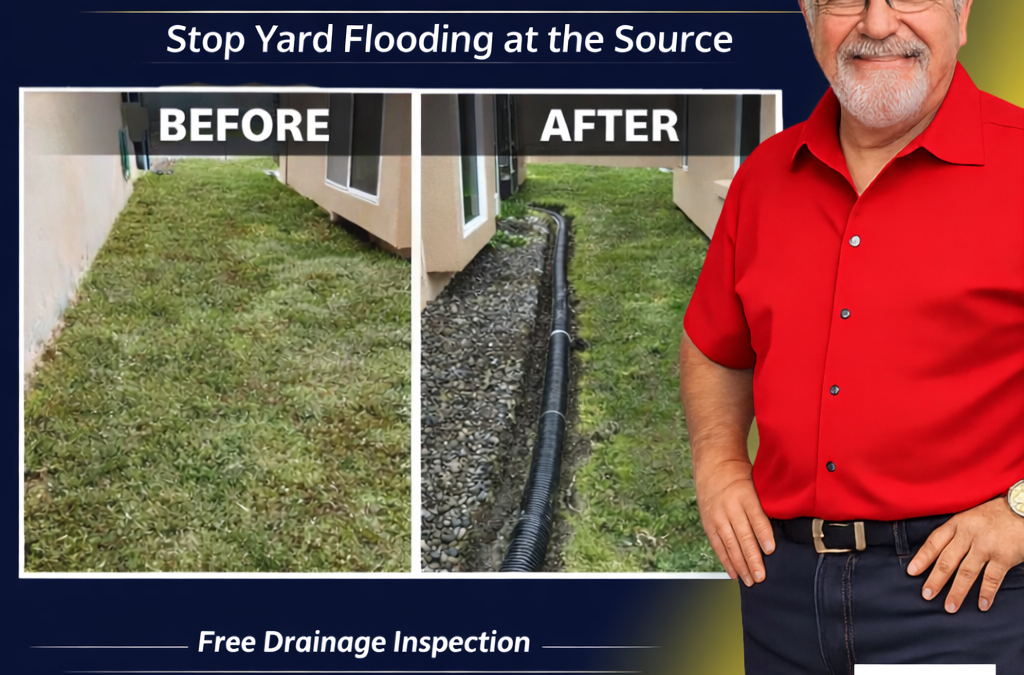
French Drain Installation Denver, CO Drainage System
French Drain Installation Denver
Water doesn’t just show up out of nowhere. It follows patterns. It follows gravity. And in Denver, with snow melt, freeze thaw cycles, and heavy summer storms, if your yard doesn’t have a place to send that water, it’s going to sit, spread, and eventually cause damage.
If this is your first time hearing this, here’s the straight truth most homeowners don’t get told: standing water in your yard is not the problem. It’s the warning sign. The real problem is what’s happening under the surface.
When water saturates soil over and over again, especially here in Colorado where clay is common, it starts to hold moisture longer than it should. That leads to foundation pressure, basement seepage, and long term structural issues that don’t show up right away. By the time you see the damage inside, the problem has already been working for years.
That’s where a properly built French drain system comes in. Not the cheap version. Not the “throw some pipe in the ground and hope for the best” version. A real system designed from a roofing contractor’s perspective, where water control starts at the top of the home and continues all the way through the property.
We’ve been doing this in Denver since 1978, and the biggest mistake we see is not bad materials. It’s bad design. No slope. No separation of systems. No understanding of how water actually behaves in this climate.
Featured Answer
A French drain installation is designed to collect subsurface water and move it away from your home through a sloped trench filled with stone and perforated pipe. In Denver, proper grading, fabric protection, and separation from roof runoff systems are critical to prevent clogging, backups, and long term water damage.
Why French Drains Fail in Denver Yards
Most failed drainage systems we tear out all have the same problems. And they usually start with someone trying to save a few bucks.
Here’s what typically goes wrong:
• No consistent slope in the trench
• Corrugated pipe installed uneven
• Mixing roof runoff with French drain systems
• No fabric used around the stone
• Improper fittings restricting flow
• No cleanouts for maintenance


In Denver, that freeze thaw cycle makes everything worse. Water gets in, freezes, expands, and shifts the soil. If your system isn’t built right from day one, it won’t last.
What should have been a fix turns into a full replacement.
Related service: https://erniesgutter.com/downspouts-and-gutters/
How a French Drain Actually Works
A lot of homeowners think a French drain is supposed to catch rainwater right away. That’s not what it’s built for.
A French drain is designed to handle groundwater.
Here’s how it works step by step:
• Water saturates the soil below the surface
• That water finds the path of least resistance
• The stone trench provides that path
• Water flows through the voids in the gravel
• It enters the perforated pipe
• The pipe carries it away to discharge
That’s why after a heavy rain, your yard may still look flooded for a short time. But give it 20 to 30 minutes, and you’ll see it start to dry out faster than surrounding areas.
That’s the system doing its job.
Denver Soil Conditions and Why They Matter
Denver is not easy ground to work with. You’re dealing with:
• Clay heavy soils
• Expansive soils that hold water
• Freeze thaw cycles
• Sudden storm events
Clay is the big one. Clay doesn’t drain fast. It holds water. So even with a French drain, drainage takes longer than sandy soil areas.
That means your system needs to be designed with patience in mind, not shortcuts.
If you’re trying to move large volumes of surface water fast, you need additional systems. Catch basins. Channel drains. Not just a French drain.
Related service: https://erniesgutter.com/seamless-rain-gutter-denver/
Proper French Drain Installation Process
This is where most installs fall apart. The steps matter. Every single one.
Step 1: Excavation and Slope Control
The trench is everything.
You don’t just dig a trench and throw pipe in. You shape it. You check it. You confirm slope with water if needed.
Water must flow downhill. Always.
Step 2: Fabric Installation
Geotextile fabric lines the trench completely.
This is not optional.
Without it:
• Soil clogs the stone
• Voids disappear
• Water stops moving
With it:
• System stays clean
• Water flows freely
• System lasts decades
Step 3: Stone and Pipe Placement
• Base layer of stone
• Perforated pipe installed
• More stone added around pipe
The stone is not just filler. It creates space for water to move.
Step 4: Full Fabric Wrap
The entire system gets wrapped like a burrito.
This protects the system from:
• Roots
• Clay
• Sediment
Step 5: Backfill and Surface Grading
• Thin soil layer on top
• Sod installed
• Slight slope toward drain
You’re guiding water to the system, not hoping it finds it.
Related service: https://erniesgutter.com/gutter-repair-denver/
Dual System Design: Roof Runoff vs French Drain
This is where most contractors get it wrong.
They combine everything into one pipe.
Big mistake.
Here’s the reality:
Roof runoff is high volume water.
French drains handle slow moving groundwater.
When you combine them:
• System overloads
• Pipe backs up
• Drain fails
Correct approach:
• Solid pipe for roof runoff
• Separate perforated pipe for French drain
• Separate discharge lines
That’s how you build it to last.
Cleanouts and Long Term Maintenance
If you can’t access the system, you can’t maintain it.
Every proper install includes cleanouts:
• At the start of the system
• At transitions
• At discharge points
Add leaf filters at downspouts if needed.
This keeps debris out and gives you access if anything ever needs to be flushed or cleared.
Common DIY Mistakes to Avoid
Let’s call it like it is.
Most DIY drainage projects fail because of these:
• No slope verification
• Using cheap corrugated pipe
• Skipping fabric
• Mixing drainage systems
• No discharge planning
• No maintenance access
You can do it yourself. But you have to do it right.
Otherwise, you’re just digging a future problem.
When You Need More Than a French Drain
A French drain is not a cure all.
You may also need:
• Surface drains for heavy runoff
• Downspout extensions
• Channel drains near patios
• Full drainage system design
Water problems are solved in layers, not one pipe.
Related service: https://erniesgutter.com/downspouts-and-gutters/
FAQs
What is a French drain used for?
A French drain removes subsurface water from saturated soil and redirects it away from your home.
Will a French drain stop yard flooding during rain?
No. It helps after the rain by draining groundwater faster.
How deep should a French drain be?
Typically 12 to 24 inches depending on soil and drainage needs.
Do French drains need maintenance?
Yes. Cleanouts allow periodic inspection and flushing if needed.
Can I connect my downspouts to a French drain?
No. Roof runoff should be on a separate solid pipe system.
What kind of pipe is best?
Perforated pipe for the drain, solid SDR pipe for roof runoff.
Why is fabric important?
It prevents clogging and keeps the system functioning long term.
How long does a French drain last?
Properly installed systems can last decades.
Does clay soil affect performance?
Yes. It slows drainage but the system still works.
Is gutter cleaning enough to fix drainage issues?
No. Cleaning helps maintenance, but it does not fix grading or drainage failures.
Protection starts at the top of the home
This content is provided for general informational and educational purposes only. It does not constitute professional construction, roofing, or contracting advice. Every property, structure, and situation is different. Always consult a qualified roofing or gutter professional for inspections, recommendations, and repairs specific to your home or building.
OUR SERVICES
Best Gutter Installation
Get more information concerning our service, do not wait to call us at 720 346 ROOF today. We’ll be more than happy to schedule a meeting with you.

Residential Gutter Contractor
Ernie’s Gutter specializes in residential gutter installation in Denver and has a team of experienced professional gutter installers available to get the job done right The First Time. From minor repairs and maintenance to full–scale gutter replacements.

Commercial Gutter
Commercial gutter needs with ease. Our seamless gutters are made using only the highest quality materials and are built to last. With our custom fit, your new gutters will fit your project perfectly and look great!. Call us at 720 346 ROOF and book a consultation today.

Gutter Guards
Gutter guards come in a variety of materials, sizes, and colors so you can customize them to fit your home’s aesthetic. Gutter guards are designed to help keep the leaves from entering your gutters Hail Claim Help

Downspouts and Extensions
Downspout for Drainage is the place to go for all your system needs.We understand the importance of properly managing water runoff and are committed to ensuring that your home or business is protected from potential flooding or water damage.

Gutter Repair
When it comes to Gutter Repair, it can be difficult to determine whether the damage was caused by hail or wind or age. While all types of damage can cause similar symptoms, they have different causes and require different repair methods.