
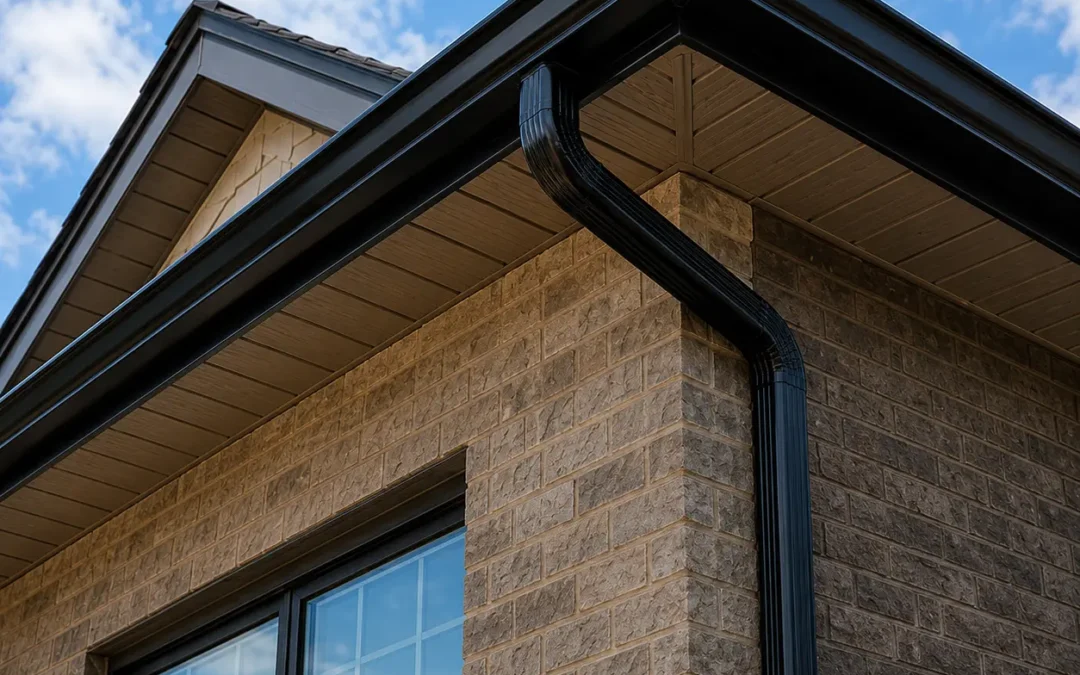
Gutter Drainage Solutions Denver
Gutter Drainage Solutions Denver homeowners need begin where the downspout reaches ground level. We diagnose buried downspout lines, short extensions, poor discharge locations, pooling, erosion and runoff that keeps returning toward the home instead of simply assuming the gutter itself needs replacement.
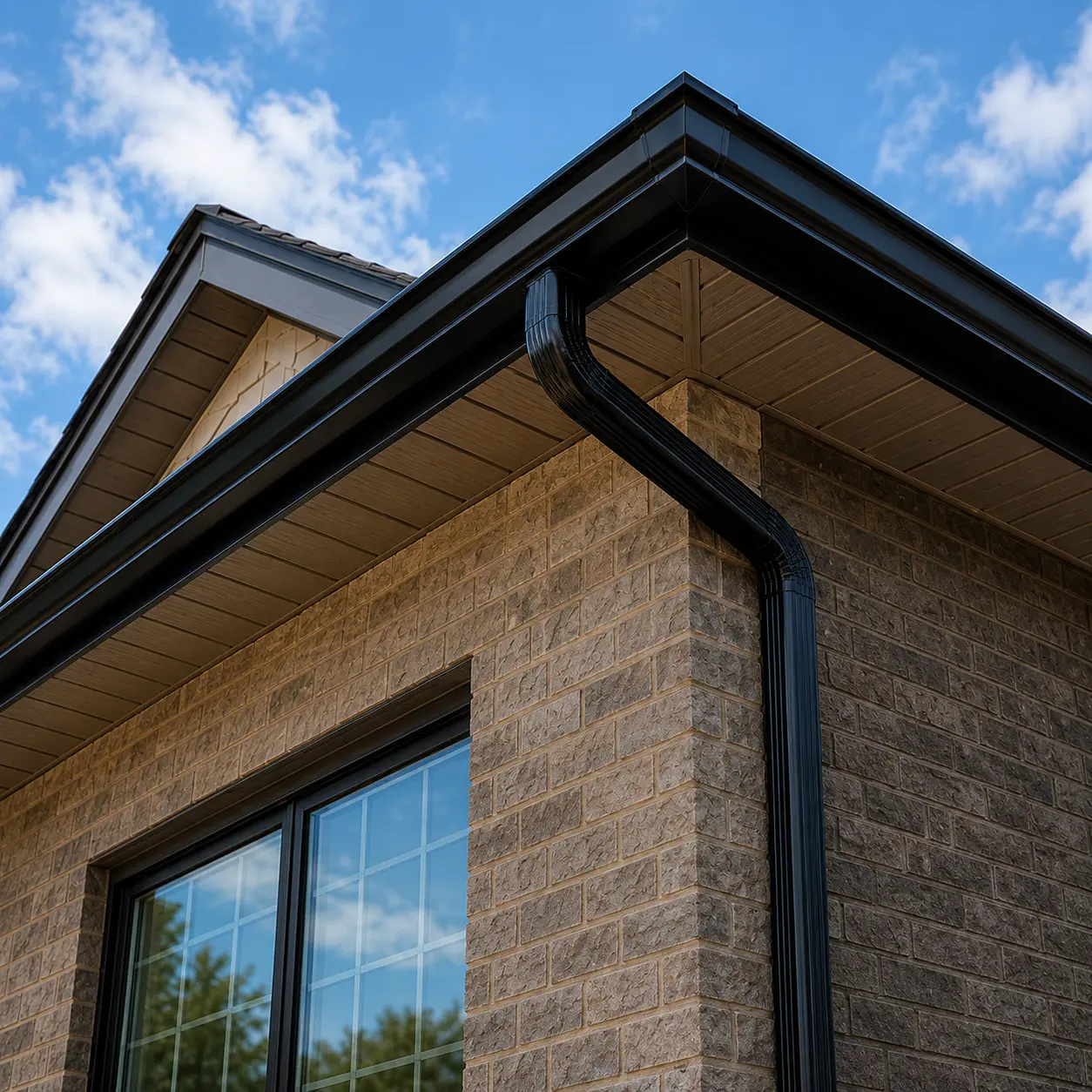
The Gutter Can Work Correctly and the Property Can Still Have a Drainage Problem
If this is your first time hearing this, there is an important difference between a gutter problem and a ground-level drainage problem. The gutter collects water at the roof edge. The downspout carries that concentrated runoff toward the ground. What happens after that point is a separate part of the water-control system.
A homeowner can have properly pitched gutters, open outlets and functioning downspouts and still find standing water next to the foundation after every storm. We also see water washing mulch into sidewalks, cutting channels through lawns, reaching basement window wells, crossing driveways and freezing into the same patch of ice every winter.
Those conditions are not automatically reasons to replace the gutters.
This is why we keep the job of this page specific. For the complete roof-edge system, including gutters, outlets, downspout sizing, placement, elbows and overall water movement, see our Downspouts and Gutters Denver guide.
This page goes deeper into what happens once concentrated roof water reaches the ground and needs a practical route away from the structure.
Start With the Final Outlet
After working on Denver-area homes since 1978, we have learned that the most expensive drainage correction is not necessarily the best correction.
Sometimes a longer above-ground extension is enough. Sometimes the downspout needs to move. Sometimes an existing underground line needs to be opened, repaired or re-routed.
Sometimes the property simply does not provide a sensible underground outlet without additional grading or drainage work.
The first job is diagnosis: where does the water start, where does it travel and where can it safely finish?
Page Guide
Why Ground-Level Gutter Drainage Systems Fail
Most drainage failures are not mysterious. Water is usually being collected correctly but is delivered to the wrong location, trapped inside a system that cannot release it, or sent through a route that was never designed around the volume of roof runoff reaching it.
A downspout takes water from a relatively large roof area and concentrates it into a small outlet. During a fast Denver thunderstorm or a period of rapid snowmelt, that outlet may be carrying runoff from hundreds of square feet of roof.
If that water is released within a foot or two of the foundation, the soil at that corner is asked to absorb the same concentrated discharge over and over again.
Short Downspout Extensions
An extension may technically move water away from the downspout but still release it too close to the structure. If surrounding grade sends that water back toward the home, adding another foot of extension may accomplish very little.
Unknown Underground Outlets
We regularly find downspouts disappearing into the ground with no clear answer about where the buried line ends. If nobody can identify the outlet, there is no easy way to confirm whether the line is open, damaged or able to release water.
Flat or Back-Pitched Pipe
Water needs usable fall. A buried line with low sections can hold standing water, collect sediment and become more vulnerable to freezing. The trench route matters just as much as the pipe itself.
Restricted Inlets
Leaves, roof granules and debris can pass through a downspout and collect where it transitions into underground drainage. A poorly designed connection can become a maintenance problem even when the buried pipe is otherwise sound.
Blocked or Damaged Buried Pipe
Roots, crushed sections, separated fittings, sediment, ice or a blocked outlet can slow a drainage line. Water then backs up at the downspout and makes the failure look like a gutter problem above.
No Practical Final Discharge
Moving water underground is only transportation. The water still needs somewhere appropriate to exit. If the final outlet releases into another low area, the system simply moves the problem across the property.
The same principle applies when the gutter itself is part of the problem. If one downspout is receiving too much concentrated valley runoff, burying a larger pipe may treat the symptom instead of correcting how the water reaches the ground.
If the failure is at the gutter rather than below ground, start with Gutter Repair Denver .
Gutter Drainage Solutions Denver for Underground Downspouts
Underground drainage can be a clean and effective way to move roof runoff when an above-ground extension would cross a walkway, interfere with landscaping, create a mowing obstacle or simply cannot reach a suitable discharge point.
But underground does not automatically mean better. Once pipe is buried, problems become harder to see.
A surface extension tells you immediately where water exits. An underground line may hide a blockage, poor slope or damaged fitting until water backs up at the house.
Our Gutter Drainage Solutions Denver service focuses on controlling roof runoff after it leaves the downspout, especially where buried drainage, pooling or foundation discharge is involved.
That is why we plan an underground route backward from the outlet. We identify where water can safely leave the system, determine whether the property provides enough elevation difference to reach that location, then evaluate the path from the downspout to the outlet.
For many homes, solid pipe is used to transport concentrated downspout runoff. This is different from perforated pipe used in a traditional French drain.
If this is your first time hearing the distinction, think of it this way: a downspout drain is transportation. A French drain is collection.
| System | Primary Job | Typical Water Source |
|---|---|---|
| Downspout Drain | Transport concentrated roof runoff | Gutter and downspout |
| Surface Extension | Move discharge farther from the home above ground | Downspout |
| French Drain | Collect unwanted surface water or saturated-soil water | Ground and surrounding soil |
| Catch Basin | Collect surface water at a defined low point | Surface runoff |
Homeowners sometimes ask for a French drain when the actual problem is a downspout dumping concentrated roof runoff into one corner during a storm.
In that situation, collecting more water from the soil does not address the concentrated source. We first want to control the water already being collected by the roof and gutter system.
The City and County of Denver also advises homeowners to direct downspouts away from foundations and notes that underground drainage systems require careful planning and maintenance. See Denver's homeowner runoff and drainage guide .
Parts of a Practical Downspout Drainage System
There is no single drainage assembly that fits every Denver property. The right combination depends on elevation, available discharge points, sidewalks, driveways, landscaping, soil conditions, roof-water volume and how easily the system can be maintained later.
Downspout Extension
The simplest solution is often the best one. A properly placed extension can move water far enough away from the foundation without excavation.
Drainage Receptor
A receptor provides a transition between the vertical downspout and an underground drain. A serviceable connection can make future inspection and maintenance easier.
Solid Underground Pipe
Solid drainage pipe transports concentrated roof runoff from the inlet toward the selected outlet. Route, pitch, fittings and protection from crushing all affect reliability.
Cleanout or Service Access
A buried system should not become an underground mystery. Service access can make it possible to inspect or flush portions of the line without immediately excavating the yard.
Daylight Outlet
When the property provides enough natural fall, the pipe may exit above ground at a lower elevation. A visible outlet makes it easier to verify that water is actually leaving the system.
Pop-Up Emitter
A pop-up emitter can release water at a selected surface location when flow reaches the outlet. The surrounding grade still needs to carry that released water away.
Catch Basin
A catch basin can collect surface water at a defined low area. It does a different job from a direct downspout connection and should be used because the property actually needs surface collection.
Final Discharge
This is the part homeowners should ask about before work begins. Where does the water actually end up? A good drainage plan should have a clear answer.
How Ernie's Gutter Diagnoses a Drainage Problem
We follow the water instead of starting with a product. That keeps a drainage evaluation focused on the cause rather than on selling the largest possible excavation.
Gutter Drainage Solutions Denver should solve the actual water-path problem, not just hide it underground. That means checking the roof source, gutter, outlet, downspout, grade and final discharge as one connected path.
Identify the Roof-Water Source
We look at the roof areas and valleys feeding the trouble location so we understand how concentrated runoff becomes before reaching the downspout.
Check the Gutter and Outlet
Pitch, standing water, outlet size, debris and overflow patterns help determine whether the problem actually begins above the downspout.
Inspect the Downspout
We look at downspout size, elbows, lower connections, damage, extensions and whether the downspout connects to buried drainage.
Read the Property
Grade, sidewalks, driveways, window wells, patios, landscaping and property boundaries affect where water can realistically travel.
Locate the Discharge
If underground drainage already exists, we determine where the line is intended to terminate and whether water can actually leave the outlet.
Recommend the Simplest Complete Correction
If a surface extension solves the problem, excavation may be unnecessary. If underground transport is appropriate, the complete route and outlet are planned together.
Warning Signs Worth Paying Attention To
Drainage problems usually leave clues before they become major problems. The trick is understanding which part of the water path is causing them.
- Water remains beside the foundation after surrounding areas begin drying.
- Mulch, decorative rock or soil repeatedly washes away below the same downspout.
- A buried line backs up around its inlet during heavier rain.
- Downspout discharge crosses a sidewalk or driveway and repeatedly freezes.
- Water reaches a basement window well after storms or snowmelt.
- The same patch of lawn remains saturated after the gutter above appears to drain normally.
- A downspout enters the ground but nobody knows where the buried pipe terminates.
- Water emerges from the ground near an underground line instead of reaching its intended outlet.
- One corner of the home has persistent drainage trouble while the rest of the gutter system performs normally.
These clues help narrow the diagnosis, but they are not all proof of the same failure.
Water beside a foundation may be caused by a short extension, poor grading, a blocked underground line or a discharge point that sends water right back toward the structure.
If the metal gutter itself is leaking, sagging or failing, visit Gutter Repair Denver .
If the entire gutter system has reached the point where replacement makes more sense than repair, see Rain Gutter Replacement in Denver .
For new custom-fabricated roofline gutters, see Seamless Gutter Installation .
Denver Weather Makes the Final Discharge Point Matter
Denver drainage systems deal with more than summer rain. Snow can remain on a roof for several days and then begin melting quickly during a sunny afternoon while shaded areas at ground level remain frozen.
Denver freeze-thaw cycles are one reason Gutter Drainage Solutions Denver systems need a clear outlet and a route that does not trap standing water.
A discharge location that seems harmless in July can become a recurring ice problem in January.
Freeze-thaw conditions also expose underground lines that hold standing water. A section of pipe with poor pitch may continue working during warmer weather but become unreliable when trapped water freezes.
Summer thunderstorms create a different test. Water can arrive at one downspout quickly, especially below valleys or larger roof planes.
If concentrated runoff enters a restricted underground system, water may back up at the inlet even though the buried pipe looks large enough when viewed by itself.
Landscaping adds another variable. Trees and shrubs grow. Roots can affect buried drainage over time. Mulch moves. Soil settles. Extensions get disconnected. Pop-up emitters become surrounded by new landscaping.
What Homeowners Can Check Safely
You do not need to excavate the yard to collect useful information. During normal rainfall, or shortly afterward when conditions are safe, walk the property and watch the complete path of the water.
- Look at the gutter above the problem area and see whether it is overflowing.
- Watch whether water exits the bottom of the downspout freely.
- Check whether an extension is connected and pointed away from the home.
- Observe which direction the ground slopes after water leaves the downspout.
- Look for channels cut through mulch, decorative rock or soil.
- Check whether a buried inlet is backing up or bubbling during heavier flow.
- If you know the underground outlet location, verify whether water actually reaches it.
- Watch for water moving toward window wells, steps, patios or neighboring low areas.
Why We Separate Gutter Drainage From General Yard Drainage
Ernie's Gutter specializes in the water path created by the roof, gutter and downspout system.
Not every wet yard is a gutter problem. A low lawn collecting neighborhood surface runoff, groundwater conditions, irrigation failures or large-scale grading issues may require a landscaper, drainage specialist or another trade.
Likewise, if the trouble ends at the bottom of the downspout because the complete gutter/downspout layout needs correction, our broader Downspouts and Gutters Denver page covers that system.
Related Reading
Frequently Asked Questions About Gutter Drainage Solutions Denver
What is a gutter drainage system?
A gutter drainage system controls roof runoff after it is collected by the gutter and carried through the downspout. Gutter Drainage Solutions Denver may include an extension, receptor, solid underground pipe, cleanout, catch basin, daylight outlet or pop-up emitter depending on the property.
Do I need underground drainage for my downspouts?
Not automatically. If an above-ground extension can move water to a suitable location without creating a walkway, landscaping or maintenance problem, it may be the simpler solution.
What is the difference between a downspout drain and a French drain?
A downspout drain transports concentrated water that has already been collected by the roof and gutter system. A traditional French drain is designed to collect unwanted surface water or saturated-soil water.
Why does my underground downspout drain back up?
Possible causes include debris, sediment, poor pipe pitch, roots, a crushed or separated line, freezing, a blocked outlet or a discharge location that cannot release water fast enough.
Can an underground downspout drain freeze in Denver?
Yes. A line that holds standing water because of low spots, poor pitch or a restricted outlet can be more vulnerable during Denver freeze-thaw conditions.
What does it mean to daylight a drainage pipe?
Daylighting means routing a buried drainage line to a lower elevation where the pipe can terminate above ground and release water visibly.
What is a pop-up emitter?
A pop-up emitter is a surface outlet used with some underground drainage systems. Water pressure lifts the cap and allows water to discharge.
Why is water still pooling even though my gutters are clean?
Clean gutters only confirm that one part of the system is open. Water can still pool because the downspout discharges too close to the home, the underground line is blocked or the property grade sends water back toward the structure.
Should I replace my gutters if water is pooling near the foundation?
Not until the cause is identified. If the gutters and downspouts are moving water correctly, replacement may not solve a ground-level discharge problem.
Who should I call for gutter drainage problems in Denver?
Ernie's Gutter can evaluate the gutter, outlet, downspout and ground-level discharge path. Call 720 346 ROOF to arrange an evaluation and determine whether the problem belongs to the gutter system, underground roof-runoff drainage or another type of property drainage.
Follow the Water Before You Dig
Gutter Drainage Solutions Denver should control the complete path of roof runoff after it reaches the downspout, from the first outlet to the final discharge point.
Family Owned Since 1978.
We Do It Seamless.
Protection starts at the top of the home.
#1 Rated Rain Gutter Contrator In Denver
Craftsmanship That Stands Like a House
Let’s Get Your Project on the Right Track

Let’s Get Started
Offering Gutter Replacement & Gutter Repair Near You