
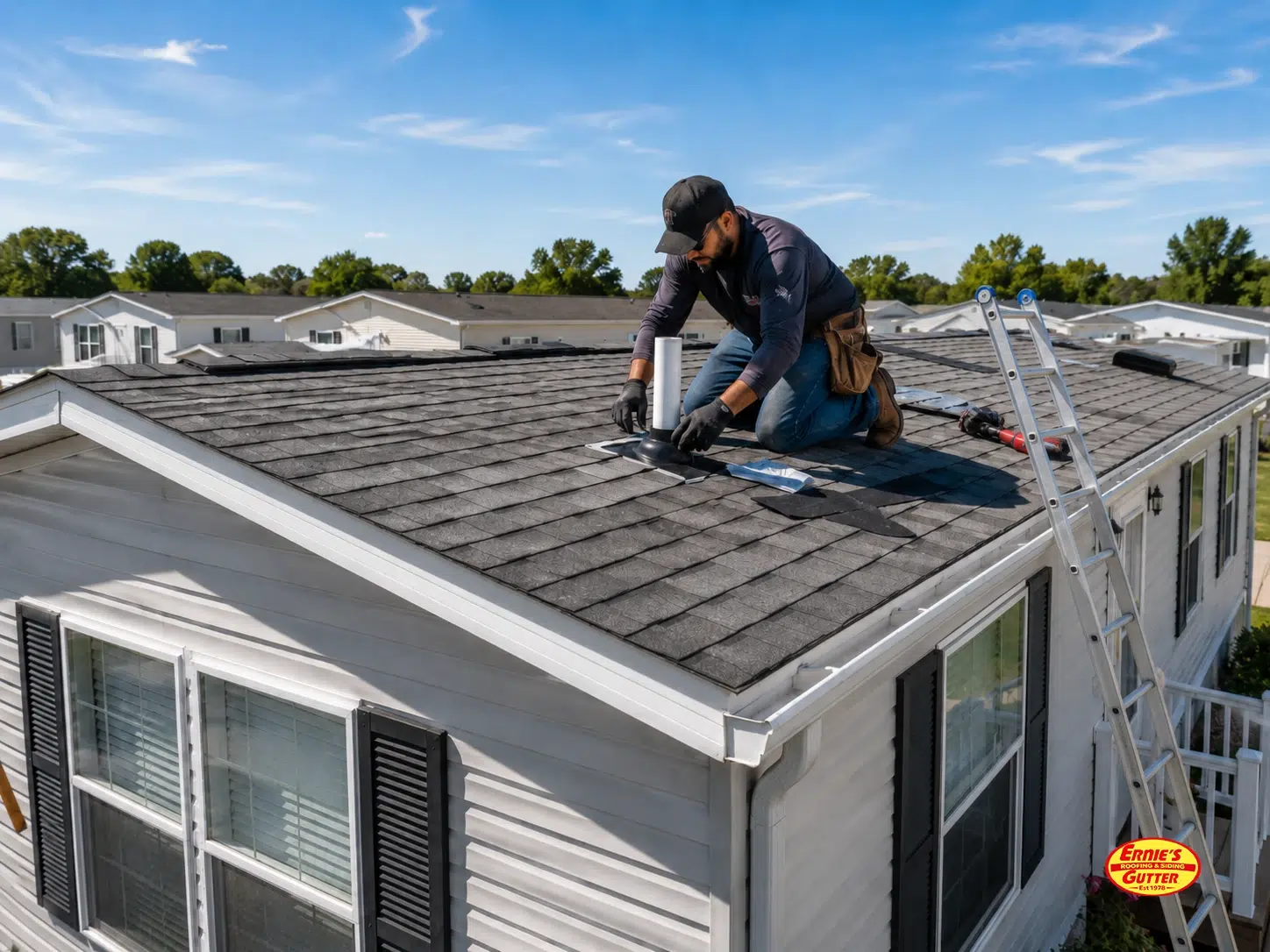
Roof Repair
Mobile Home
Roofing Contractor Specializing in Roof Repair and Storm Damage Roofing in Denver
Providing roof repair, emergency roof repair, storm damage roofing, and roof replacement services throughout the Metro Denver Area
Family-Owned Legacy Built on Quality Since 1978
Fast scheduling and quick response – reach out today
Request Estimate
Ernies Roofing


OUR SERVICES
Your Neighborhood Roofing Contractor
Get more information concerning our service, do not wait to call us at 720 346 ROOF today. We’ll be more than happy to schedule a meeting with you.

Residential Roofing Contractor
Ernie’s Roofing specialize in residential roofing in Denver and have a team of experienced professional Roofers available to help you get the job done right The First Time. From minor repairs and maintenance to full–scale roof replacements,

Commercial Roofing
We construct, repair, as well as maintain Commercial Roofing systems for services both large and also small, creating personalized services that conserve our client’s time, cash, and also power. Call us at 720 346 ROOF and book a consultation today.

Hail Damage
Their knowledgeable staff is ready to help you assess the damage caused by storms and provide you with a comprehensive repair evaluation & plan. We specialize in all types of roof damage, including hail, wind, and even lightning strikes. Hail Claim Help

INSURANCE CLAIMS HELP
Our team of experienced insurance claim specialists will work with you to ensure that the insurance claim process is as stress-free as possible. We will work with your insurance company to provide all necessary documentation and estimates to ensure that your claim is processed quickly and correctly.

Wind Damage
When it comes to roof damage, it can be difficult to determine whether the damage was caused by hail or wind. While both types of damage can cause similar symptoms, they have different causes and require different repair methods.
What’s New on The Blog
T Lock Roofing Shingles no longer available and no longer manufactured
Why T-Lock Roofing Shingles Are a Major Problem in Denver Since 1978, we at Ernie’s Gutter have proudly served homeowners throughout Denver, offering expert roofing and gutter solutions that stand the test of time. One issue we continue to see, especially in older...

Detecting Leaky Windows
Detecting Leaky Windows in Denver: Tips from Expert Contractor Leaky windows can be a source of discomfort and energy inefficiency in your home. As a third-generation family of contractors with a rich history dating back to 1978, Ernie's Roofing is dedicated to...
Rain Gutter Leak Repair
How to Fix a Rain Gutter Leak Repair in Denver: A Comprehensive Guide When it comes to maintaining your home, one of the common challenges you might encounter is a rain gutter leak. As a responsible homeowner, addressing this issue promptly can save you from more...
#1 Rated Roofing Contrator In Denver
Craftsmanship That Stands Like a House
Let’s Get Your Project on the Right Track

Let’s Get Started