
When It’s a Gutter Issue Versus a Roofing Issue
Gutter Issue Versus a Roofing Issue
If you’re a homeowner in Denver and you’re seeing water where it shouldn’t be, you’re not alone. One of the most common questions we hear is simple on the surface but tricky in real life:
Is this a gutter problem, or is this a roof problem?
If this is your first time hearing this, here’s the honest truth most contractors won’t say out loud: water damage gets misdiagnosed all the time. Gutters get blamed for roof failures. Roofs get blamed for drainage problems. And homeowners end up fixing the wrong thing first.
Ernie’s Gutter has been inspecting homes along the Front Range since 1978. We’re a third-generation, family-owned contractor, and we’ve seen just about every way water can move through — and damage — a house. The goal of this guide is simple: help you understand where the problem actually starts so you can fix it once and fix it right.
This isn’t a sales pitch. It’s an education piece written for real Denver homes, real weather, and real construction methods.
Why Water Problems Are So Often Misdiagnosed
Water doesn’t fall straight down and politely disappear. It runs, backs up, freezes, melts, gets pushed by wind, and finds weak points. In Denver, freeze-thaw cycles make this worse because small issues turn into big ones fast.
Here’s why confusion happens:
-
Gutters and roofs work as one system
-
Damage often shows up far from the source
-
Ice and snow change normal water flow
-
Older homes were built under different standards
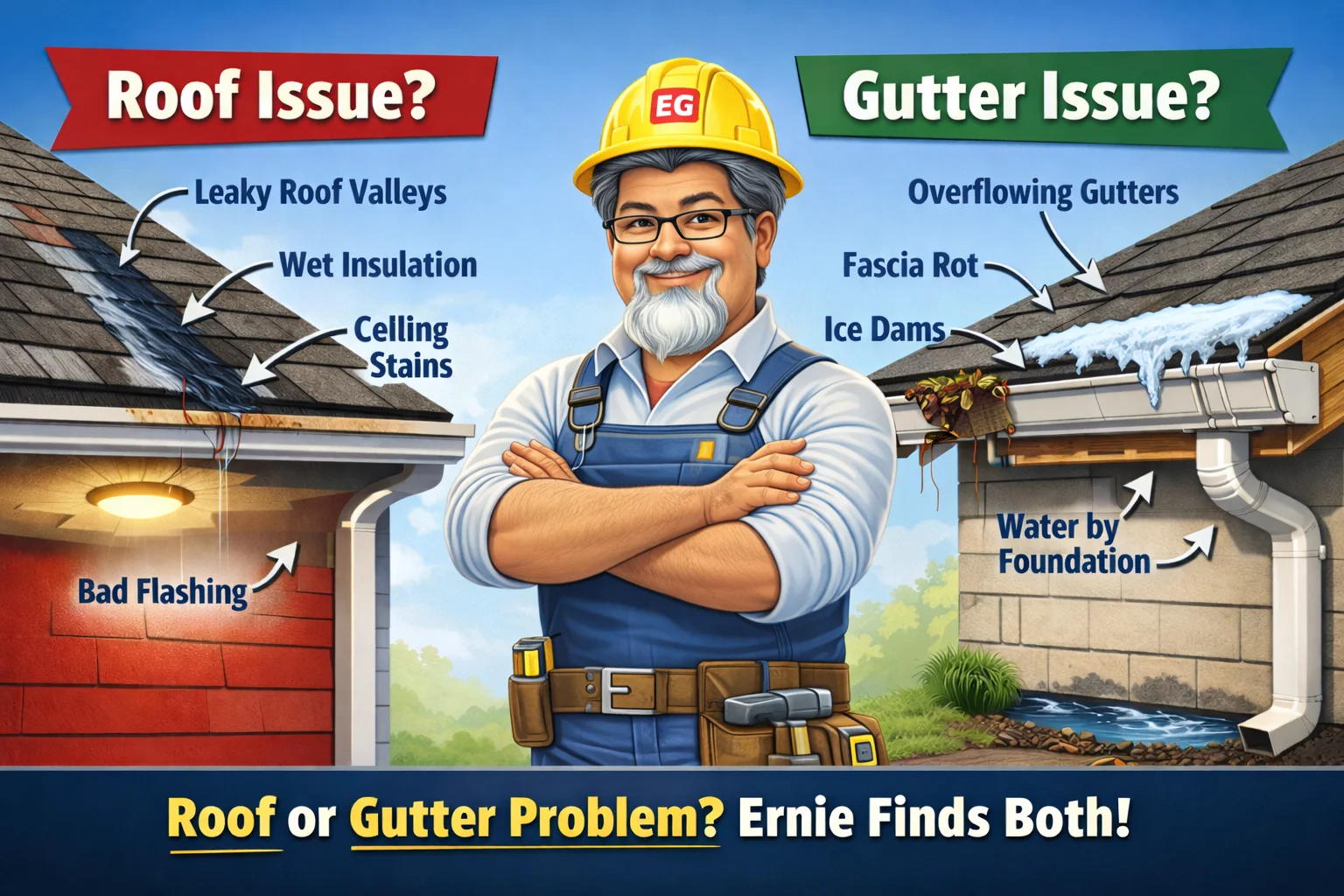

A stain on a ceiling doesn’t mean the roof directly above it failed. Rot on fascia doesn’t always mean the gutter caused it. Water can travel along framing, decking, and trim before it finally shows itsel
That’s why guessing usually costs more than inspecting.
Signs It’s Most Likely a Gutter Issue
Gutter problems usually show themselves on the outside of the home first, especially around edges, trim, and foundations.
Common signs include:
-
Water spilling over the gutter during rain
-
Pools of water near the foundation
-
Soil erosion below downspouts
-
Rotting fascia boards behind the gutter
-
Peeling paint along roof edges
-
Ice buildup along the eaves in winter
In many Denver homes, the gutter system simply isn’t sized or sloped correctly for modern snow melt and heavy spring storms. Older sectional gutters are especially prone to leaking at seams, pulling away from the fascia, and clogging.
A properly installed seamless gutter system should:
-
Move water away from the roof edge
-
Control meltwater during freeze-thaw cycles
-
Protect fascia and siding
-
Discharge water well away from the foundation
When those things don’t happen, water finds another path — usually a destructive one.
How Gutters Cause Damage Without Actually Leaking
This is where homeowners get tripped up.
A gutter doesn’t have to be broken to cause damage.
If a gutter is clogged, pitched incorrectly, or undersized, water can back up under shingles, soak fascia boards, and freeze behind the system. Over time, that moisture works its way into wood components that were never meant to stay wet.
Common gutter-related failures we see include:
-
Fascia rot that spreads into roof decking
-
Ice dams caused by trapped meltwater
-
Mold growth behind trim
-
Siding damage below overflowing gutters
From the ground, this can look like a roofing failure — but the roof may actually be doing its job. The gutter just isn’t letting it finish the job.
Signs It’s Actually a Roofing Issue
Roof problems usually show themselves inside the home or in areas not directly connected to the gutter line.
Red flags include:
-
Water stains on ceilings or walls
-
Damp or compressed insulation in the attic
-
Leaks appearing far from exterior walls
-
Dripping after snow melt, not rain
-
Repeated leaks in the same interior spot
In Denver, roofing leaks are often tied to flashing, roof penetrations, valleys, or underlayment failures rather than missing shingles.
Common roofing-related causes include:
-
Worn or improperly installed flashing
-
Failed pipe boots
-
Aging underlayment
-
Ice and water shield breakdown
-
Wind-driven rain entering vulnerable joints
These issues have nothing to do with gutters, even though water eventually exits the roof near them.
Why Ice and Snow Complicate Everything
Colorado weather doesn’t play fair.
Snow sits on the roof. Sun warms one section. Meltwater runs down. Then it refreezes at the edge. That ice blocks proper drainage and forces water backward.
This can lead to:
-
Water entering under shingles
-
Saturated decking
-
Interior leaks weeks after a storm
-
Damage that only shows up in spring
Homeowners often blame the gutter because ice forms there — but ice dams are usually a roof edge design issue, not just a gutter issue.
The fix may involve gutters, roofing details, insulation, or ventilation — sometimes all of the above.
When It’s Both a Gutter Issue and a Roofing Issue
This is the most common outcome we see on inspections.
Examples include:
-
Short or missing drip edge combined with old gutters
-
Rotted fascia that can’t support proper gutter fastening
-
Roofing work done without replacing failing gutters
-
Gutters installed without considering roof slope or melt patterns
When one system fails, it stresses the other. That’s why patching one side of the problem often doesn’t stop the damage long-term.
This is also why Ernie’s operates with roofing authority first. You can’t solve water problems by looking at gutters alone.
Ernie’s Roofing approaches drainage issues from the top down — literally — because that’s how water actually moves.
Safe DIY Checks Homeowners Can Do
There are a few things you can look for without climbing onto the roof or doing anything risky.
You can:
-
Watch gutters during rain to see if they overflow
-
Check for water stains behind gutters
-
Look for peeling paint or soft fascia
-
Inspect the attic for visible moisture or stains
-
Observe where downspouts discharge water
What you should not do:
-
Walk icy or snow-covered roofs
-
Climb ladders in winter conditions
-
Pull shingles or flashing
-
Assume the visible damage is the source
Ladders and winter roofs don’t forgive mistakes.
When to Call a Professional Inspection
If you see repeated water issues, interior staining, or structural rot, guessing becomes expensive.
A proper inspection should:
-
Trace water from entry point to exit
-
Evaluate roof edge details
-
Check fascia and decking condition
-
Inspect gutter pitch and attachment
-
Account for Denver weather patterns
At Ernie’s, inspections are about clarity, not pressure. Sometimes the fix is a small gutter adjustment. Sometimes it’s roofing work. Sometimes it’s both. The goal is to tell you the truth so you can make an informed decision.
Frequently Asked Questions
Can gutters cause roof leaks
Yes, when water backs up behind the system and enters under shingles.
Do overflowing gutters damage shingles
Over time, constant saturation can shorten shingle life at the roof edge.
Why does water leak even when gutters are clean
The issue may be flashing, underlayment, or roof edge design.
Are ice dams a gutter problem or roof problem
They are usually a roof edge and insulation issue, not just gutters.
Should gutters be replaced during roof work
Often yes, especially if fascia or edge details are being rebuilt.
Can bad fascia cause gutter failure
Yes, rotted fascia can’t support proper gutter attachment.
Why does water show up far from the gutter line
Water travels along framing and decking before it becomes visible.
Do seamless gutters prevent all water problems
They help, but they don’t fix roofing failures.
Is interior staining always a roof leak
No, it can be condensation or previous moisture movement.
How do I know which system failed first
A professional inspection traces water flow instead of guessing.
This content is provided for general informational and educational purposes only. It does not constitute professional construction, roofing, or contracting advice. Every property, structure, and situation is different. Always consult a qualified roofing or gutter professional for inspections, recommendations, and repairs specific to your home or building.
Related Reading
This content is provided for general informational and educational purposes only. It does not constitute professional construction, roofing, or contracting advice. Every property, structure, and situation is different. Always consult a qualified roofing or gutter professional for inspections, recommendations, and repairs specific to your home or building.
OUR SERVICES
Best Gutter Installation
Get more information concerning our service, do not wait to call us at 720 346 ROOF today. We’ll be more than happy to schedule a meeting with you.

Residential Gutter Contractor
Ernie’s Gutter specializes in residential gutter installation in Denver and has a team of experienced professional gutter installers available to get the job done right The First Time. From minor repairs and maintenance to full–scale gutter replacements.

Commercial Gutter
Commercial gutter needs with ease. Our seamless gutters are made using only the highest quality materials and are built to last. With our custom fit, your new gutters will fit your project perfectly and look great!. Call us at 720 346 ROOF and book a consultation today.

Gutter Guards
Gutter guards come in a variety of materials, sizes, and colors so you can customize them to fit your home’s aesthetic. Gutter guards are designed to help keep the leaves from entering your gutters Hail Claim Help

Downspouts and Extensions
Downspout for Drainage is the place to go for all your system needs.We understand the importance of properly managing water runoff and are committed to ensuring that your home or business is protected from potential flooding or water damage.

Gutter Repair
When it comes to Gutter Repair, it can be difficult to determine whether the damage was caused by hail or wind or age. While all types of damage can cause similar symptoms, they have different causes and require different repair methods.