Roofing Denver Terms
Roofing Denver Terms and Cost
If this is your first time hearing this, roofing “cost” in Denver isn’t just the shingles. It’s the whole system that has to survive hail, wind, snow load, ice melt, and fast temperature swings without letting water sneak into your attic or walls. That’s why two roofs that look the same from the street can price out very differently once you get into the details.
Here’s the simple truth: most “surprise” roof bills come from the parts homeowners don’t see. Tear-off and disposal, hidden wood damage, flashing that was never installed right, poor ventilation that cooks the shingles from underneath, and code-required upgrades that get triggered once the old roof comes off. And if you’re in an HOA, budgeting gets even trickier because a roof reserve account isn’t an insurance policy. Insurance is for sudden damage events, not a long-worn roof that finally gave up.
This page breaks down common roofing terms (in plain English) and explains what actually drives roof replacement and roof repair pricing in Denver. If you want the clean answer for your home: get a real inspection, pictures included, and a written scope that spells out materials, labor, ventilation, and disposal. Call 720-346-ROOF and we’ll walk the roof, explain what you’re looking at, and give you a straight estimate.
What “roof cost” really includes in Denver
Roofing is a labor-heavy trade. Materials matter, but installation is usually the bigger chunk of the total because it includes safety setup, tear-off, prep work, and the details that keep water out long-term.
Typical cost categories that affect pricing:
-
Tear-off vs overlay
-
Tear-off means removing the old roof down to the deck so the new system can be installed correctly
-
Overlay means roofing over existing shingles (often cheaper upfront, usually not the best long-term play in Denver)
-
-
Disposal and dump fees
-
Old shingles and underlayment have to go somewhere, and landfill rates plus hauling add up fast
-
-
Roof size and complexity
-
Valleys, dormers, skylights, chimneys, and multiple slopes increase labor and flashing work
-
-
Roof pitch and access
-
Steeper roofs take longer, require more safety equipment, and slow production
-

-
-
-
Decking and wood repairs
-
If the plywood/OSB is soft, rotted, or delaminated, it must be replaced or your new roof is built on a bad foundation
-
-
Ventilation and intake
-
Poor attic ventilation shortens shingle life and can create ice dam problems
-
-
Flashing and penetrations
-
Most leaks are flashing-related, not “bad shingles”
-
-
Permit requirements and inspections
-
Depending on where you live in the Denver metro, permits and code compliance can affect scope and cost
-
Roofing terms Denver homeowners should actually understand
When a contractor throws terms around, you should be able to stop them and ask “show me.” Here are the big ones that matter.
Roof square
-
A “square” equals 100 square feet of roof surface
-
Roof pricing is often built around squares because it accounts for slope and surface area, not just your home’s footprint
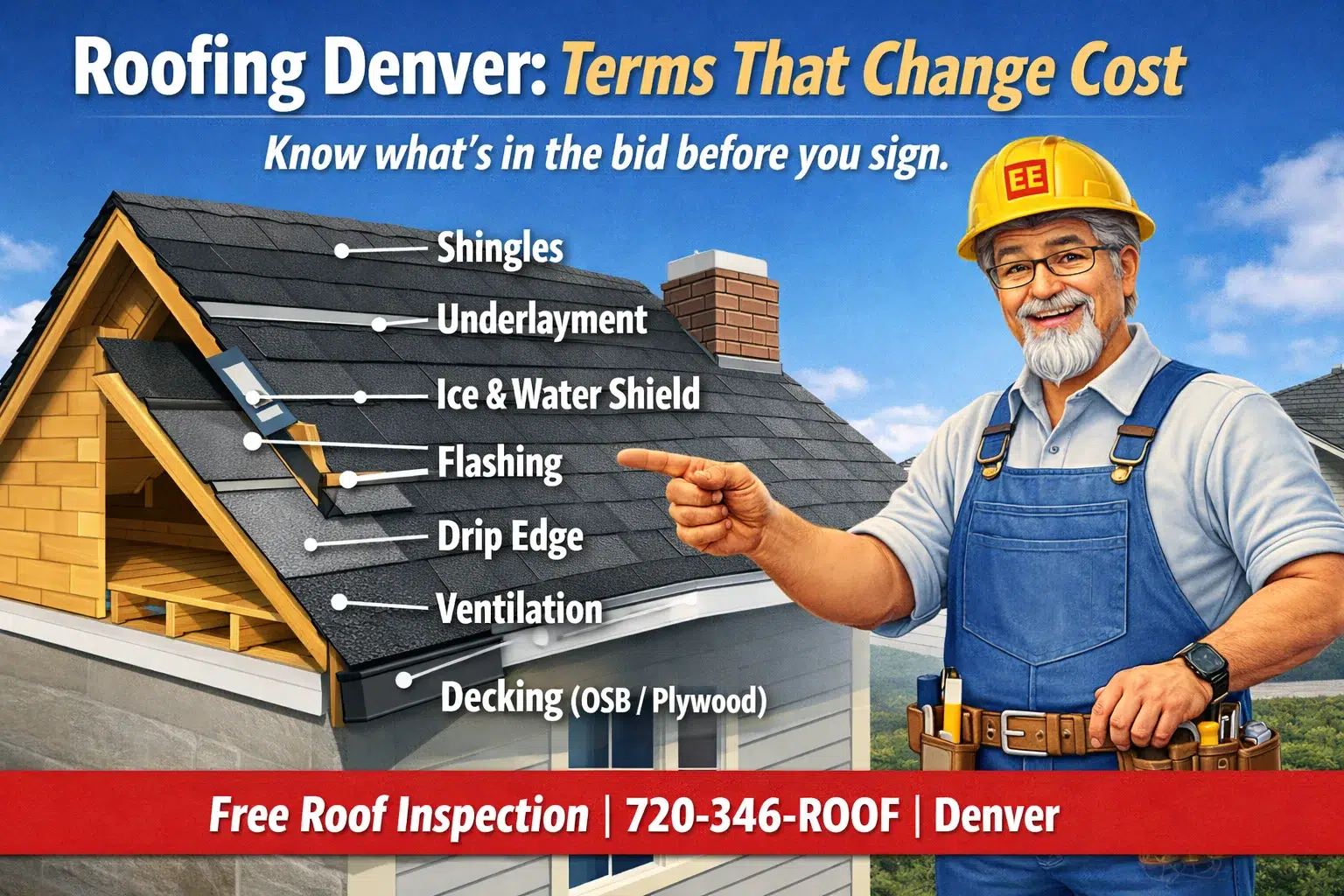
Underlayment
-
The water-shedding layer under the shingles
-
Think of it as the roof’s backup raincoat if wind-driven rain gets under the shingles
Ice and water shield
-
A self-sealing membrane used in leak-prone areas like eaves, valleys, and around penetrations
-
In Colorado freeze-thaw cycles, this can be the difference between “fine” and “ceiling stain”
Flashing
-
Metal pieces that seal transitions and edges, especially around chimneys, walls, and valleys
-
If flashing is rusted, loose, or installed wrong, water wins every time
Drip edge
-
Metal at the roof edge that directs water into the gutter instead of behind the fascia
-
Cheap to install, expensive to skip
Roof decking (OSB/plywood)
-
The wood surface your roof is built on
-
If it’s soft or damaged, shingles can’t fasten properly and you’ll get blow-offs and leaks
Vent boots / roof jacks
-
The seals around pipe penetrations
-
These are common leak points when they crack, shrink, or were installed sloppy
Ridge vent / box vents / intake vents
-
Ventilation components that move hot, moist air out of the attic
-
Balanced intake + exhaust keeps shingles from cooking and helps prevent moisture issues
Valley
-
Where two roof planes meet and water concentrates
-
Valleys demand correct underlayment, clean metal work (when used), and careful shingle layout
What drives roof replacement cost in Denver
Denver pricing isn’t only about material choice. It’s about risk, labor, and what you uncover once the roof is opened up.
Common pricing drivers we see in Denver:
-
Multiple layers of existing roofing that must be removed
-
Steep pitches and difficult access (tight lots, landscaping, multi-story)
- Hail and wind damage patterns that require more than “spot repairs”
-
Hidden wood replacement around eaves, valleys, and penetrations
-
Ventilation upgrades to meet current best practices
-
Ice dam vulnerability from heat loss + snowmelt refreezing
-
Chimney and wall flashing replacement (often skipped by low bids)
-
Gutter/fascia edge issues that should be corrected while the roof is open
Insurance vs maintenance
A lot of homeowners get burned here.
What’s generally true in plain language:
-
Insurance helps when there is a sudden covered event (like hail or wind damage) and the policy allows it
-
Insurance is not a maintenance plan for an old roof that finally wore out
-
If water intrusion happens because the roof has outlived its useful life, coverage can be limited or denied
If you’re dealing with storm damage, the best move is documentation. Photos, slope marks, soft metal hits, and a written scope matter. We can help you understand what you’re looking at and what should be included so you don’t get stuck with a “cheap” scope that leaves out the parts that actually stop leaks.
What to expect during a roof inspection
A real inspection isn’t a guy glancing up from the driveway.
A thorough Denver roof inspection should include:
-
Photos of shingles, flashing, penetrations, valleys, and roof edges
-
Attic ventilation evaluation (intake and exhaust)
-
Signs of active leaks vs old staining
-
Soft decking checks where safe and appropriate
-
Condition of vent boots, chimney flashing, and pipe penetrations
-
Gutter and drip edge relationship (water should land in the gutter, not behind it)
If you want that level of detail, call 720-346-ROOF. We’ll keep it simple, show you the problem areas, and give you an estimate you can actually compare.
Frequently Asked Questions
-
-
What does “per square” mean in roofing?
It means pricing based on 100 square feet of roof surface. It’s a standard measurement so contractors can estimate labor and materials consistently, especially on sloped roofs. -
Why can two Denver roof estimates be so different?
Usually because the scope isn’t the same. One bid may skip flashing replacement, ventilation upgrades, drip edge, decking allowances, or proper underlayment. The cheapest bid often leaves out the parts that prevent leaks. -
Do I need a permit to replace my roof in Denver?
Often, yes, depending on your jurisdiction. A contractor should confirm local requirements and include permits and inspections in writing when needed. -
What’s the most common cause of roof leaks you see?
Flashing and penetrations. Chimneys, pipe boots, and valleys are frequent offenders, especially when they were reused or installed poorly. -
How long does a typical roof replacement take?
Many residential jobs are completed in a few days, but weather, complexity, and unexpected wood repairs can extend the timeline. Denver wind and snow can slow things down. -
Is it okay to roof over existing shingles?
Sometimes it’s allowed, but it’s rarely the best long-term choice in Denver. Overlay can hide decking issues, add weight, and reduce shingle performance and lifespan. -
What is ice and water shield and do I need it?
It’s a self-sealing membrane that helps prevent leaks in high-risk areas like eaves and valleys. With Colorado freeze-thaw cycles, it’s a smart layer of protection. -
How do I know if my roof decking needs replacement?
Signs include soft spots, sagging areas, persistent leaks, or visible rot at edges. The most accurate determination is after tear-off when the deck is exposed. -
Does ventilation really affect roof life?
Yes. Poor ventilation traps heat and moisture, which can shorten shingle life and contribute to ice dam issues and attic condensation problems. -
What should be listed clearly in my roofing contract?
Materials and brand lines, underlayment type, flashing scope, ventilation plan, decking repair allowances, disposal method, permits, workmanship warranty, and exactly what penetrations are being replaced
-
Related Reading
- Ernie’s Gutter
- Denver Roofing Inspection
- Temporary Emergency Roof Repair
- Roof Replacement in Denver
- Gutter Repair in Denver
- Gutter Replacement Denver
This content is provided for general informational and educational purposes only. It does not constitute professional construction, roofing, or contracting advice. Every property, structure, and situation is different. Always consult a qualified roofing or gutter professional for inspections, recommendations, and repairs specific to your home or building.
OUR SERVICES
Your Neighborhood Roofing Contractor
Get more information concerning our service, do not wait to call us at 720 346 ROOF today. We’ll be more than happy to schedule a meeting with you.

Residential Roofing Contractor
Ernie’s Roofing specialize in residential roofing in Denver and have a team of experienced professional Roofers available to help you get the job done right The First Time. From minor repairs and maintenance to full–scale roof replacements,

Commercial Roofing
We construct, repair, as well as maintain Commercial Roofing systems for services both large and also small, creating personalized services that conserve our client’s time, cash, and also power. Call us at 720 346 ROOF and book a consultation today.

Hail Damage
Their knowledgeable staff is ready to help you assess the damage caused by storms and provide you with a comprehensive repair evaluation & plan. We specialize in all types of roof damage, including hail, wind, and even lightning strikes. Hail Claim Help

INSURANCE CLAIMS HELP
Our team of experienced insurance claim specialists will work with you to ensure that the insurance claim process is as stress-free as possible. We will work with your insurance company to provide all necessary documentation and estimates to ensure that your claim is processed quickly and correctly.

Wind Damage
When it comes to roof damage, it can be difficult to determine whether the damage was caused by hail or wind. While both types of damage can cause similar symptoms, they have different causes and require different repair methods.