Ernie’s Gutter · Family Owned Since 1978
Garage Door Trim Cladding Wrap
Garage door trim cladding wrap covers weathered exterior wood around your garage opening with custom-bent aluminum. Ernie’s Gutter helps Denver homeowners improve peeling jambs, headers, and casing when the backing remains serviceable, with localized repairs where needed. We measure the surround, review the water path, and form the metal to fit the existing opening.

Garage Door Trim Cladding Wrap
Garage door trim cladding wrap, also called aluminum capping or jamb wrapping, covers exterior wood around a garage opening with custom-bent aluminum. It can improve weathered surfaces and reduce repainting when the backing remains firm and suitable for attachment. Failed wood and ongoing water-entry problems need attention before the finished metal covering is installed.

The Wood Around the Door Has Its Own Job
If this is your first time hearing this, the visible wood around a garage opening has several names. Side jambs run vertically beside the opening. The header area is across the top. Casing, brickmold, and other exterior trim finish the transition between the opening and the wall. Homeowners may call all of it the garage door frame, even though the visible finish and structural framing are different components.
This service addresses that exterior surround. A metal brake, which is a tool for making controlled folds in sheet metal, forms aluminum trim coil to fit the shape being covered. The finished pieces follow the existing trim and connect with neighboring finishes. The useful result is a cleaner, lower-maintenance surface around the garage door, while preserving sound backing that does not need to be torn out.
The opening still needs to function properly after the work. Trim must be coordinated with weather seals, the moving door, adjacent siding, and existing clearances. A loose seal, damaged panel, or operational door problem should be identified separately. An attractive surround does not correct worn door hardware. Explaining that boundary at the estimate helps the homeowner understand exactly which problem the trim work is intended to solve.
Ernie’s Gutter is a third-generation family contractor serving Denver and surrounding communities since 1978. We look at the visible trim and the water reaching it before recommending a finish. The first decision is whether the backing can remain in service. The second is how the new covering should fit. Choosing a color before resolving those two questions can leave a good-looking surface over an unresolved problem.
Wrap, Repair, or Replace the Garage Trim?
Wrap Serviceable Wood
Peeling paint, rough grain, surface checking, and an unattractive finish do not automatically require full replacement. When the underlying wood remains firm, secure, and suitable for attachment, aluminum capping can cover the exposed face and reduce repeated scraping and painting.
Repair Isolated Failure
One damaged lower jamb or a small deteriorated section does not establish that the entire opening has failed. Identify the extent, correct the moisture source, and repair the affected backing as needed before forming and attaching the finish over it.
Replace Failed Backing
Soft, crumbling, loose, or deeply deteriorated wood needs a different approach. Cladding does not restore its strength or make it a suitable attachment surface. The work plan should explain which failed pieces must be replaced and what conditions remain uncertain.
Weathered Does Not Automatically Mean Worthless
Garage trim can look rough long before every piece has reached the end of its useful life. Sun exposure breaks down paint, exposed grain opens, and repeated wetting leaves stains. Those visible changes deserve inspection, but a photograph of peeling paint is not enough to condemn all the wood. We distinguish surface wear from deeper deterioration so a homeowner is not paying for unnecessary removal of otherwise usable material.
Where wood condition is uncertain, a qualified assessment may include a careful probe and checks for movement or poor attachment. The point is to understand the material beneath the weathered surface without needlessly damaging sound sections. Resistance at one point does not prove the whole surround is sound. Pay attention to lower ends, joints, and areas beneath visible staining, where repeated moisture exposure may be concentrated.
Covering a Surface Does Not Repair Decay
Aluminum changes the exposed finish; it does not turn deteriorated wood into new lumber. A useful proposal separates the covering from any repair work required underneath. It also explains how hidden problems discovered during removal or preparation will be handled. That distinction protects both the finished appearance and the homeowner’s understanding of what was actually repaired. The recommendation should follow the condition, rather than assuming every opening needs a full rebuild.
Persistent moisture must be considered with the wood condition. Wrapping an area that is repeatedly getting wet from above can conceal warning signs without stopping the water. Look for a leaking gutter corner, a poor transition, splashback, or another source before the metal goes on. The finish works best when the backing is serviceable and the surrounding assembly has a reasonable path for water to leave.
Custom-Bent Aluminum Should Fit the Actual Opening
Trim coil is sheet metal supplied in a roll with a finished exterior surface. We measure the opening and use a brake to create the needed faces, folds, and returns. A return is a folded portion that follows an edge or turns back toward adjoining material. The exact shape depends on the trim being covered, its depth, nearby siding, and the transition at the garage door.
Two openings with similar widths can need different pieces. One may have flat casing beside brick. Another may have a shaped trim profile beside vinyl siding. A third may include previous patches or an uneven header. Measuring those conditions is more useful than ordering a generic strip and forcing it into place. Clean-looking work begins with a shape that fits the opening and a plan for its joints.
Color and Finish Need a Real Comparison
White, brown, bronze, and other available finishes can be compared with the door, siding, gutters, and fascia. Availability varies by product and supplier, so the specific finish should be confirmed before ordering. An existing surface may have faded, and two products carrying a similar color name may not match. Compare actual samples outdoors and discuss whether a close complement is acceptable when an exact match cannot be promised.
Details Matter More Than a Shiny Face
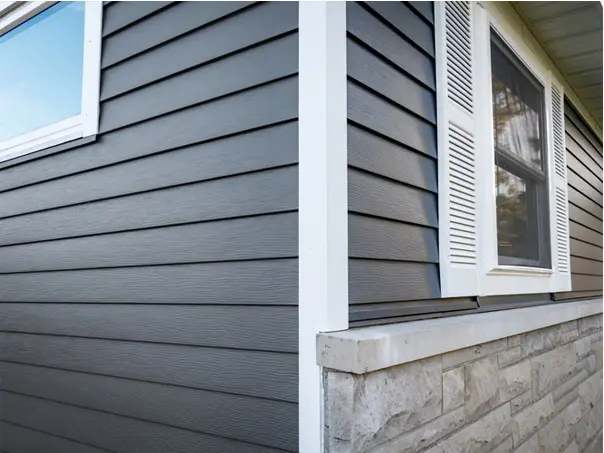
The folds, attachment, laps, and edges must suit the selected material and the surrounding assembly. A neat face alone does not establish that water is being directed properly. Appropriate movement and attachment details help the finish remain serviceable as temperatures change. Ask how seams and transitions will be handled, especially at the header and lower ends. Sealant is part of some details, but it cannot compensate for every poor fit or missing water-management connection.
Protect What Is Sound. Repair What Has Failed.
A new metal finish can cover weathering and improve appearance. It cannot restore failed backing or stop a water problem that has not been identified.
How We Plan Garage Door Jamb Wrapping
The inspection should connect the homeowner’s concern with a clear scope of work. Peeling paint may lead to a straightforward wrapping discussion. A loose lower jamb or recurring stain may require additional evaluation. Before the project begins, identify the surfaces being covered, the condition of the backing, the selected finish, and the neighboring details that must remain functional. That preparation helps avoid surprises when the metal is already being installed.
- Review the opening. Look at both side jambs, the header, casing, visible joints, and how the surround meets siding, masonry, or other finishes.
- Check the backing. Identify firm areas, localized deterioration, loose sections, and locations where the condition needs closer assessment.
- Follow the water. Review staining, runoff above the garage, nearby gutter corners, and repeated wetting at lower trim.
- Measure the profiles. Record widths, depths, returns, and the clearances needed around the actual opening.
- Agree on repairs and finish. Explain what stays, what changes, the available color, and how concealed conditions will be addressed.
- Form, fit, and review. Install the covering with suitable details, preserve door and seal clearances, and review the completed surround and cleanup.
Keep Door Operation and Weather Seals in View
The garage opening includes more than the trim that will be wrapped. Existing weatherstripping, seal attachment, and door movement need consideration so the finished metal does not interfere with operation. If another component is worn or damaged, identify who will address it and whether it is included. Homeowners should not discover after installation that a quoted cosmetic finish was assumed to include unrelated door-service work.
Access and daily use also matter. Discuss vehicles, stored items near the jambs, landscaping, electrical fixtures, and the need to use the garage during the project. Timing depends on the opening, repairs, material availability, and conditions encountered. A clear schedule and an explanation of any expected interruptions are more useful than promising a universal completion time before the property and scope have been reviewed.
That roof-edge distinction matters when a gutter above the garage is contributing to the trim damage. The metal covering provides a finished surface. It does not replace sound structural attachment or correct a gutter that keeps sending water onto the same opening.

Connect the Garage Surround With the Water Path
Garage trim can be affected by roof runoff, siding transitions, and conditions at the ground. A gutter overflowing above the opening may keep the header wet. A short downspout may splash water toward a side jamb. A wall connection can direct water behind the visible finish. Inspecting those relationships helps explain why the trim is deteriorating instead of treating every stain as a paint problem.
The garage-trim page owns the surround-wrapping service. Broader soffit and fascia wrap work belongs on its roof-edge service page. Siding projects belong with our siding contractor information. Windows, entry doors, and patio-door trim may use similar custom metal techniques, but those openings need their own measurements and water-management details. They should be identified separately in a proposal rather than silently included under garage-door trim.
Simple Checks and Low-Maintenance Care
From the ground, watch for loose edges, open joints, dents, staining, or sealant that has separated where sealant is part of the detail. Take a wide photograph of the opening and a closer view of the problem. Note whether the change followed a storm, an impact, or repeated runoff. Avoid prying metal away to inspect the backing; doing so can damage a serviceable finish and expose the edge underneath.
Follow the finish manufacturer’s cleaning guidance. Use an approved gentle method rather than abrasive tools or a strong chemical chosen by guesswork. Aluminum capping is lower maintenance than repeatedly repainting exposed wood, but it is not a promise that every joint and connected component can be ignored. Keep gutters draining properly, check surrounding trim, and arrange an assessment when movement or persistent wetting appears.
Lower trim ends deserve attention because snow, splashback, and landscaping can keep the same area damp. Observe whether soil, mulch, or stored items remain against the surround. Record the condition without digging into the wood or bending the metal. Where repeated wetting continues, discuss the cause before treating another coat of sealant as the complete solution. The surrounding grade and discharge path may matter as much as the appearance of the covering.
If a vehicle, tool, or other object dents the finish, photograph the affected piece and nearby joints. A small cosmetic dent and a separated edge are different problems. Explain whether the damage changed door movement or exposed the backing so the assessment can address function as well as appearance.
What the Written Estimate Should Explain
The estimate should identify which opening and surfaces are included, the planned material and finish, repairs to the backing, treatment of existing trim, and how neighboring seals or accessories will be handled. Ask whether removal and disposal are included and how concealed damage would change the scope. Compare proposals for the same work. A wrapping-only price and a proposal including substantial wood repair are not equivalent scopes.
Keep photographs, finish information, and the completed proposal for future reference. There is no need to replace useful backing merely because the surface looks tired, and there is no benefit in pretending failed material becomes sound when it is hidden. A practical plan explains the distinction, directs water appropriately, and gives the homeowner a clear understanding of the finished work around the garage opening.
Helpful Homeowner Resources
10 Garage Door Trim Cladding Wrap FAQs
1. What is garage door trim cladding wrap?
It covers the exterior wood surround of a garage opening with custom-bent aluminum trim coil. The work may include jamb faces, header trim, casing, and appropriate returns. The existing profile and surrounding finishes determine the pieces needed.
2. Is aluminum capping the same as replacing wood?
No. Capping creates a finished covering over suitable backing. Replacement removes failed material and installs new backing or trim. Some openings need a combination of localized repair and wrapping rather than one treatment for every piece.
3. Can weathered or peeling wood be wrapped?
Often it can, when the remaining wood is firm, secure, and suitable for attachment. Peeling paint and surface wear alone do not prove that every piece needs replacement. The condition and moisture source should be assessed before deciding.
4. What if the wood is soft or deeply deteriorated?
Failed areas need repair or replacement before the finish is installed. Aluminum does not restore strength to rotten backing. The proposal should identify known repairs and explain how additional concealed deterioration would be handled.
5. Does the service include garage door mechanisms?
The scope described here concerns exterior trim around the opening. Springs, tracks, openers, moving panels, and operational repairs require separate evaluation. Weather seals and clearances should still be coordinated with the wrapping work.
6. Can the wrap match my existing trim color?
Available finishes can be compared with the garage door, siding, gutters, and fascia. Exact matching cannot be assumed because existing finishes may have faded and product colors vary. Confirm the actual material and sample before ordering.
7. Will wrapping stop every source of water damage?
No. It reduces direct exposure of the covered surface, but leaking gutters, poor transitions, or repeated splashback may require separate correction. Following the water path before covering the trim helps avoid concealing the same unresolved problem.
8. Is aluminum garage trim maintenance-free?
It is better described as low-maintenance. Follow the product’s cleaning instructions and periodically observe joints, attachments, seals, and surrounding materials. Damage or persistent moisture still deserves attention even when regular painting is reduced.
9. Can garage trim wrapping be coordinated with fascia work?
Yes. Connected work can be planned together when the property needs it. The estimate should distinguish garage-surround surfaces from soffit, fascia, gutter, or siding work so the homeowner understands what is included in each part.
10. How do I arrange a garage trim review?
Call Ernie’s Gutter at 720 346 ROOF or use the contact page. Describe the affected opening, visible wear, and any repeated water exposure. Photographs help explain the concern, while an assessment determines whether wrapping, repair, or replacement is appropriate.
Protection starts at the top of the home.
General information only. Appropriate materials, attachment, repairs, clearances, and water-management details depend on the existing assembly, site conditions, manufacturer instructions, and applicable local requirements. Property-specific recommendations require an assessment.
Siding Contrator In Denver
Craftsmanship That Stands Like a House
Let’s Get Your Project on the Right Track

Let’s Get Started