

Lakewood Gutter service from Ernie’s Gutter includes seamless gutter installation, repair, replacement, cleaning, gutter guards, downspouts and drainage evaluation. We look at the complete water path—from roof runoff and gutter pitch to outlets, fascia and final discharge—so Lakewood homeowners can understand what is failing before deciding what actually needs to be corrected.
Family owned Since 1978. Third-generation gutter and exterior water-management experience serving Lakewood and the Denver Metro area.

Lakewood Gutter Service Starts With the Entire Water Path
A gutter is only one part of a home’s exterior water-control system. Roof water reaches the gutter, moves toward an outlet, drops through a downspout and then has to continue somewhere at ground level. When one part of that sequence is wrong, the symptom may appear somewhere else. That is why the same overflow problem can come from debris, poor pitch, a restricted outlet, too few downspouts, a roof valley concentrating runoff or a buried drain that is backing up.
If this is your first time hearing this, replacing the gutter does not automatically fix every water problem. A new gutter installed on damaged fascia can still loosen. A large gutter with a small outlet can still overflow. A clean downspout that empties beside the foundation can still leave a wet-soil problem. Good gutter work in Lakewood starts by finding where the water path fails and then correcting the part that is actually responsible.
This page is the Lakewood location hub for Ernie’s Gutter. It connects homeowners with the main gutter and drainage services used on Lakewood homes while explaining how installation, repair, cleaning, protection, downspouts, fascia and drainage work together. For the broader company overview, visit the Ernie’s Gutter service hub.

Page Guide
- Seamless gutter installation in Lakewood
- Gutter repair versus replacement
- Gutter cleaning and seasonal debris
- 5-inch versus 6-inch gutter decisions
- Pitch, hanger support and outlet placement
- Downspout size and final discharge
- Gutter guards and leaf protection
- Fascia and roof-edge conditions
- Lakewood weather and drainage considerations
- Safe homeowner checks from the ground
Complete Gutter Services for Lakewood Homes
The right service depends on what the system is doing now. Some homes need a new seamless system. Some need a repair to one corner, outlet or run. Some only need cleaning because the gutter and downspout layout are still sound. Other properties have gutters that work at the roof edge but discharge water into a low area, onto a walkway or too close to the house. Those are different problems and should not be sold as though one solution fits every property.
Seamless Gutter Installation
Continuous gutter runs are measured and formed for the home with fewer middle seams. Proper slope, strong hanger support, outlet placement and downspout planning matter just as much as the metal itself.
Gutter Repair
Leaking corners, loose hangers, sagging sections, damaged outlets and some pitch problems may be repairable when the rest of the gutter system remains serviceable.
Gutter Replacement
Replacement can make more sense when damage is widespread, the layout is poor, capacity is inadequate, several areas leak or repeated repairs no longer make financial sense.
Gutter Cleaning
Cleaning removes leaves, roof granules and organic debris that restrict flow. It can restore a sound system, but it cannot correct bad pitch, weak attachment or poor drainage.
Downspouts & Water Discharge
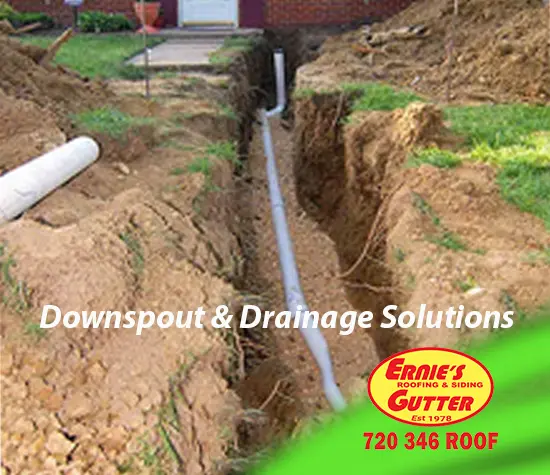
Downspouts control where concentrated roof runoff goes after it leaves the gutter. Size, location, elbows, extensions and the final discharge point all affect performance.
Gutter Guards & Leaf Protection
Gutter protection can reduce larger debris entering the trough. The right system depends on tree cover, debris type, roof conditions, gutter design and maintenance expectations.
Not Sure Which Gutter Service You Need?
You do not have to diagnose the house before calling. Tell us what you are seeing—overflow, leaking, standing water, loose gutters, damaged downspouts or wet areas around the property—and the first step is to identify where the water path is failing.

What Gutter Systems in Lakewood Have to Handle
Lakewood includes established neighborhoods, mature landscaping, foothill-facing areas, older rooflines and newer construction. Different properties can have very different roof shapes, tree exposure, lot grades and drainage conditions. The water-control principle stays the same: collect roof runoff, move it through the gutter efficiently and discharge it where it will not create another problem.
Colorado weather can expose weak gutter systems quickly. Snow adds weight to gutters and hangers. Warm winter days can turn roof snow into fast meltwater. Freeze-thaw cycles make standing water and weak seals easier to notice. Spring and summer storms can place a lot of water on a roof in a short period. Hail and wind can dent metal, loosen components and move debris. Mature trees can fill gutters with leaves, needles, seeds and fine organic material while roof granules collect around outlets.
None of those conditions automatically means the home needs new gutters. If one run overflows while the rest of the house works correctly, the correction may be local. A roof valley may be concentrating runoff into one section. An outlet may be too restricted. The run may have a low spot. A downspout may not be moving enough water. Replacing every gutter without identifying the reason for the overflow is not a good diagnosis.
For municipal drainage context, Lakewood homeowners can also review the City of Lakewood Stormwater Management Utility information. City stormwater infrastructure and a home’s private gutter system are different systems, but both depend on keeping water moving through a usable path.
5-Inch vs. 6-Inch Gutters in Lakewood
Homeowners often ask whether 6-inch gutters are automatically better. They are larger, but larger does not always mean necessary. A properly designed 5-inch system can work very well on many homes when roof area, pitch, run length, outlet size and downspout quantity are matched correctly.
A larger gutter may make sense on roof sections with more collection area, long runs, steep roof planes or valleys that concentrate a large amount of runoff into one location. The mistake is looking only at the trough. A 6-inch gutter that drains through an undersized outlet can still back up. A larger run with too few downspouts can still overflow. A large gutter attached to weak fascia can still sag.
Correct gutter sizing in Lakewood means the gutter, outlet and downspout work together as one system. The contractor should be able to explain why a larger system is being recommended instead of treating size alone as a sales upgrade.
Gutter Pitch
Pitch is the controlled slope that moves water toward an outlet. Too little slope leaves standing water. Too much visible slope can look poor and may point to a weak layout.
Hanger Support
Hangers keep the gutter in position under water, snow and debris load. Loose or poorly spaced support can create sagging and low areas that retain water.
Outlet Capacity
The gutter can move only as much water as the outlet allows to leave. Outlet size and location can become a hidden bottleneck when a clean gutter still overflows.
Downspout Placement
Downspouts need to be positioned where the gutter can drain efficiently and where water can continue away from the structure at ground level.
Related service: Gutter drainage solutions and final water discharge
Repair, Replace, Clean or Correct the Drainage?
This is where homeowners can save money by separating symptoms from causes. One leaking corner does not automatically justify a full replacement. A system that is structurally sound but packed with debris may simply need cleaning. A long run that sags, leaks in several places and pulls away from deteriorated fascia may be beyond sensible repair. A gutter that performs correctly at the roof can still leave a drainage problem if the downspout empties water into the wrong place.
Repair May Be Enough
Repair can make sense when the metal is sound and the failure is isolated. Examples include one leaking corner, a loose hanger, a disconnected downspout, a damaged outlet or a localized pitch correction.
Cleaning May Be Enough
If the gutter and downspout remain structurally sound but leaves, granules or debris are restricting flow, cleaning may restore performance without replacing usable components.
Replacement May Be Smarter
Widespread leaks, badly bent runs, repeated sagging, severe impact damage, inadequate capacity or a poor original layout can make replacement more practical than repeated patching.
Drainage May Be the Real Problem
If water reaches the bottom of the downspout but then collects beside the home, crosses concrete, backs up from a buried line or erodes landscaping, the correction may be needed after the gutter.
Why Fascia Condition Matters Before Gutter Work
A gutter is only as strong as the fascia it is attached to. Fascia is the vertical roof-edge board or finished surface where many gutter systems are secured. If that attachment area is soft, rotted, loose or damaged from repeated water exposure, hanging a new gutter over the problem does not create a reliable system.
Water behind a gutter can be a clue that the issue is not limited to the gutter itself. Poor roof-edge water control, a drip-edge problem, incorrect gutter position, loose fasteners or existing fascia damage can all allow water to reach areas that should stay dry. This is why a proper estimate should include a look at the roof edge rather than measuring linear footage and walking away.
That does not mean every gutter project in Lakewood needs fascia work. Sound fascia should be left alone. The point is to identify the attachment surface honestly before the final scope is decided. If fascia or soffit conditions need attention, review our soffit and fascia wrap information.
How Ernie’s Gutter Evaluates a Lakewood Home
Exterior Ground Assessment
We start by looking for overflow marks, erosion, wet soil, disconnected downspouts, sagging sections and places where water appears to collect around the property.
Inspect the Gutter Runs
We check physical condition, pitch, seams, corners, end caps, hangers and outlets for signs of standing water, repeated leakage or weak attachment.
Inspect the Roof Edge and Fascia
The attachment surface matters. We look for water staining, damaged fascia, poor roof-edge water control and other conditions that could affect repair or replacement.
Follow the Downspouts
We evaluate downspout size, location, elbows and connections to determine whether water can leave the gutter efficiently and continue away from the roofline.
Check the Final Discharge
We look at what happens after water reaches ground level. A gutter can work correctly at the roof and still contribute to a problem if the final discharge point is wrong.
Explain the Practical Correction
Once the cause is understood, we explain what can remain, what needs correction and whether cleaning, repair, replacement, protection or drainage work makes sense.
Get a Straight Answer Before Replacing the Whole System
If the gutter can be repaired, that should be part of the conversation. If replacement is the smarter long-term choice, the reason should be visible and understandable. The goal is not the biggest job. The goal is a water-control system that works.
Common Gutter Problems We See in Lakewood
Most gutter failures give warning signs before they become major exterior problems. Some show up only when it rains. Others remain after the storm is over. Watching those clues can help a homeowner explain the problem accurately and can help a contractor diagnose the system faster.
Water Over the Front Edge
Overflow can come from debris, poor pitch, restricted outlets, inadequate capacity, a roof valley or too few downspouts.
Standing Water
Water remaining after the weather clears can point to low spots, sagging or incorrect pitch toward the outlet.
Gutters Pulling Away
Loose hangers, heavy load, poor fastening or deteriorated fascia can let the gutter separate from the roof edge.
Leaking Corners
Aging sealant, movement, impact or standing water can cause corners and joints to leak even when the rest of the gutter is usable.
Erosion Below Downspouts
Washed-out soil and channels below a discharge point show that concentrated runoff needs better control at ground level.
Water Beside the Home
Short extensions, poor grading, a buried drainage failure or a poorly placed downspout can release roof water where it should not go.
Lakewood Neighborhoods and Local Service Coverage
Ernie’s Gutter serves Lakewood as a service-area contractor. The city includes areas such as Applewood, Morse Park, Eiber, Belmar, Green Mountain, Kendrick Lake, Bear Creek, Union Square and surrounding Lakewood neighborhoods. Different parts of the city can present different tree cover, roof styles, lot grades and drainage paths, so the evaluation should be based on the property rather than a generic citywide assumption.
On a mature lot, seasonal debris may be a larger maintenance issue. On a sloped property, the final downspout discharge may need more attention. On an older home, fascia condition and previous gutter attachment points may matter more. On a roof with large valleys, concentrated runoff can overwhelm one short gutter section even when the rest of the system works correctly.
Lakewood Service Hub
This page is the primary Lakewood location hub for Ernie’s Gutter. Supporting Lakewood neighborhood and problem-specific pages should point back here when they are created, while this hub connects homeowners to the established service pages for installation, repair, replacement, cleaning, gutter protection, downspouts, fascia and drainage.
What Homeowners Can Check Safely From the Ground
You can learn a surprising amount about a gutter system without climbing a ladder. During a normal rain, watch where water enters the gutter, where it overflows and where the downspouts discharge. After the storm, look for water still sitting in visible sections, wet fascia, stained siding, eroded mulch, puddles or new channels in the soil. In winter, note recurring ice at downspout discharge points or walkways.
- Look for gutter sections that visibly sag or pull away.
- Watch where water spills over during rain.
- Check whether downspouts remain connected and securely fastened.
- Look for erosion below downspout discharge points.
- Check fascia and siding for staining or peeling finishes.
- Look for consistently wet soil beside the home after weather clears.
- Watch for water crossing sidewalks, patios or driveways.
- Notice recurring winter ice near downspout outlets.
What a Gutter Contractor Should Check
A contractor should not stop at the spot where you saw the drip. The visible symptom may be downstream from the actual cause. The evaluation should include gutter size and condition, pitch toward the outlets, hanger attachment, fascia condition, outlet size, downspout size and placement, concentrated roof runoff and where the water finally goes at ground level.
The contractor should also be willing to explain the difference between a repairable problem and a system that has reached the point where replacement makes more sense. If cleaning will solve the issue, say so. If the gutter is sound but the downspout discharge is wrong, fix the drainage problem instead of selling new metal along the roof edge.
Gutter Guards, Cleaning and Preventive Maintenance
Gutter guards can be useful on Lakewood homes with significant tree debris, but they are not a substitute for correct gutter design. A guard may reduce larger leaves entering the trough, yet it cannot correct bad pitch, weak fascia, a restricted outlet or a poorly placed downspout.
Different debris types behave differently. Broad leaves, pine needles, seeds, roof granules and fine organic material do not all respond the same way to the same protection system. For many homes in Lakewood, routine gutter cleaning remains the simplest answer. When the gutter is structurally sound and the primary problem is seasonal buildup, cleaning can restore flow without replacing parts that still work.
When gutters continue overflowing after they are clean, that is when pitch, outlets, downspouts, capacity and drainage should be checked more closely. The same principle applies to guards: protection should be added to a working system, not used to hide a gutter that already has a structural or drainage problem.
Helpful Homeowner Resources
Frequently Asked Questions About Gutters in Lakewood
What Lakewood Gutter services does Ernie’s Gutter provide?
Ernie’s Gutter provides seamless gutter installation, gutter repair, replacement, cleaning, gutter guards, downspout work, fascia-related roof-edge evaluation and exterior drainage help for Lakewood homeowners. The inspection looks at the complete water path so the recommendation matches the actual problem.
Do all Lakewood homes need 6-inch gutters?
No. Many homes perform well with properly designed 5-inch gutters. The right size depends on roof area, roof pitch, valley runoff, run length, outlet size, downspout capacity and how much water reaches each gutter section.
When should a gutter be repaired instead of replaced?
Repair can make sense when the gutter body is still sound and the problem is isolated, such as one leaking corner, a loose hanger, a damaged outlet, a disconnected downspout or a localized pitch issue. Widespread failure can make replacement more practical.
Why do clean gutters still overflow?
Clean gutters can overflow when pitch is wrong, the outlet is restricted, the gutter is undersized for the roof area, there are too few downspouts or a roof valley concentrates a large amount of runoff into one short section.
Can gutters damage fascia if they are installed incorrectly?
Yes. Water running behind the gutter, weak attachment, standing water and poor roof-edge positioning can keep fascia wet and weaken the surface supporting the gutter. Fascia condition should be checked before new gutters are installed.
Are gutter guards a good choice for Lakewood homes with trees?
They can be useful, especially where larger leaves create recurring buildup. The best choice depends on the type of debris, roof design, gutter condition and maintenance expectations. Guards still require a properly pitched gutter and functional downspouts.
How do I know if my downspouts are causing a drainage problem?
Warning signs include erosion below the outlet, water collecting beside the home, saturated soil, water crossing walkways, recurring ice near the discharge point or water backing up from a buried drain. The final discharge should be part of the gutter inspection.
How often should gutters be checked in Lakewood?
A practical approach is to inspect them seasonally and after major hail, wind, heavy rain or snow events. Homes with mature trees may need more frequent debris checks, especially during fall and spring shedding periods.
Does Ernie’s Gutter serve neighborhoods throughout Lakewood?
Yes. Ernie’s Gutter serves Lakewood as part of its Denver Metro service area, including established areas such as Applewood, Morse Park, Eiber, Belmar, Green Mountain, Kendrick Lake, Bear Creek and surrounding Lakewood neighborhoods.
How do I schedule a gutter estimate in Lakewood?
Call Ernie’s Gutter at 720 346 ROOF or use the contact page to request an evaluation. Describe what you are seeing, and the inspection can determine whether the practical next step is cleaning, repair, replacement, protection or drainage correction.
Need Gutter Help in Lakewood?
Ernie’s Gutter helps Lakewood homeowners identify where the water path is failing and choose the repair, replacement, cleaning, protection or drainage correction that makes sense for the property.
720 346 ROOFFamily owned Since 1978.
We Do it Seamless.
Protection starts at the top of the home.