
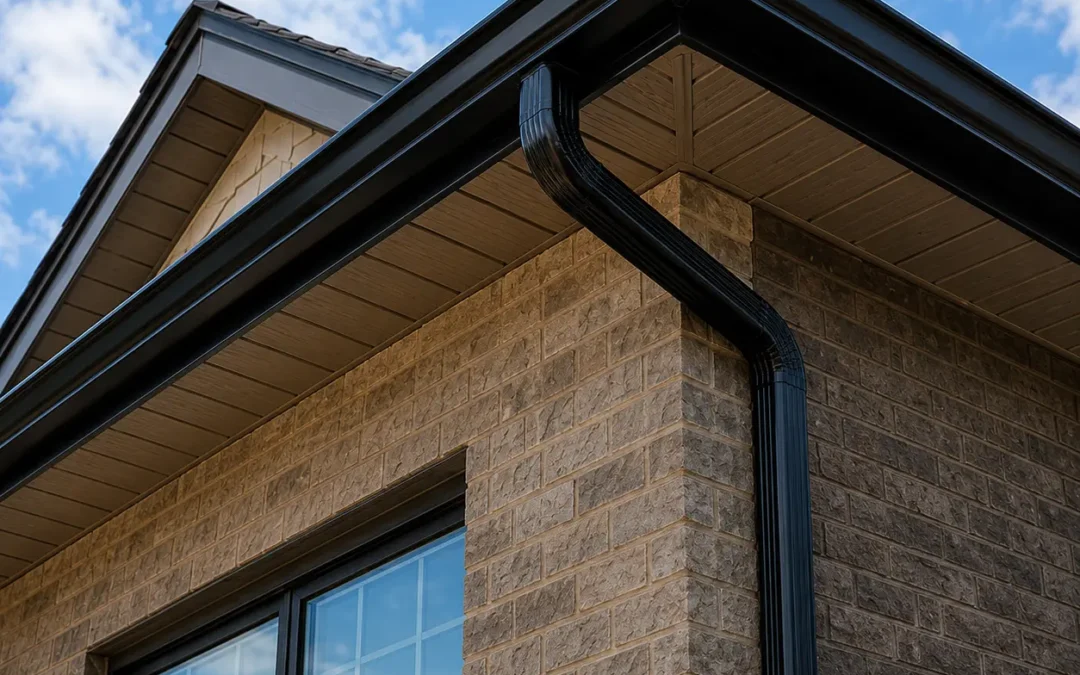
Custom-Fit Seamless Gutters Built Around the Whole Water Path
Seamless Rain Gutter Denver service from Ernie’s Gutter is designed to move roof water away from the home before it damages fascia, siding, landscaping, walkways, basement areas, or foundation soil.
Seamless gutters are formed as one continuous piece for each straight roofline run. That eliminates unnecessary middle joints found in sectional systems while providing a cleaner finished appearance.
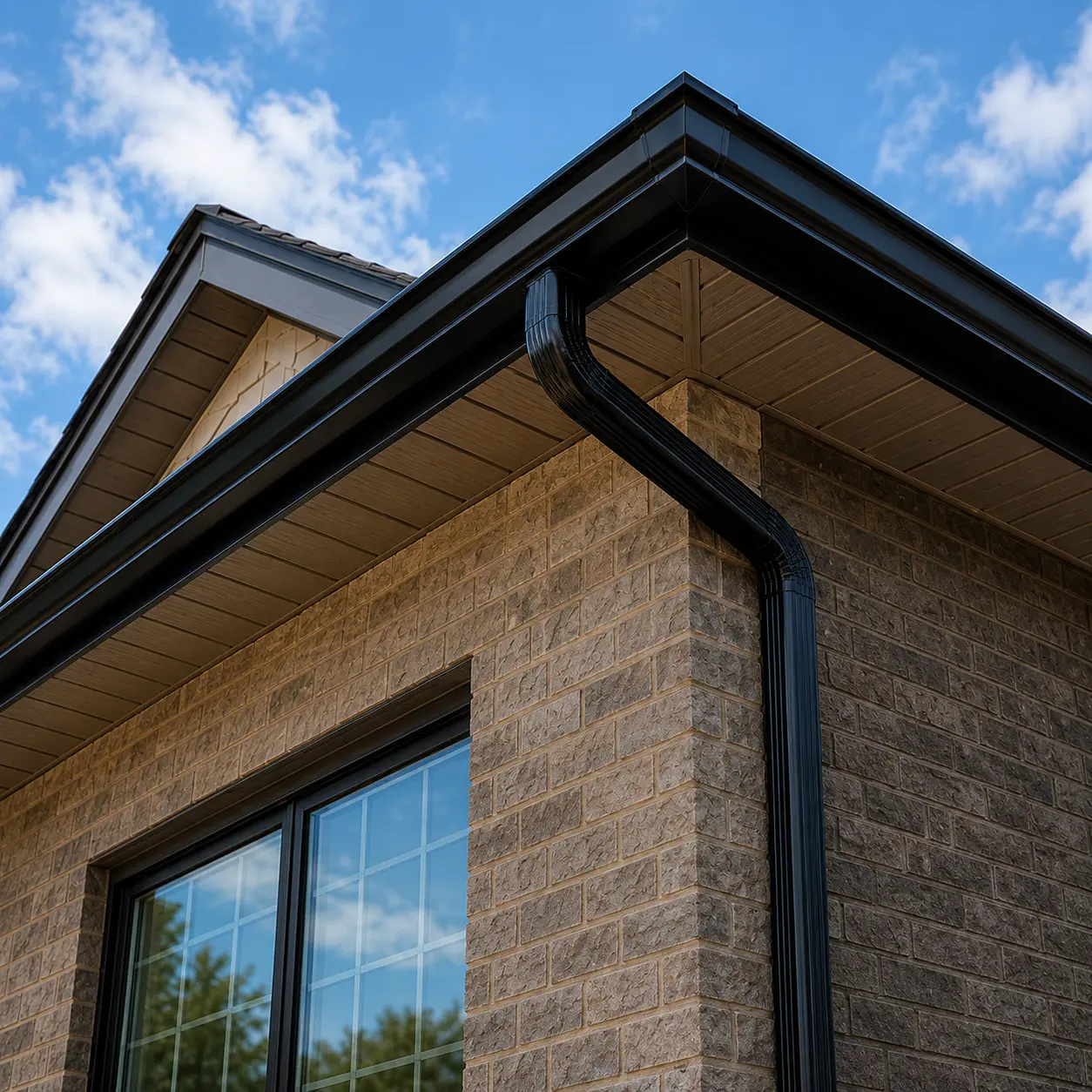
Start With Where the Roof Water Needs to Go
The real decision is not simply whether to install seamless gutters. The complete system has to move water from the roof, through the gutter and downspouts, and safely away from the property.
A roof valley can concentrate a large amount of runoff into one short gutter section. A long roof may need additional outlets. A new downspout can still create trouble when it empties into a low area beside the foundation.
We look at roof area, valleys, gutter length, fascia condition, outlet size, downspout capacity, soil slope, concrete, walkways, landscaping, and the final discharge point before deciding how the system should be built.
Why Seamless Gutters Make Sense for Denver Homes
Sectional gutters are assembled from shorter pieces joined together along the roofline. Every connection creates another location where sealant can age, sections can move, debris can catch, and water can escape.
Seamless gutters eliminate those unnecessary middle connections by forming each straight run to the measured length of the home.
Fewer Mid-Run Joints
Continuous straight sections remove many of the connection points found in sectional gutter systems.
Built to the Roofline
Each section is measured and formed for the home instead of forcing stock-length material to fit the building.
Cleaner Appearance
Long uninterrupted runs create cleaner roof edges and can be matched to fascia, siding, roofing, and exterior trim.
Choosing the Right Seamless Gutter System
Standard Residential Gutters
Properly designed 5-inch seamless gutters work well for many Denver homes with moderate drainage areas, balanced roof runs, sound fascia, and correctly placed downspouts.
Higher Water Capacity
Six-inch gutters may be appropriate for long runs, steep roofs, larger drainage areas, or locations where valleys concentrate substantial runoff.
Full Water-Path Correction
Some properties also need fascia repair, larger downspouts, extensions, or drainage improvements to move collected water safely away from the structure.
Warning Signs Your Gutter System Is Not Working
Gutter problems often begin with small warning signs: dark streaks below the gutter, water marks on concrete, washed-out landscaping, soft fascia, standing water in the trough, or sections that stay wet long after a storm.
Leaks & Overflow
Water escapes from corners, end caps, behind the gutter, or over the front edge.
Sagging Gutters
Sections dip between fasteners, look wavy, or hold standing water.
Loose Attachment
Gutters pull away from the fascia or fasteners repeatedly loosen.
Valley Overflow
Concentrated runoff from roof valleys overwhelms a short section of gutter.
Downspout Problems
Downspouts clog, separate, crush, back up, or empty too close to the home.
Ground-Level Water
Water pools near the foundation, washes away landscaping, or creates icy walkways.
Seamless Gutter Planning Checklist
Roof Drainage Area
The amount of roof feeding each gutter run determines how much water the system must carry.
Roof Pitch
Steeper roofs can move water toward the gutter faster during heavy storms.
Roof Valleys
Valleys can concentrate large amounts of water into a short gutter section.
Fascia Condition
Soft, split, loose, or rotted fascia should be corrected before installation.
Gutter Size
Five-inch and six-inch systems should be selected based on actual roof conditions.
Controlled Pitch
Gutters need enough slope to move water toward the outlets without looking crooked.
Hanger Spacing
Ernie’s Gutter commonly installs hidden hangers at 24 inches on center, with closer spacing where needed.
Outlet Capacity
A restricted outlet can cause even a properly sized gutter to overflow.
Downspout Size
Downspouts need enough capacity to empty the gutter during concentrated runoff.
Walkways
Discharge should not create slippery surfaces or winter ice problems.
Ground Slope
Soil or concrete sloping toward the house can defeat a correctly installed gutter.
Final Discharge
Collected water needs a safe location to finish its trip away from the home.
How Ernie’s Gutter Installs a Seamless System
Inspect the Roofline
We review roof planes, valleys, overflow areas, fascia condition, downspouts, landscaping, concrete, and drainage.
Measure Each Run
Each roofline is measured and the gutter size, profile, outlets, downspouts, and drainage path are planned.
Form Gutters On-Site
Continuous sections are formed to the measured length of each straight run.
Set Pitch & Hangers
Controlled slope is established and hidden hangers are fastened into dependable material.
Install Downspouts
Outlets and downspouts are positioned to move water efficiently away from the roofline.
Inspect the Water Path
The completed gutter, outlets, downspouts, and discharge locations are checked before completion.
Do Not Install New Gutters Over Rotted Fascia
The fascia board provides the structural surface that most residential gutters attach to. If that board is soft, split, rotted, or water damaged, installing a new gutter over it does not repair the underlying problem.
Damaged fascia should be repaired before the new gutter is expected to carry the weight of water, snow, ice, and debris.
Seamless Gutter Repair Versus Replacement
One leaking corner does not automatically mean every gutter on the home needs replacement. At the same time, repeatedly repairing a system with failing joints, lost pitch, damaged fascia, or inadequate capacity can become expensive.
Repair May Make Sense
- One corner, outlet, end cap, elbow, or downspout is damaged.
- The main gutter trough remains straight and sound.
- The fascia can still securely hold fasteners.
- Pitch can be corrected.
- The existing gutter has adequate capacity.
- The problem is isolated.
Replacement May Make More Sense
- Multiple runs repeatedly leak or separate.
- Gutters are twisted, crushed, split, or badly damaged.
- Several sections hold standing water.
- The system is undersized for the roof.
- Fasteners repeatedly release from damaged fascia.
- The same problems keep requiring repairs.
Denver Snow, Hail, Wind, and Heavy Storms
Denver weather puts stress on gutter joints, hangers, fascia, outlets, downspouts, and drainage connections. Wet debris, snow, and ice also add significant weight.
Hail can dent gutter material, deform outlets, damage downspouts, or loosen already weakened sections. Wind can twist gutter runs that were already pulling away from the fascia.
Check the Roof Edge
Look for crushed areas, loose sections, separated corners, exposed fascia, or gutters pulling away.
Check Water Flow
Watch for new overflow, standing water, leaks behind the gutter, or blocked downspouts.
Check Ground Drainage
Look for new pooling, washed-out soil, foundation water, or icy walkways.
Helpful Homeowner Resources
Frequently Asked Questions About Seamless Rain Gutters
1. What makes a rain gutter seamless?
Each straight gutter run is formed as one continuous piece to match the roofline. Corners, end caps, outlets, and downspout connections are still required.
2. Are seamless gutters guaranteed never to leak?
No. Seamless construction reduces mid-run joints, but corners, outlets, fascia condition, installation quality, storm damage, and maintenance still affect performance.
3. Do Denver homes need 5-inch or 6-inch gutters?
Many homes perform well with properly designed 5-inch gutters. Six-inch gutters may be better for large drainage areas, long runs, steep roofs, or concentrated valley runoff.
4. How long does seamless gutter installation take?
Many straightforward residential installations can be completed within a day. Larger properties, fascia repairs, difficult access, or additional drainage work may require more time.
5. Can new gutters be installed over rotted fascia?
New gutters should not be fastened into wood that cannot securely hold the hangers. Damaged fascia should be repaired first.
6. How far apart should gutter hangers be?
Ernie’s Gutter commonly installs hidden hangers at 24 inches on center, with closer spacing when the roofline or field conditions require additional support.
7. Do seamless gutters need gutter guards?
Not every home needs guards. They can reduce debris buildup, but they do not make a gutter system maintenance-free.
8. Can existing downspouts stay when the gutters are replaced?
Sometimes. Existing downspouts should be in good condition, properly sized, correctly located, and able to move water safely away from the structure.
9. When is gutter repair better than replacement?
Repair may be appropriate when the problem is isolated and the main gutter, fascia, pitch, outlets, and downspouts remain sound.
10. Does homeowners insurance cover damaged gutters?
Coverage depends on the cause of damage and the homeowner’s insurance policy. Ernie’s Gutter can inspect and document visible exterior damage and prepare a contractor repair or replacement scope.
Get the Right Seamless Gutter System for Your Home
If you are dealing with leaking corners, overflowing valleys, sagging gutters, storm damage, loose downspouts, fascia problems, or water pooling near the foundation, Ernie’s Gutter can inspect the system and explain the practical next step.
Family owned Since 1978. Serving Metro Denver and the Front Range.
Protection starts at the top of the home.
OUR SERVICES
Best Gutter Installation
Get more information concerning our service, do not wait to call us at 720 346 ROOF today. We’ll be more than happy to schedule a meeting with you.

Residential Gutter Contractor
Ernie’s Gutter specializes in residential gutter installation in Denver and has a team of experienced professional gutter installers available to get the job done right The First Time. From minor repairs and maintenance to full–scale gutter replacements.

Commercial Gutter
Commercial gutter needs with ease. Our seamless gutters are made using only the highest quality materials and are built to last. With our custom fit, your new gutters will fit your project perfectly and look great!. Call us at 720 346 ROOF and book a consultation today.

Gutter Guards
Gutter guards come in a variety of materials, sizes, and colors so you can customize them to fit your home’s aesthetic. Gutter guards are designed to help keep the leaves from entering your gutters Hail Claim Help

Downspouts and Extensions
Downspout for Drainage is the place to go for all your system needs.We understand the importance of properly managing water runoff and are committed to ensuring that your home or business is protected from potential flooding or water damage.

Gutter Repair
When it comes to Gutter Repair, it can be difficult to determine whether the damage was caused by hail or wind or age. While all types of damage can cause similar symptoms, they have different causes and require different repair methods.