
Ernie’s Gutter · Denver Metro · Since 1978
How to Tell If Your Gutters Need Replacement
Ernie’s Gutter is a third-generation, family-owned contractor serving Denver and the surrounding metro area.
Gutters need replacement when the metal is split or perforated in several places, a run has twisted beyond adjustment, or repeated leaks show that several connections have failed. One loose hanger, an isolated seam leak, or water backing up at a downspout can often be corrected with a smaller job.
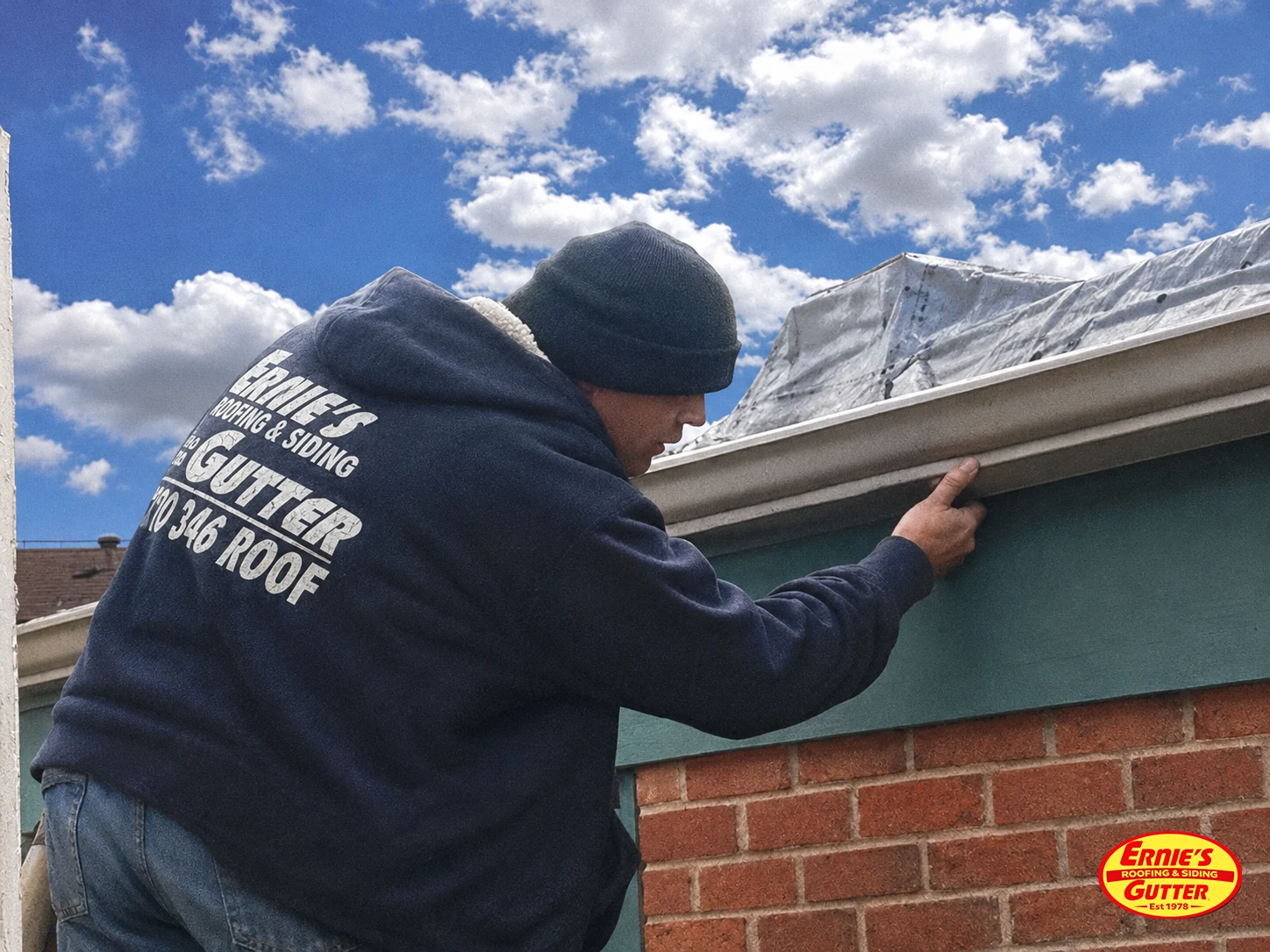
How to Tell If Your Gutters Need Replacement
If you’re wondering whether your gutters need replacement, start by finding where the water first escapes. The spot where it lands can be several feet from the source. A puddle below a corner might come from a leaking joint above it, water slipping behind the gutter, or a downspout that turns back toward the house. Before you decide your gutters need replacement, find the first place the water leaves its intended path. That observation gives the crew somewhere specific to start.
If this is your first time hearing this, a run is a length of gutter along one roof edge. The outlet is the opening in the gutter that feeds the downspout. The fascia is the board or finished face at the roof edge where many gutters are attached. Those parts work together. If the outlet is restricted, water can spill over a perfectly sound gutter. If the fascia is weak, the trough can sag even when the metal has no holes.
From a sheltered spot during ordinary rain, watch the affected wall. Look at the front lip, the back edge against the house, and the downspout. If you can safely see the bottom elbow, check where it sends the water. Then compare that wall with another side of the house. A single wet spot that starts at one joint tells a different story from water overflowing two runs that both drain through the same downspout route.
Take a wide picture that shows the whole wall and a second picture of the affected area from the ground. Write down whether it occurred during steady rain, a short downpour, or a thaw. Keep clear of loose metal and areas where ice could fall. Save roof-edge checks for the inspection.
Six Warning Signs Your Gutters Need Replacement
1. Several seams leak again after repair
A corner or end cap can drip because its seal has failed. When the surrounding metal still fits together, the run drains, and its fasteners hold, that joint may be repairable. When seams reopen in several places, look for movement or water holding in the trough. Two sections that have shifted out of alignment can move again after someone applies fresh sealant. Ask which joints are leaking, how the crew identified the source, and whether correcting support or slope can keep them together.
2. The gutter stays twisted or pulls away
Look along the front edge from the ground. A shallow dip near one support can be a loose hanger. A long stretch with a rolled lip, a visible gap along the back, or several hangers pulling loose calls for a closer look. A bent run may still contain water while draining poorly. The crew also needs to find out whether the fasteners pulled out of sound backing or whether the board behind them has deteriorated.
3. Holes or splits show up across a run
A scrape in the finish and a hole through the floor of the gutter are different defects. In steel gutters, rust can start where the protective coating is damaged. Aluminum can also develop corrosion or holes. A small damaged area surrounded by sound material may have a workable repair. Several pinholes, thin metal around joints, or splits at several attachment points suggest there may be too little sound material to rely on along that run.
4. A clean run repeatedly overflows
Once debris and outlet restrictions have been checked, recurring overflow can point to a low spot, a poor outlet location, or insufficient capacity for the roof area. A roof valley is where two roof planes meet. It can send a concentrated stream into one short stretch of gutter. If the valley overshoots the front edge, check how runoff enters the trough. If the trough fills from the outlet backward, trace the downspout and discharge before choosing a different profile.
5. Water stays in several low spots
Note whether a pool remains in the same part of the run after the rest of the system has drained. Pitch is the slope that leads water toward an outlet. One dropped hanger or a short section that has settled may be adjustable. A gutter bent into several low pockets can be harder to bring back into line. Have the crew determine whether the channel can be supported at a useful slope and which sections would need to come down to correct it.
6. Hail or ice damages the shape or connections
After conditions clear, look for an outlet pinched shut, a corner pulled apart, or a gutter that stays bowed after the ice is gone. A dent on the outer face may leave the water path intact. A folded channel next to an outlet or a split that opens under light rain is a functional problem. Compare affected runs side by side. Damage across the front of the house can still leave the back and sides serviceable.
Check the downspout discharge too. Overflow, washed-out mulch, and a puddle near the foundation can start with a blocked outlet, a separated extension, or a buried drain that backs up. Our gutter repair and downspout guide shows how to follow those clues.
Choose a Repair, One New Run, or a Larger Replacement
| What you find | What to discuss at the inspection |
|---|---|
| One loose hanger or leaking joint | Targeted repair when the metal, fastening surface, and drainage are sound. |
| Water backs up at one outlet | Check the outlet, elbows, downspout, and ground discharge for restrictions or undersizing. |
| One run is bent or perforated | Replace that run if adjacent sections remain sound and can connect reliably. |
| Several runs have failed | Assess broader replacement, support conditions, outlet placement, and final discharge together. |
Picture a Denver bungalow with one dripping corner and solid gutters on the other walls. A joint repair makes sense if the pieces fit and water leaves that corner promptly. If the metal surrounding the corner is split or too thin for the joint to hold, a longer section may need to come out. Ask where the proposed repair ends and what makes that end point a sound place to tie in.
Now picture an Arvada home with sectional gutters, several joints that have leaked again, and low spots on both the front and back. Pricing the same seam work again without checking the slope and support can set you up for more service calls. Walk through each affected wall separately. If one wall still drains and its connections are sound, there may be a practical way to retain it.
Seamless gutters are formed in continuous lengths to fit individual roof edges. The straight run has fewer joints, while corners, end caps, and outlets still need reliable connections. If someone recommends moving from a five-inch to a six-inch K-style gutter, ask which roof surfaces feed the affected run, where the water enters, and where it exits. The layout, outlet size, downspout, and discharge route all need to work together.
If the inspection points to an isolated defect, see our Denver gutter repair service. For multiple failed runs, see what is involved in rain gutter replacement for a Denver-area home.
Find the Cause Before You Approve the Work
Tell us where the leak starts, when it happens, and whether that spot has already been repaired.
Compare the Scope Before You Approve Work
Two proposals can use the same description at the top and cover different work. One may include removing the old gutter, inspecting exposed fascia, and rerouting a downspout. Another may cover new troughs and reuse the old outlets or leave the discharge in the same place. Ask for enough detail to compare what each proposal actually fixes, especially if overflow or standing water was your first complaint.
What an on-site inspection should explain
Start with the side of the house where you saw the trouble. A crew can look at the metal, fasteners, fascia, outlet and downspout in that order and compare those findings with a side that drains well. If conditions allow, a controlled flow check can show whether water collects near a low spot, escapes a joint or backs up where the downspout enters a buried line. Ask which conditions were visible and which still need confirmation. That gives you a chance to decide how much work to authorize before old material comes off.
If the plan calls for a new run, ask where the outlets will go and how the crew will connect it to any gutter you’re keeping. On a split-level home, an upper downspout may feed a lower section. That lower section has to carry its own roof runoff plus whatever comes down from above. A proposal that changes the upper outlet can also change the amount of water reaching the lower gutter during a downpour. Have the crew explain that connection and show you where the combined flow will leave the house.
Put the next approval step in writing. For example, the crew might discover deteriorated fascia after removing an old gutter. Ask for a photo, the affected length, and a price for correcting the backing before the new gutter goes up. If a buried line is outside the scope, have the proposal say where the new downspout ends. You’ll know which items the gutter work addresses and which ones still need a decision. Keep that written note with photographs of the affected runs so you can refer to it during the final walkthrough.
- Identify each run being repaired or replaced and the defect observed on that run.
- Confirm which corners, end caps, outlets, elbows, and downspouts are included.
- Ask who checks the exposed backing and how concealed damage is documented and approved.
- Get the intended discharge location, including whether a buried line is being reused or evaluated separately.
- Confirm disposal, any finish work, and who handles callbacks for the areas that were repaired.
Repeated small repairs add up when each visit addresses the drip and leaves a moving joint or a weak attachment behind it. Replacing a sound side adds immediate cost and can disturb a working connection. Compare the proposed work to the failure documented on each side. A contractor should be able to show where the original problem starts and explain how the proposed work changes the water path.
After the work, repeat your original ground-level observations during similar rain. A light shower can show that a joint stays dry. A problem that only happened in a heavy burst calls for a comparable storm before you can assess it. Save the scope and your photos so you can tell a returning leak from a new problem farther down the system. For neighborhood service information, see our Denver gutter service area page.
Ernie Said
Show me the first place the water escapes and where the downspout empties. If one corner leaks and the rest of the run drains and holds tight, I start at that corner. If the metal is split in several places or the whole run has moved, I want to see what’s holding it up before telling you how much needs to come down.

Insurance Claim Support
Document each affected side
When you can safely walk the property, take wide photos that establish the location, then photograph accessible damage such as a folded outlet, separated corner, or downspout knocked loose from the wall. Keep earlier pictures of the same exterior if you have them. A photo set that shows each affected run gives the contractor and insurer a clearer record of where the visible changes occurred.
Ask for a written description of the observed damage
A written scope can explain which sections still carry water, where a connection is torn or distorted, and which conditions are concealed until removal. Ask the insurer what documentation it needs and keep the photos with the proposed scope. Ernie’s Gutter can document accessible conditions and explain the work those conditions call for. Your insurer determines policy coverage and payment.
Helpful Homeowner Resources
Follow the runoff
Use the gutter repair and downspout guide to tell where a backup may start. For failing metal on multiple roof edges, review the rain gutter replacement service before comparing proposals.
Plan routine maintenance
Habitat for Humanity of Metro Denver’s Home Care Manual covers clearing gutter debris, keeping extensions in place, and directing discharge away from the home.
Frequently Asked Questions
How do I tell from the ground if my gutters need replacement?
Look for recurring leaks at several joints, holes spread across a run, severe twists, and stretches pulling away from the fascia. Photograph the affected walls and have the metal, backing, outlets, and discharge evaluated.
Can one leaking gutter corner be repaired?
Often, if the corner fits, the adjacent metal is sound, and the run drains. Have the first drip traced to the seam or the back edge of the gutter before choosing the repair.
Why does my gutter still leak after the joint was sealed?
The joint may have moved, the trough may be holding water, or runoff may be passing behind it. The location of the first drop during rain helps identify the cause.
What does water behind my gutter mean?
It can point to the roof-edge metal, how the gutter is positioned, or movement where it attaches. The inspection should follow the actual water path and check the supporting surface.
Why would a clean gutter overflow?
A low spot, restricted downspout, poor discharge, or concentrated runoff from a roof valley can cause overflow. Check where the spill begins and whether the nearest outlet is moving water.
Do hail dents mean I need new gutters?
Check whether the dents changed how the gutter works. Splits, crushed outlets, loosened attachments, and distorted channels deserve closer inspection. Keep pictures of each affected wall if you are documenting storm damage.
Can I replace only one side of my house?
Yes, when the problem is limited to that run and the neighboring gutters can remain secure, drain properly, and connect reliably to the replacement.
Will a bigger gutter stop water from overshooting a roof valley?
Sometimes. The valley’s discharge point, gutter position, and outlet capacity determine whether a larger profile will help. Overshooting and backing up require different corrections.
Why is water pooling near the foundation if my gutters look fine?
The extension may be disconnected, the yard may slope toward the house, or a buried line may be restricted. Follow the flow after it leaves the bottom elbow and note where the puddle starts.
What should I ask before approving replacement?
Ask which runs failed, what the crew observed, where runoff will discharge, and how concealed fascia damage will be documented and approved if it appears during removal.
Find Out Which Gutter Runs You Can Keep
Family Owned Since 1978. We Do It Seamless.
Schedule an inspection with Ernie’s Gutter for your Denver-area home. Tell us where you first see water escape and which areas have already been repaired.
Disclaimer: This guide provides general homeowner information. A visual inspection is limited to accessible conditions. An on-site inspection is needed before work recommendations and project pricing. Contractor observations do not establish insurance coverage or guarantee approval or payment. Insurance coverage and payment are determined by your insurer.