
Do I Need a French Drain or Downspout Drain Denver
Seamless Gutter Installation, Repair, and Service for Denver Homeowners Since 1978
Ernie’s Gutter provides seamless gutter installation, repair, cleaning, gutter guards, downspout corrections, and fascia repair for Denver, Colorado homeowners
Family-Owned Legacy Built on Quality Since 1978
Fast scheduling and quick response – reach out today
Request Estimate
Ernies Roofing
Do I Need a French Drain or Downspout Drain Denver
Do I Need a French Drain or Downspout Drain Denver is the right question when water keeps collecting near your foundation, in a side yard, beside a walkway, or at the end of a downspout. The two systems solve different water problems, and choosing the wrong one can leave you with the same puddle after the next storm.
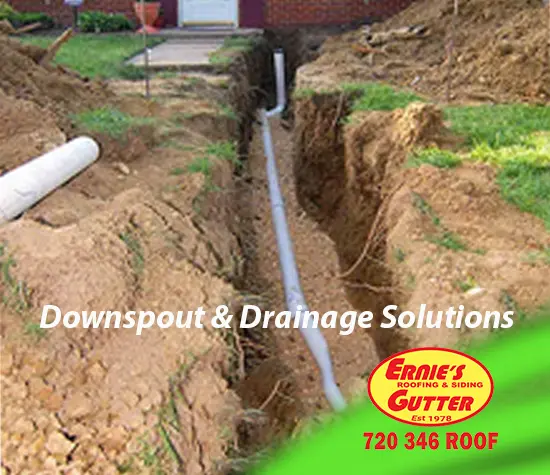
French Drain and Downspout Drain Systems Do Different Jobs
If this is your first time hearing this, a French drain and an underground downspout drain may both be buried in the yard, but they are not the same system. A French drain is normally built to collect water that is already moving through the soil. An underground downspout drain is normally built to carry water coming directly from the roof and gutter system. One deals with broad soil saturation. The other deals with concentrated roof runoff.
That difference matters because roof water arrives quickly. During a hard Colorado storm, a large roof can send a heavy volume of runoff into a few downspout locations in a short period of time. Groundwater behaves differently. It may spread through a low side yard, collect behind a retaining edge, move through compacted soil, or remain in a soft area for several days after the rain stops.
Homeowners often see only the final symptom: a puddle, muddy landscaping, a damp foundation line, or a walkway that stays wet. The correct drainage plan starts farther upstream. We look at where the water began, how it traveled, what stopped it, and where it can safely exit. Digging a trench before answering those questions is backwards. Water control is planning first and excavation second.
Water Starts at a Downspout
Pooling appears directly below a downspout, at a house corner, beside a splash block, or along a short extension. The wet area usually shows up quickly during or immediately after rain.
The Yard Stays Saturated
The ground stays soft for days, water collects across a wider low area, or moisture appears even when the nearest downspout is not dumping into that location.
Roof Water Overloads a Wet Yard
The downspout delivers a concentrated flow into soil that already drains poorly. In that situation, correcting only the gutter discharge or only the soil drainage may solve only half the problem.
Choose a French Drain When Water Is Collecting in the Soil
A French drain is designed to intercept and redirect water moving through saturated ground. A typical system uses a sloped trench, drainage fabric, clean washed stone, and perforated pipe. Water enters through the stone and pipe openings, then travels toward a planned outlet. The important word is planned. A French drain without a useful outlet can collect water without truly removing it.
A French drain may be the right direction when a side yard remains soggy long after the storm, when a low strip of lawn repeatedly holds water, or when subsurface moisture moves toward the foundation. It can also help where landscaping beds, walkways, retaining edges, or compacted soil interrupt the natural path of water. The system gives that water a lower-resistance route away from the problem area.
The biggest mistake is treating every puddle as a French drain job. If the puddle is being created by a downspout that dumps hundreds of gallons into the same corner, the downspout should be corrected first. Otherwise, the French drain may be forced to accept a concentrated volume it was not meant to handle. That can overwhelm the stone trench, introduce leaves and shingle grit, and turn a soil-water system into a roof-water disposal line.
Another common mistake is installing perforated pipe without the right fabric and stone. Soil can migrate into the voids around the pipe, reducing capacity over time. The trench can also be installed too flat, too shallow, or with no maintainable outlet. The system may look finished on installation day while quietly losing performance underground.
Wide Soggy Areas
A French drain is often appropriate when moisture spreads across a section of yard rather than appearing only at one downspout outlet.
Low Side Yards
Narrow areas between homes can trap water when grading, fences, concrete, and landscaping leave no clear surface route.
Subsurface Foundation Moisture
A correctly placed drain may help intercept water moving through soil toward a basement wall or foundation area. Foundation cracks and interior moisture still require separate evaluation.
Wet Soil Near Walkways
Repeated soil saturation can contribute to movement around pavers, edging, steps, and concrete. The water path should be corrected before cosmetic repairs are repeated.
Landscape Washout
When surface water and subsurface moisture keep moving mulch and soil, a French drain may be part of a broader grading and discharge plan.
No Natural Surface Route
A buried collection system can help when the yard cannot move water safely on the surface and a legal, practical outlet is available.
Choose a Downspout Drain When the Roof Is Creating the Wet Area
An underground downspout drain is a solid-pipe route that connects to the gutter downspout and carries roof runoff away from the home. It may discharge through a pop-up emitter, daylight outlet, approved drainage location, or another site-specific endpoint. Unlike a French drain, the pipe is intended to carry concentrated water inside the pipe rather than collect groundwater through perforations.
This system can be a smart choice when a surface extension would cross a walkway, block a gate, create a trip hazard, interfere with mowing, or be removed every time someone works in the yard. It can also help where the downspout must travel farther than a practical surface extension can reach. The finished yard looks cleaner, but appearance should never outrank function. A hidden drain still needs pitch, capacity, a dependable outlet, and maintenance access.
We have seen buried lines installed flat, ended in a low spot, crushed under shallow soil, or connected with fittings that catch debris. We have also seen downspouts tied directly into perforated French drain pipe. That can send leaves and roof grit into a system that was designed to collect groundwater. A better design usually keeps concentrated roof runoff in solid pipe until it reaches its intended discharge point.
The gutter above the pipe must also be working. If the gutter is sagging, the outlet is undersized, or the downspout is clogged, burying the lower line will not correct the roof-edge failure. The inspection should include the gutter pitch, hangers, outlet opening, downspout size, elbows, lower connection, buried route, and final discharge point. That is why our drainage work connects naturally with gutter repair and downspout correction.
Water Pools at a House Corner
The wet spot appears exactly where the downspout ends. That is the clearest sign that concentrated roof runoff needs a better route.
Extensions Cross a Walkway
A buried line can eliminate trip hazards when there is enough slope and a safe place for the water to discharge.
Surface Extensions Keep Getting Moved
If the extension is removed for mowing, access, or appearance, the drainage plan is not dependable. Underground routing may provide a permanent path.
Mulch Washes Out Below the Downspout
Fast roof runoff can carve channels, expose soil, and carry landscaping into sidewalks or window wells.
Water Runs Back Toward the Home
A short extension may move water away briefly, but poor grading can send it right back. The drain route has to reach a genuinely safer location.
Roof Runoff Must Travel Farther
When the nearest safe outlet is beyond a patio, side yard, or landscaped area, a planned underground route may be the cleaner solution.
French Drain vs Downspout Drain: What Is the Difference?
The easiest way to understand the choice is to compare the source of the water, the kind of pipe used, and the intended job. The table below is a practical homeowner guide, not a substitute for checking the actual grade and outlet on the property.
| Decision Point | French Drain | Underground Downspout Drain |
|---|---|---|
| Main water source | Water moving through saturated soil or collecting in a low area. | Concentrated runoff coming directly from gutters and downspouts. |
| Typical pipe | Perforated pipe surrounded by washed stone and drainage fabric. | Solid pipe that carries water from the downspout to the outlet. |
| How water enters | Through the stone and perforations along the trench. | Through the connected downspout at a specific inlet. |
| Common warning sign | Broad soggy ground or a yard area that stays wet for days. | Pooling, erosion, or washout directly below a downspout. |
| Main design need | Correct trench placement, fabric, stone, slope, and outlet. | Correct pipe size, slope, cleanout access, connection, and discharge point. |
| Common failure | Soil contamination, poor outlet planning, or a trench installed too flat. | Clogs, crushed pipe, shallow installation, poor slope, or an outlet in another low spot. |
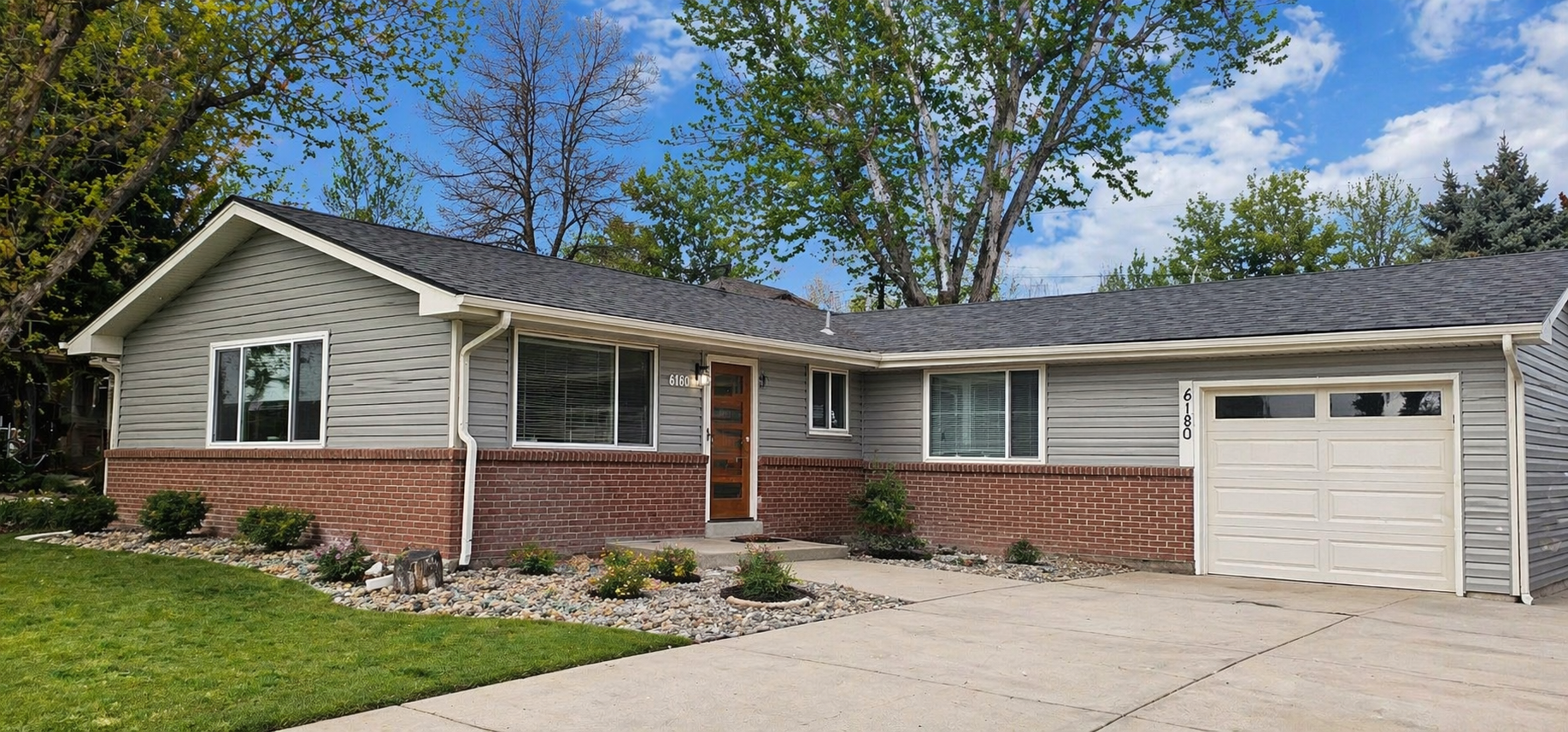
Some Denver Homes Need a French Drain and a Downspout Drain
A combined plan makes sense when the roof sends a large amount of water into a yard that already drains poorly. The downspout drain controls the concentrated roof runoff. The French drain collects water moving through the saturated soil. Each system handles the water it was designed to handle.
For example, imagine a narrow side yard with two downspouts, a fence, a concrete walkway, and compacted soil. Moving the downspouts underground may stop water from dumping beside the foundation, but the low side yard may still collect water from surrounding grade. A French drain may be needed to intercept that broader soil moisture. In the opposite situation, installing only a French drain while two downspouts keep dumping into the trench may overload the system and shorten its service life.
The goal is not to sell two systems when one will work. The goal is to stop asking one system to perform two different jobs. A practical inspection should identify which water can be redirected at the source and which water must be collected after it enters the soil.
Why Local Weather and Yard Conditions Change the Drainage Answer
Denver drainage problems are rarely caused by one calm, steady rainfall. Our homes deal with fast thunderstorms, hail debris, snowmelt, freeze-and-thaw cycles, intense sun, landscaping changes, and soil that may become compacted around walkways and foundations. A system has to work across those conditions, not only during the easy test with a garden hose.
Fast storms expose capacity problems. Gutters can overflow when debris blocks the outlet or when the downspout cannot keep up with the roof area feeding it. That concentrated water then hits the same patch of soil again and again. Snowmelt creates a slower but longer flow. If the ground is frozen, the water may travel across the surface instead of soaking in. A low outlet can become an ice area near a walkway, gate, or driveway.
Freeze-and-thaw movement also punishes weak installations. Shallow pipe can shift. Poor joints can separate. Standing water inside a flat section can freeze. A pop-up emitter placed in the wrong depression can remain buried in ice or mud. French drain stone can become contaminated when fabric is missing or poorly wrapped. These are not reasons to avoid drainage work. They are reasons to build it with Denver conditions in mind.
Older homes may have grading that changed over decades. Soil settles. New patios are poured. Garden beds are raised. Neighbors add fences or landscape edging. A route that once moved water away may now trap it. That is why the inspection must follow the current water path rather than assuming the original design still works.
Fast Summer Storms
Heavy runoff reaches the downspout quickly, so pipe capacity and outlet planning matter.
Snowmelt on Frozen Soil
Water may stay on the surface and travel toward low areas when the ground cannot absorb it.
Hail and Roof Debris
Leaves, shingle grit, and storm debris can enter outlets and buried lines when screens, cleanouts, and maintenance are ignored.
Compacted Side Yards
Foot traffic, narrow access, and hard soil can slow drainage between homes.
Changing Landscape Grades
Raised beds, edging, patios, and new concrete can interrupt a water route that used to work.
Winter Ice at Outlets
Discharge points must be placed where water will not create a recurring slip hazard or freeze against the home.
Common French Drain and Downspout Drain Mistakes
Drainage work is easy to hide because most of it disappears under soil. That makes planning, materials, and documentation more important. The yard can look perfect on the day the trench is closed even when the line has no reliable slope or outlet. Denver weather eventually finds those shortcuts.
Installing Before Finding the Outlet
Every drainage plan needs a safe destination. Digging first and deciding where the water goes later is how one wet spot becomes another.
Using Perforated Pipe for Concentrated Roof Water
Roof runoff can carry leaves and grit into a groundwater collection system. Solid pipe is generally the cleaner route for direct downspout flow.
No Maintenance Access
Buried lines should be designed with realistic cleaning and inspection in mind. A completely sealed mystery pipe becomes a future excavation problem.
Flat or Reverse Pitch
Water cannot move uphill. Small low sections hold sediment and water, increasing the chance of blockage and freeze damage.
Ending the Pipe in a Low Spot
A drain that empties into another depression has moved the symptom without solving the drainage problem.
Ignoring the Gutter Above
An underground line cannot fix a sagging gutter, undersized outlet, loose downspout, or roof-edge overflow. The full water path has to work.
Using Easily Crushed Pipe
Material selection should match burial depth, yard use, soil conditions, and maintenance needs. Thin pipe can deform under shallow soil or traffic.
Skipping Drainage Fabric
French drain stone can fill with surrounding soil when the trench is not separated and wrapped correctly.
Sending Water Toward a Neighbor
The discharge point must be selected responsibly. A drainage repair should not create a runoff problem on the adjoining property.
Simple Drainage Checks Before You Dig
You can learn a lot during the next rain without opening a trench. Stay safely on the ground and watch where water leaves the roof, where it lands, and how long it remains. Do not climb a ladder during a storm. The purpose of this check is to identify patterns, not to perform a risky inspection in wet conditions.
Watch the Downspout Outlets
Does water leave each downspout freely, or does it back up at an elbow? Does it land beside the foundation, cross a sidewalk, or run back toward the house? A problem that appears at the downspout first usually points to roof-runoff control.
Mark the Wet Area
Take photos during the storm and again one day later. A small puddle that disappears quickly is different from a broad soft area that remains wet for several days.
Check the Surface Grade
Look from the foundation toward the yard. Water should not be trapped by raised edging, settled soil, patios, walkways, or landscape borders.
Look for Erosion and Staining
Channels in mulch, exposed soil, splash marks on siding, and sediment on concrete show where concentrated water repeatedly travels.
Notice How Long the Yard Stays Soft
Ground that remains soft well after the downspouts stop flowing may need broader soil-water management rather than only a longer extension.
Check for Existing Buried Lines
Do not assume an old underground line works. Look for a visible outlet, cleanout, crushed connection, or standing water at the inlet. Utility locating and safe excavation procedures are required before digging.
Our Drainage Inspection Follows the Water From Roof to Outlet
Ernie's Gutter has served Denver-area homeowners since 1978. As a third-generation family contractor, we do not separate the gutter from the water problem below it. The roof edge, gutter run, outlet, downspout, grade, soil, and final discharge point are parts of one system. The job is not finished because water left the roof. It is finished when that water has a controlled route away from the home.
We also keep the recommendation practical. Some properties need a simple downspout correction. Some need a longer surface extension. Some need a solid underground line. Some need a French drain. Some need both. The inspection should explain why, not bury the homeowner under contractor language.
Inspect the Roof-Water Path
We check gutter pitch, hangers, outlets, seams, downspout size, elbows, and visible overflow or staining.
Identify the Water Source
We determine whether the main problem is concentrated roof runoff, saturated soil, surface grading, or a combination.
Review the Yard and Obstacles
Walkways, patios, gates, fences, landscaping, utilities, window wells, and property lines affect the route.
Find a Safe Discharge Point
We identify where water can exit without returning to the foundation, icing a walkway, or creating a new problem.
Match the System to the Problem
Solid downspout pipe, a French drain, a surface extension, gutter repair, or a combined plan is recommended only when it fits the water path.
Explain Maintenance
We discuss cleanouts, outlet access, debris control, and what the homeowner should watch after storms and snowmelt.
Drainage Work Should Protect More Than the Lawn
Standing water is annoying, but the larger concern is what repeated moisture can affect around the home. Poor roof-water control can wash soil away from the foundation, stain siding, flood window wells, soften landscaping, and keep fascia or lower wall areas wet. Saturated soil can also contribute to movement around steps, pavers, edging, and concrete. Drainage work should reduce those risks by moving water in a controlled direction.
This is also why gutter condition matters. A new French drain cannot compensate for a gutter that overflows along the roof edge. A new underground downspout line cannot compensate for a clogged outlet. Before investing in underground work, it may be smarter to correct the existing system through gutter repair, gutter cleaning, or rain gutter replacement.
The most cost-effective drainage plan is not automatically the cheapest trench. It is the smallest complete solution that stops the recurring water path. A partial fix that fails after every storm costs more because the homeowner pays twice and may still face damage between repairs.
Foundation Soil
Keep concentrated runoff from repeatedly soaking and washing out soil beside the home.
Fascia and Soffit
Correct gutter overflow and roof-edge leaks before water damages the materials supporting the gutter.
Siding and Lower Walls
Reduce splashback, staining, and repeated moisture where downspouts discharge too close to the structure.
Walkways and Steps
Route water away from areas where repeated wetting, soil movement, and winter icing create ongoing trouble.
Landscaping
Prevent roof runoff from cutting channels through mulch, washing out soil, and exposing plant roots.
Outdoor Use Areas
Keep patios, gates, and side-yard access from becoming muddy or blocked by surface extensions.
Still Asking, “Do I Need a French Drain or Downspout Drain?”
Do not guess from the puddle alone. Ernie's Gutter can inspect the gutter system, downspout outlets, soil condition, surface grade, obstacles, and discharge options. You will get a straight explanation of whether the property needs a French drain, an underground downspout line, a simpler correction, or a combined plan.
Frequently Asked Questions About French Drains and Downspout Drains
What is the main difference between a French drain and a downspout drain?
A French drain collects water moving through saturated soil, usually through a stone-filled trench and perforated pipe. A downspout drain carries concentrated roof runoff from a gutter downspout through solid pipe to a safer discharge point.
How do I know whether the water problem starts at the roof or in the soil?
Water that appears immediately below a downspout during rain usually points to a roof-runoff problem. A wider area that stays soft or wet for days may indicate soil saturation. Some properties have both conditions.
Can a downspout connect directly to a French drain?
Directly sending roof runoff into perforated French drain pipe is often a poor choice because leaves and roof grit can enter the groundwater collection system. A combined plan can keep downspout water in solid pipe while the French drain separately collects soil water.
Do I need both systems?
You may need both when downspouts deliver concentrated roof runoff into a yard that also has broad soil saturation or a low area. Each system should handle its own water source and discharge safely.
Will a longer downspout extension solve the problem?
It can when the yard slopes away, the extension reaches a safe surface outlet, and it does not cross a walkway or create a trip hazard. It will not solve broad groundwater saturation or a low yard with nowhere for water to go.
Where should an underground downspout drain discharge?
It should discharge at a safe location where water cannot return to the foundation, flood a walkway, create winter ice, or cause a problem on neighboring property. The correct outlet depends on the specific grade and site layout.
Can a French drain help with basement moisture?
It may help reduce water moving through soil near the foundation, but basement moisture can also involve grading, foundation cracks, window wells, gutters, downspouts, or interior waterproofing. The full source should be inspected.
Why does an underground drain need a cleanout?
Downspout drains can collect leaves, shingle grit, and sediment. Maintenance access gives the line a practical way to be inspected and cleared instead of requiring excavation when flow slows down.
Can Denver freeze-and-thaw cycles damage buried drainage?
Yes. Flat sections can hold water that freezes, shallow pipe can move, and poor outlets can become blocked by ice. Proper slope, burial, connections, and discharge planning reduce those risks.
How do I schedule a drainage inspection with Ernie's Gutter?
Call 720 346 ROOF or use the online contact page. We will inspect the roof-water path, yard conditions, and discharge options before recommending a system.
H1 LINE HERE….. Your content goes here.
BODY OF BLOG…….. Edit or remove this text inline or in the module Content settings. You can also style every aspect of this content in the module Design settings and even apply custom CSS to this text in the module Advanced settings.


Your content goes here. Edit or remove this text inline or in the module Content settings. You can also style every aspect of this content in the module Design settings and even apply custom CSS to this text in the module Advanced settings.
OUR SERVICES
Best Gutter Installation
Get more information concerning our service, do not wait to call us at 720 346 ROOF today. We’ll be more than happy to schedule a meeting with you.

Residential Gutter Contractor
Ernie’s Gutter specializes in residential gutter installation in Denver and has a team of experienced professional gutter installers available to get the job done right The First Time. From minor repairs and maintenance to full–scale gutter replacements.

Commercial Gutter
Commercial gutter needs with ease. Our seamless gutters are made using only the highest quality materials and are built to last. With our custom fit, your new gutters will fit your project perfectly and look great!. Call us at 720 346 ROOF and book a consultation today.

Gutter Guards
Gutter guards come in a variety of materials, sizes, and colors so you can customize them to fit your home’s aesthetic. Gutter guards are designed to help keep the leaves from entering your gutters Hail Claim Help

Downspouts and Extensions
Downspout for Drainage is the place to go for all your system needs.We understand the importance of properly managing water runoff and are committed to ensuring that your home or business is protected from potential flooding or water damage.

Gutter Repair
When it comes to Gutter Repair, it can be difficult to determine whether the damage was caused by hail or wind or age. While all types of damage can cause similar symptoms, they have different causes and require different repair methods.
What’s New on The Blog
Benefits Of Waterproofing Your Residence
Waterproofing Your Home Each year, only 28% associated with houses becoming constructed are subjected to Waterproofing Your Home. Homeowners as well as creating managers would find themselves determining feasible costs of having their home waterproof. There are...

LowE Coatings
LowE Coatings I'd say no, adding LowE coatings devices would not be an excessive amount of a very important thing. Whatever they will perform is reasonable your solar panel technology achieve along with damage simply by obstructing a number of solar power achieve (I...
Replacement Window Sash
Replacement Window Sash .An upgraded Replacement Window Sash set up might be just what you should increase the top quality of each body in your house whilst reducing the original expenses that are related to these kinds of work. The actual sash of the eye-port is...
#1 Rated Roofing Contrator In Denver
Craftsmanship That Stands Like a House
Let’s Get Your Project on the Right Track

Let’s Get Started